Blitz Bureau
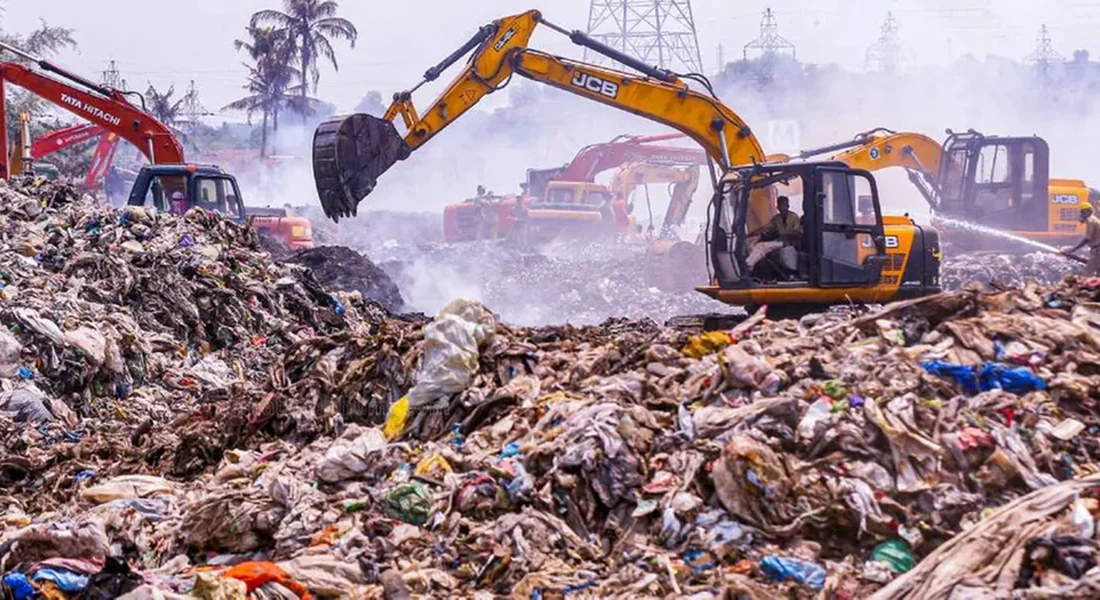
NEW DELHI: Legacy waste is biomined, a process in which old waste is scientifically stabilised and separated into different usable parts, reducing pressure on landfills and ensuring that nothing returns to the dumpsite. Each recovered material is sent for appropriate reuse or processing, following the broader circular-economy approach. Biomining means digging out old waste from a dumpsite and cleaning it up in a scientific way. After the waste is excavated, it is spread out in long rows and allowed to breathe in air while special microbes (biocultures) speed up natural decomposition. Once the waste becomes stable and dry, it is screened and separated into different categories such as soil-like fines, bricks, stones, metals, plastic, clothes, and other recyclables. Each of these materials is then sent for proper reuse.
End-use pathways
As part of dumpsite remediation, legacy waste is scientifically segregated into different material streams. The following section outlines the end-use pathways: Inert & soil-like material: Inert and construction debris are reused to build roads, strengthen embankments, and level lowlying areas, supporting urban development without extracting new raw material. Construction & demolition waste: The waste from demolished buildings or structures falls in this category. The waste will be processed into paver blocks, tiles, bricks, and aggregates.
Refuse-derived fuel: Means fuel derived from combustible in nature but is not recyclable, such as soiled paper, soiled cloth, contaminated plastics, multilayer packaging material, and other packaging material. The RDF is supplied to cement factories, waste-to-energy plants, and other industries as an alternative to coal. Recyclables: Recyclables include materials like plastic, paper, metal, glass, and cardboard that are segregated and sorted from mixed waste. These are processed through recycling, where they are reprocessed to create new products. Biodegradable waste: Refers to any organic material that can be broken down by micro-organisms into simpler, stable compounds. This includes food scraps, kitchen waste, garden waste, and other naturally decomposable materials.
SBM – Urban 2.0
Strengthening material recovery facilities (MRFs): The mission aims to set up at least one MRF in each city. At present, there are 2,900 operational MRF plants with a total capacity of 67,000 TPD. Additionally, 43,800 TPD of MRF capacity has been approved under SBM-U 2.0. Expansion of wet waste processing and composting: Waste-to-compost plants are strengthening wet waste management across urban areas. Currently, there are 2,800 operational compost plants with a total capacity of 1.14 lakh TPD. Under SBM-U 2.0, an additional composting capacity of 47,200 TPD has been approved. Biomethanation and compressed biogas (CBG) plants: At present, 131 biomethanation plants with a cumulative capacity of 4,253 TPD are operational.
Waste-to-Electricity (WtE) facilities: Cities with a population of more than 10 lakh are required to establish higher-order processing facilities, such as Waste-toElectricity (WtE) plants for the treatment of dry waste.
The way forward
Achieving Zero Dumpsites by 2026 will help strengthen the foundations of modern urban governance by embedding scientific waste management into daily municipal operations and integrating waste pickers and sanitation workers into the formal waste management chain.
The elimination of legacy dumpsites supports the shift from open dumping to circular waste practices, contributing to SDG 11 (Sustainable Cities and Communities) and SDG 12 (Responsible Consumption and Production), while reduced methane emissions from unmanaged waste advance SDG 13 (Climate Action). By enabling cleaner, more resource-efficient, and better-managed cities, Mission Zero Dumpsites contributes to the broader vision of Viksit Bharat 2047, where urban growth is aligned with sustainability, productivity, and long-term quality of life.