Blitz Bureau
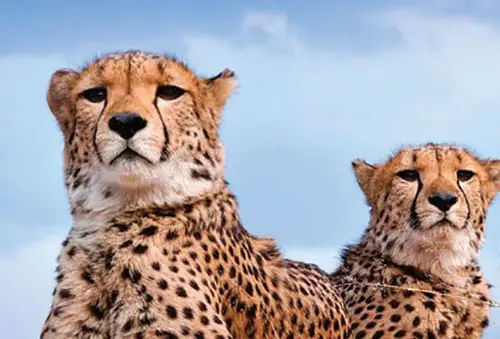
NEW DELHI: Project Cheetah’s mandate is multifaceted with establishment of a viable metapopulation of 60-70 cheetahs across 17,000 km² in the Kuno-Gandhi Sagar landscape, and restore open forests and grasslands, along with mitigating climate impacts via enhanced carbon sinks.
Under Project Cheetah, the cheetah has been designated as a flagship/umbrella species. The official plan aims to use its reintroduction to restore neglected grassland and semi-arid ecosystems, thereby benefiting prey species and other grassland‑dependent biodiversity.
Ecological prudence
A phased implementation ensures ecological prudence through: Founder stock introduction into Kuno National park’s 748 square km core area, expanding to 3,200 square km landscape. Metapopulation linkage with Gandhi Sagar Wildlife Sanctuary, located about 300 km from Kuno. Self-sustaining growth: If a net annual growth rate of about 5 per cent is maintained, the released population is expected to reach its carrying capacity in roughly 15 years.
Budgetary support: Rupees 39 crore for Phase 1, integrated into the Centrally sponsored scheme – Project Tiger, with additional allocations for prey translocation and infrastructure.
Key milestones
Project Cheetah’s ledger brims with quantifiable successes, blending innovation with resilience. By February 2023, 20 cheetahs were translocated via Indian Air Force C-17 Globemasters, a logistical marvel spanning more than 7,900 km without morbidity.
Early breeding is one of the strongest biological signals that a species has adjusted well to its new environment. The successful reproduction of cheetahs in Kuno so soon after their translocation indicates that the landscape is meeting their essential ecological needs. At Project Cheetah’s heart lies inclusive conservation. Over 450 ‘Cheetah Mitras’ in 80 villages serve as vigilant ambassadors, conducting 150 awareness sammelans and 16 Anubhuti camps for 2,200 students.
Eco-development: Roads, check dams, sanitation, spans 100+ villages in the cheetah zone, fostering coexistence. This model, echoed in UNEPCBD frameworks exemplifies community-led biodiversity gains. Wildlife diplomacy Project Cheetah stands as a landmark in global wildlife diplomacy, built on deep, formalised cooperation between India and African range countries.
Under the inter-governmental MoU between India and South Africa, both nations committed to a long-term partnership in cheetah translocation, custodianship, training, and technology transfer, an arrangement reviewed every five years to ensure continuity and relevance. This followed India’s historic first-ever intercontinental wild-to-wild cheetah translocation from Namibia in 2022, making Project Cheetah the world’s first large carnivore reintroduction across continents. Sourcing cheetahs from genetically diverse southern African populations further strengthens India’s founding population and aligns with global conservation responsibility.
International alliance
India has elevated its global conservation leadership through the establishment of the International Big Cat Alliance (IBCA), a flagship initiative of Prime Minister Narendra Modi, dedicated to safeguarding the future of the world’s seven big cat species, including the cheetah. Headquartered in India with Rs 150-crore budgetary support for five years till 2027-28, it was formally launched by the Prime Minister April 9, 2023 during the commemoration of 50 years of Project Tiger.
Designed to strengthen transnational cooperation, shared research, capacity building and technology transfer among range countries, the Alliance positions India as a global hub for big cat conservation and collaborative ecological stewardship.