Blitz Bureau
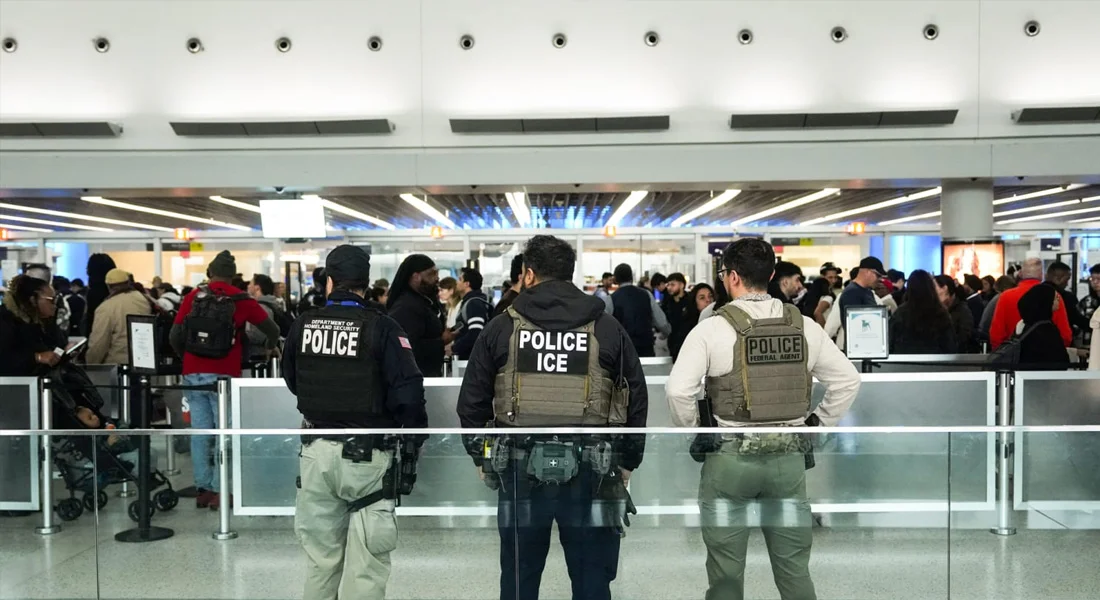
NEW DELHI: US Immigration and Customs Enforcement (ICE) agents have deployed to major air ports across the country, helping to fill the void as thousands of security staff who are going without pay refuse to work.
Transportation Security Administration (TSA) employees are increasingly absent, having not received pay in weeks due to a partial government shutdown that began on February 14.
Their absence has created huge queues and hours-long wait times at airport security checkpoints. More than 3,400 TSA agents called out of work on March 22.
The next day White House border tsar Tom Homan said hundreds of ICE agents had been deployed to 14 airports in cities including New York, Atlanta and Houston. They were also posted at New York’s John F Kennedy airport and Hartsfield Jackson airport in Atlanta, Georgia. But they were not wearing masks or face cov erings as they have done elsewhere.
At Louis Armstrong New Orleans In ternational Airport, 42.3 per cent of TSA staff called to say they would be absent on Sunday, and at Hartsfield-Jackson, 41.5 per cent of staff called out, accord ing to figures obtained by the BBC’s US partner CBS.
More than one-third of staff called out sick at three other airports the same day, includ ing George Bush Intercontinental Airport, in Houston, Texas, and Baltimore/Washington International Thurgood Marshall Airport. Airline passengers at some airports were told to arrive at least three or four hours early.
Long wait time Wait times have become so long that travellers are “sleeping in the airport” to avoid missing flights.
One of the longest security waits on March 24 was at Bush International Air port in Houston, where travelers stood in a line stretching from the airport subway to the security check-in gates, according to ABC Houston station KTRK.
In a statement, Lauren Bis, the DHS acting assistant secretary for public af fairs, said the partial government shut down over DHS funding has caused “more than 450 TSA officers to quit and thousands have called out from work because they are not able to afford gas, childcare, food, or rent.”