Blitz Bureau
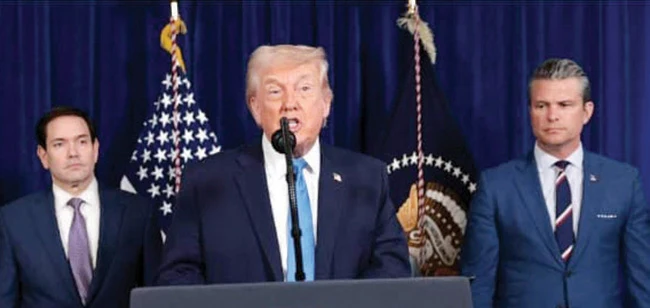
NEW DELHI: United States President Donald Trump invoked the Monroe Doctrine to justify a military operation in Venezuela to capture its President
Nicolas Maduro on January 3. The 200-year-old policy shapes US influence in the western hemisphere and continues to affect modern geopolitics and international relations.
Trump’s reference has sparked intense debate over sovereignty, intervention and the relevance of historical doctrines in modern geopolitics.
The Monroe Doctrine was announced in 1823 by US President James Monroe. It declared that European powers should not interfere in the political affairs of countries in the Western Hemisphere. In return, the US pledged not to involve itself in European conflicts.
Initially, the doctrine aimed to protect newly independent Latin American nations from European colonization.
Trump remarked that the doctrine had been “superseded” and jokingly referred to it as the “Donroe Doctrine”, signalling a more aggressive interpretation.
While critics say using a 19th-century doctrine to justify modern military action undermines international law and democratic norms, his supporters claim it ensures regional stability and counters hostile influences.
From Venezuela to Greenland, Cuba to Colombia, Trump is reaching deep into 19th-century history to justify a far more assertive, 21st-century projection of power.
If Monroe sought to keep foreign powers out of the Americas, Trump appears intent on reshaping the entire hemisphere around American dominance.
The emphasis has shifted from deterring outside powers to asserting American dominance within the hemisphere itself, which can also be associated with the term “Trump corollary.”
Trump has revived his long-running push for an American acquisition of Greenland, framing it as essential to US national security. He has publicly threatened Colombia with military action over the cocaine trade. His top diplomat has warned that Cuba’s communist regime is “in a lot of trouble.”
Trump has also talked about making Canada the 51st of the United States.
Some foreign policy analysts believe that Trump would like to divide the world with China and Russia into spheres of influence.