Blitz Bureau
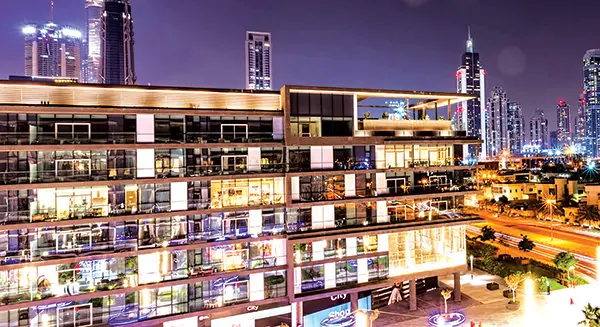
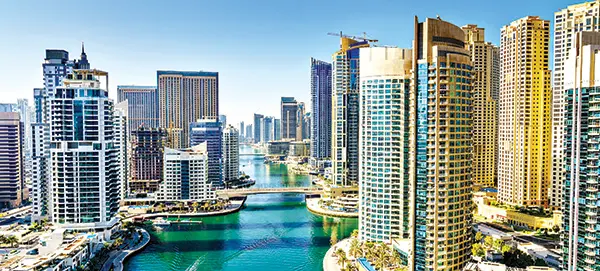
NEW DELHI: The skyline of Dubai has long served as a barometer for global capital flows, often oscillating between dizzying heights and sharp corrections. Yet, as the emirate’s real estate market scales new peaks in early 2026, a fundamental shift is underway.
Unlike the speculative fever of previous cycles, the current upswing is anchored by a trifecta of record-breaking population growth, aggressive residency reforms, and a decisive pivot toward end-user ownership.
Data suggests that Dubai is no longer merely a “transient playground” for offshore capital but a maturing metropolis. The population has surged by 15 per cent since 2020, recently breaching the four-million mark. With 208,000 new residents arriving in 2024 alone, the pressure on housing stock has transitioned from an investment luxury to a demographic necessity.
In its latest Global Real Estate Bubble Index, UBS Group AG noted that while Dubai’s inflation-adjusted home prices reached a decade-high in 2025 — recording 11 per cent growth — the market remains fundamentally cheaper than global peers such as Miami, Zurich, or Tokyo.
While UBS elevated Dubai’s risk status to “elevated,” analysts argue the “bubble” label misses the structural nuances. “In many global hubs, price growth is a product of cheap leverage,” notes an industry strategist. “In Dubai, consumption is imported at scale. When you have a demographic where 60 per cent of the population is under 35, you aren’t just selling assets; you are selling a lifestyle to a generational cohort that is here to stay.”
Supply: The Paper Giant
A perennial concern for Dubai has been the “supply overhang.” On paper, 2026 looks daunting, with estimates suggesting 100,000 units could hit the market. However, historical data serves as a sobering filter.
Historically, 30 per cent to 40 per cent of projected supply in the emirate is deferred due to construction bottlenecks or phased master plans. The “effective supply” for 2026 is expected to hover near 65,000 units — a figure that aligns closely with current absorption rates.
The Golden Visa Effect
Perhaps the most significant catalyst is the institutionalisation of residency. Since 2021, the issuance of over 250,000 Golden Visas has fundamentally altered buyer psychology. For the first time, expatriates — who make up 90 per cent of the population — are viewing Dubai as a primary home rather than a temporary workstation.
This is reflected in the transaction data. According to Betterhomes, cash buyers accounted for roughly 49 per cent of transactions in Q3 2025. More tellingly, end-users now represent half of all buyers. This “sticky” capital provides a buffer against the volatility that once defined the 2008 and 2014 cycles.
Regional Rivalries, Global Risks
The horizon is not without clouds. The market remains sensitive to oil price fluctuations and the shifting tides of regional geopolitics. Also, Dubai faces a new era of competition. Abu Dhabi has significantly sweetened its foreign investment incentives, and Saudi Arabia’s Vision 2030 is beginning to bear fruit, with Riyadh emerging as a potent competitor for international capital starting this year.
However, Dubai’s “first-mover” advantage — rooted in regulatory transparency, world-class logistics, and a tax-efficient environment — remains a formidable moat.
As 2026 progresses, Dubai’s challenge will not be avoiding a crash, but managing its own success. The task for policymakers is to ensure that infrastructure keeps pace with the influx of residents and that affordability does not become a barrier to the very talent the Golden Visa was designed to attract. For now, the “Dubai Boom” appears to have traded its speculative wings for a more stable, demographic-driven engine.