Blitz Bureau
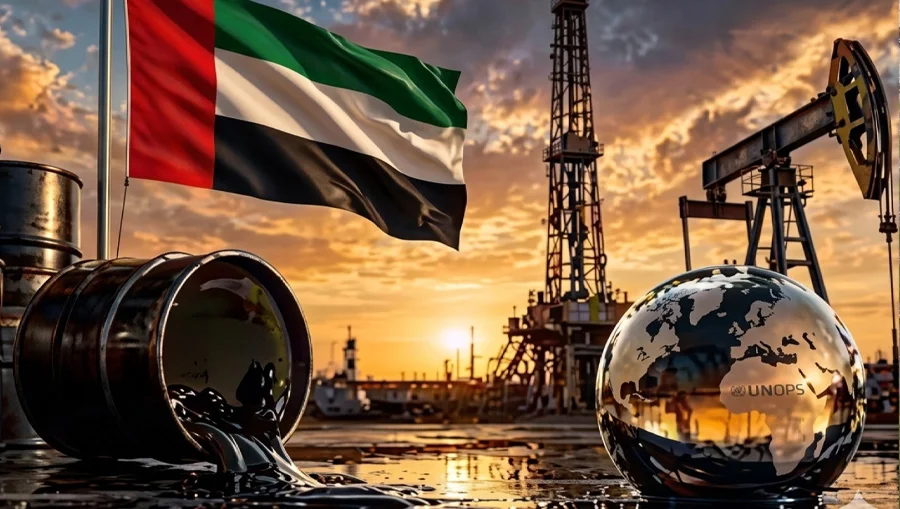
NEW DELHI: Reinforcing its commitment to a responsible, reliable, and forward-looking role in global energy markets, the United Arab Emirates on April 28 left the Organisation of the Petroleum Exporting Countries (OPEC and OPEC+), effective 1 May 2026. This decision also reflects the UAE’s long-term strategic and economic vision and evolving energy profile, including accelerated investment in domestic energy production.
The decision was taken after a comprehensive review of the UAE’s production policy and its current and future capacity. It is based on “our national interest and our commitment to contributing effectively to meeting the market’s pressing needs”, said the Government.
While near-term volatility, including disruptions in the Arabian Gulf and the Strait of Hormuz, continues to affect supply dynamics, underlying trends point to sustained growth in global energy demand over the medium to long term. A stable global energy system depends on flexible, reliable, and affordable supply. The UAE has invested to meet evolving demand efficiently and responsibly, prioritising stability, affordability, and sustainability, reported WAM.
The UAE joined OPEC in 1967 through the Emirate of Abu Dhabi and continued its membership following the formation of the United Arab Emirates in 1971. Throughout this period, the UAE has played an active role in supporting global oil market stability and strengthening dialogue among producing nations.
The decision reflects a policy-driven evolution in the UAE’s approach, enhancing flexibility to respond to market dynamics while continuing to contribute to stability in a measured and responsible manner. The UAE is a trusted producer of some of the world’s most cost-competitive and lower-carbon barrels, which will play an important role in supporting global growth and emissions reduction.