Sukumar Sah
For decades, India-Russia relationship has rested on three pillars: defence cooperation, diplomatic trust and geopolitical convergence. But the world that sustained this partnership has changed dramatically. The Ukraine war, Western sanctions on Moscow, China’s growing dominance and the fragmentation of the global order have all forced New Delhi and Moscow to rethink the carefully- designed structure of their engagement.
In this changing landscape, intergovernmental organisation BRICS may emerge not merely as a symbolic grouping of emerging economies but as the most important strategic platform for future India-Russia cooperation.
BRICS offers both countries something valuable: strategic space without formal alliance obligations
Isolation, uncertainty
The timing is significant. Russia today faces unprecedented isolation from the West. Europe, once Moscow’s principal energy and economic partner, has sharply reduced its dependence on Russian resources. The Kremlin has consequently accelerated its ‘pivot to Asia’.
For India, meanwhile, the global environment has become increasingly uncertain. Relations with China remain tense, the West expects greater strategic alignment from New Delhi, and the world economy is entering an era of trade protectionism and geopolitical fragmentation.
In such a situation, BRICS offers both countries something valuable: strategic space without formal alliance obligations.
Unlike military blocs or ideological coalitions, BRICS functions as a flexible platform where countries with differing political systems and national interests can cooperate on shared economic and geopolitical concerns. This suits India perfectly. New Delhi has consistently resisted joining rigid alliances and has instead championed ‘multi-alignment’ – engaging multiple power centres simultaneously while preserving policy independence.
Legitimacy, relevance
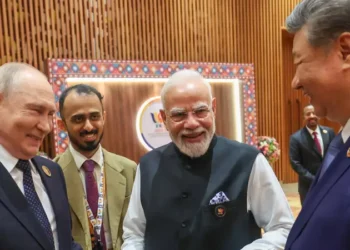
For Russia, BRICS represents something even more critical: legitimacy and relevance beyond the Western sphere. Moscow understands that its future influence will increasingly depend on institutions where the West does not dominate decision-making. In that respect, BRICS provides Russia a seat at a major global table alongside India, China, Brazil, South Africa and newly-inducted members from West Asia and Africa.
The real significance of BRICS, however, lies not in summit declarations but in the gradual creation of alternative economic and financial mechanisms. Discussions on trade settlements in local currencies, expansion of the New Development Bank and reducing dependence on dollar-dominated financial systems directly serve both Indian and Russian interests.
India has already benefited enormously from discounted Russian oil despite sanctions-related payment complications. A stronger BRICS financial framework could help institutionalise such economic resilience.
Yet BRICS is also becoming a subtle arena of strategic competition, especially between India and China. Beijing sees the grouping as a vehicle for expanding Chinese influence across the Global South. India, however, wants BRICS to remain multipolar rather than China-centric. This is where Russia becomes important for New Delhi.
Moscow has traditionally supported India’s presence in multilateral institutions and often acts as a balancing factor within Eurasian geopolitics.
India advantage
Indeed, Russia may increasingly find that India, not China, offers its most stable long-term partnership in Asia. Unlike Beijing, New Delhi does not threaten Russian territory, compete in Central Asia with the same intensity or seek to dominate Moscow strategically. India offers Russia markets, technology cooperation, diplomatic balance and political credibility in the democratic world.
Still, BRICS cannot automatically become the foundation of a renewed India-Russia partnership. The grouping remains structurally weak, internally divided and lacking institutional depth. India’s border tensions with China continue to cast a shadow over BRICS unity. Moreover, New Delhi will remain cautious about any attempt to turn BRICS into an anti-Western bloc.