Blitz Bureau
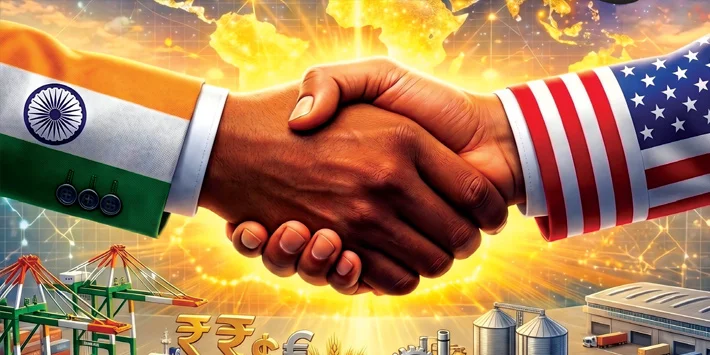
NEW DELHI: India and the United States appear to be heading closer to a breakthrough in their economic relationship, with Commerce Minister Piyush Goyal indicating recently that the first phase of a bilateral trade agreement could be finalised by mid-July.
If concluded, the India-US pact would mark an important step in strengthening commercial ties between the two countries at a time when global trade is being reshaped by geopolitical tensions, supplychain realignments, and rising protectionism.
The proposed agreement is expected to focus on improving market access for goods and services, reducing trade barriers and creating a more predictable framework for businesses operating in both countries. For India, the immediate objective is to secure greater access for its exporters in sectors such as textiles, pharmaceuticals, engineering goods, gems and jewellery, and information technology-enabled services. The United States remains one of India’s largest trading partners and a critical destination for Indian exports.
A successful trade agreement would signal that both countries are capable of overcoming long-standing differences and translating their strategic convergence into tangible economic outcomes
For Washington, the negotiations provide an opportunity to expand access to the rapidly growing Indian market. American businesses have long sought lower tariffs and fewer regulatory hurdles in sectors ranging from agriculture and medical devices to digital services and manufacturing. The challenge for negotiators lies in balancing these competing priorities while preserving the interests of domestic industries on both sides. The timing of the negotiations is particularly significant.
The global trading system is undergoing profound changes as countries seek to reduce dependence on single supply chains and diversify sources of production. India has positioned itself as a key beneficiary of this trend, presenting itself as a reliable manufacturing and investment destination. A trade agreement with the United States would reinforce that image and potentially attract greater foreign investment.
Bilateral agreement At the same time, the negotiations are unfolding against the backdrop of concerns over proposed US tariff measures that could affect several Indian exports. New tariff proposals under the Trump administration’s broader trade strategy have created uncertainty among exporters worldwide. Indian policymakers are, therefore, keen on ensuring that any bilateral agreement provides safeguards against disruptions and preserves the competitiveness of Indian products in the American market.
Beyond trade figures, the proposed pact carries strategic significance. Economic cooperation has become an increasingly important pillar of the broader India-US partnership, which already encompasses defence, technology, energy and geopolitical cooperation in the Indo-Pacific region. A successful trade agreement would signal that both countries are capable of overcoming long-standing differences and translating their strategic convergence into tangible economic outcomes.