Madhurendra Sinha
Gold had been on a roller coaster with prices going up and down frequently. The US-Iran war and events in the US economy fuelled the precious commodity’s demand to the highest level, resulting in its prices going up sharply a few weeks back. .
In a gold hungry country like India, where 90 per cent of the gold is imported, the price spurt was a shocking reality. In the month of January, it went up to Rs 1,69, 349 per 10 grammes keeping jewelers and bullion merchants clueless. International price of gold was soaring and the dollar was getting costlier, resulting in higher prices of gold.
Between June 2025 and June 2026, the price rose from $3,303 to $4,008 per troy ounce. This dramatic increase raised a pertinent question: where will gold go in 2026? Analysts believed it will hold its value and the prices may even go up this year due to the ongoing worldwide conflicts and economic uncertainty.
Experts surprised
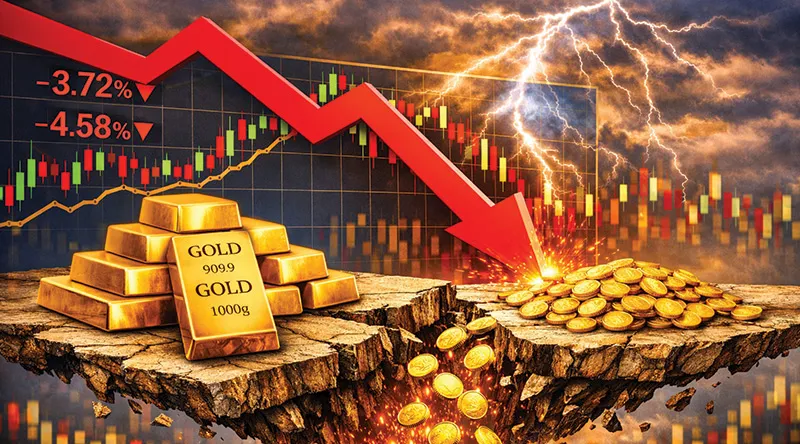
But what happened in the following months surprised even experts – the prices started going down. After touching a new high, gold prices have shown a sharp volatility and declined significantly despite rising geopolitical tensions. It has fallen over 15 per cent since late February. This unusual trend is driven by a stronger US dollar, elevated crude oil prices, and expectations of prolonged high interest rates.
One of the main reasons why it had become costly in India was that the Government, worried by its massive imports, imposed 9 per cent extra duty. That dampened market sentiment. And coupled with Prime Minister Narendra Modi’s appeal to avoid buying gold, its sales fell by 70 per cent, giving jewellers and bullion merchants sleepless nights.
Yogesh Singhal President of All Bullion and Jewelers Association, Kucha Mahajani, Delhi, says that because of heavy duty imposed by the Government, sales have come down to 20 per cent and there is a very little chance of going back to the previous levels. That, he says, is because there is no auspicious saya for weddings from July-end to November.
Selling at premium
Interestingly, instead of buying gold, people with surplus stock are snow selling it at more than ten times the purchase price making huge profits. According to reports, nearly 50 tonnes of gold was sold during the April-June quarter, which is 43 per cent higher than the corresponding period last year.
Indian households own nearly 30,000 tonnes of gold, which gives a major opportunity to improve resource utilisation and reduce dependence on imports. But despite having one of the largest private gold reserves globally, a significant portion remains idle.
Gold prices have fallen over 15 per cent since late February. This unusual trend is driven by a stronger US dollar, elevated crude oil prices, and expectations of prolonged high interest rates