Blitz Bureau
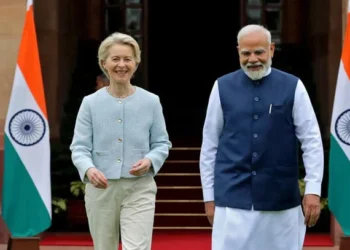
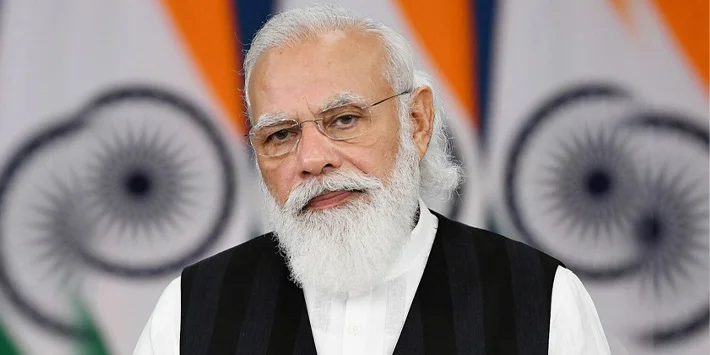
NEW DELHI: Prime Minister Narendra Modi settled into Auckland on Friday evening for the first visit by an Indian prime minister to New Zealand in nearly four decades, the closing leg of a three-nation Indo-Pacific tour that has already taken in Indonesia and Australia. Formal bilateral talks with Prime Minister Christopher Luxon are set for Saturday, alongside a business forum showcasing sectors of mutual interest and a large Indian-community event.
Both leaders have called the visit historic. Its purpose is practical: to convert a free-trade agreement signed in April into orders and investment. New Zealand grants duty-free access to the whole of India’s export basket, while tariffs on roughly 95% of New Zealand’s goods sold to India are to be cut or removed over a phase-in. Wellington has signalled it will promote up to US$20 billion of investment into India over 15 years, with New Delhi setting up a dedicated “single desk” to speed clearances.
The signatures are done; the prize now is follow-through — turning duty-free access and an investment pledge into orders, projects and jobs on both sides.
At a Glance
- Visit: First by an Indian PM to New Zealand in ~40 years (Jul 10–11)
- Talks: Formal bilateral with PM Luxon on Saturday
- Access: 100% duty-free for Indian goods; ~95% of NZ exports covered over phase-in
- Investment: Up to US$20bn NZ-promoted into India over 15 years
The stop caps an unusually busy stretch of trade diplomacy. It sits alongside a fast-widening web of agreements — the India–UK pact live on July 15, an interim deal with the United States in its final stretch, and a concluded agreement with the European Union heading for signature. Read together, they position India as a dependable partner spreading its trade across many markets rather than leaning on any one.
The constructive task now is delivery: customs facilitation, mutual recognition of standards and practical hand-holding for smaller exporters, so the agreement is felt on the factory floor and the farm and not only in the communiqué. Handled well, a landmark first visit becomes the start of a working economic partnership rather than a diplomatic milestone alone.