Blitz Bureau
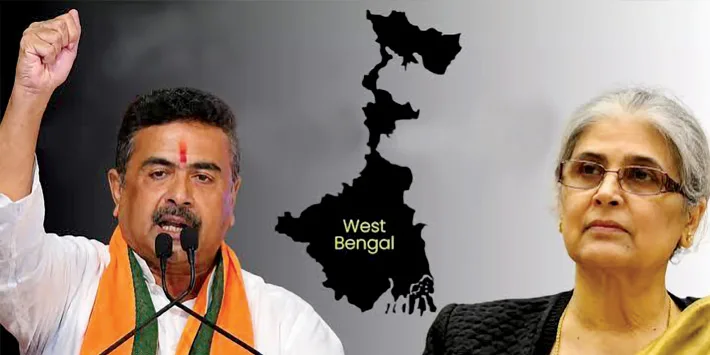
The draft of the Uniform Civil Code, West Bengal, 2026, aiming to implement a uniform civil code in the state, was cleared at a meeting of the state Cabinet recently, which was chaired by Chief Minister Suvendu Adhikari.
“Now the draft Bill will be sent to a newly constituted committee headed by former Supreme Court judge Justice Ranjana Prakash Desai (retired), for examination. Following the recommendations of the high-powered committee that will be received within the next four weeks, the final Bill will be drafted and tabled on the Àoor of the Assembly in August this year,” according to a Cabinet source.
While addressing the Assembly earlier on June 29, the Chief Minister had said that the state’s tribals, indigenous people, Kurmis and other recognised ancient tribal communities will be kept outside the purview of the proposed law.
In this regard, Adhikari clarified that the exception is being made following the model adopted by Uttarakhand and Gujarat.
The main purpose of the Bill is to implement a single law across the state, instead of having separate personal laws on the basis of religion. Once implemented, West Bengal will be the fourth Indian state to implement UCC after Gujarat, Uttarakhand and Assam.
At the same time, at the meeting, the Chief Minister directed all departments to go for strict cost-control measures and stop all avoidable departmental expenditure. “The Chief Minister strictly instructed that non-eligible people should be immediately excluded from various social welfare projects and thus ensure cost curtailment and bring ease in running those projects,” he said.
“The Cabinet also approved a proposal for perpetual transfer of government-vested land in diႇerent districts in favour of the Border Security Force (BSF) and Sashastra Seema Bal (SSB) for various purposes like construction of border outposts, border fencing and road construction, among others,” said sources.
The Cabinet also cleared a proposal for the creation of nine additional fast-track courts in nine districts of the state and also approved the creation of 35 posts for these courts.