Blitz Bureau
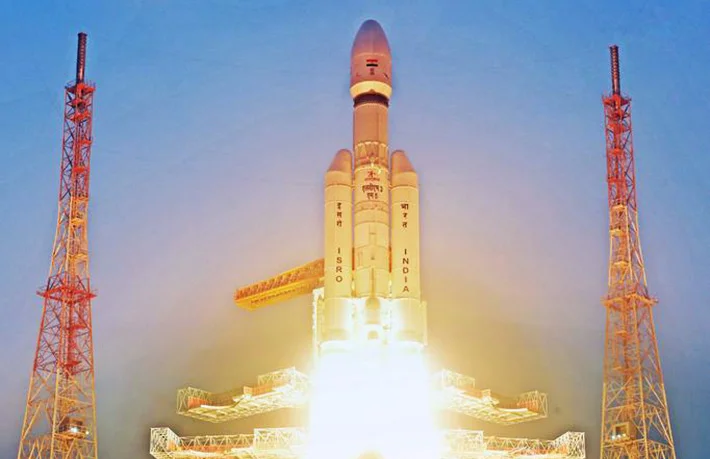
NEW DELHI: Every space programme is measured not by the launches that go right, but by how it comes back from the ones that go wrong. India’s is now in exactly that phase. After the Polar Satellite Launch Vehicle — the dependable rocket that has carried the bulk of India’s satellites for three decades — suffered a third-stage failure on its first flight of 2026 in January, the Indian Space Research Organisation has spent the months since rebuilding, retesting and, by the government’s own account, changing vendors for critical components to be certain the fix holds.
The stakes are more than sentimental. ISRO has pencilled in a heavy calendar of some 18 launches across 2026, several of them for private Indian space companies now flying payloads of their own. Union Minister of State for Science Dr Jitendra Singh has said the agency is targeting a return-to-flight for the PSLV around the middle of the year, treating the mission less as a routine outing than as a public act of confidence-building for customers at home and abroad.
A reliable rocket is national infrastructure. Getting the PSLV flying cleanly again matters as much to India’s ambitions as any single new mission on the board.
What comes next is genuinely ambitious. High on the manifest is GISAT-1A, a geo-imaging satellite designed to sit in geostationary orbit and keep a near-constant watch over the subcontinent — the kind of eye that speeds up disaster response when a cyclone or flood strikes. Further out sit TRISHNA, a thermal-imaging Earth-observation satellite built jointly with the French space agency CNES to track water stress and land surface temperature, and the crewed Gaganyaan programme, whose remaining uncrewed test flights ISRO hopes to complete before the year is out.
The honest picture is of a programme absorbing a setback in full public view — and that openness is itself a strength. The constructive read is that India has the launch cadence, the deep engineering bench and, increasingly, a private industry to share the load; each careful, successful flight from here rebuilds the reliability record on which a bigger space economy will stand. The way forward is patience over spectacle: fly, prove, repeat.