Blitz Bureau
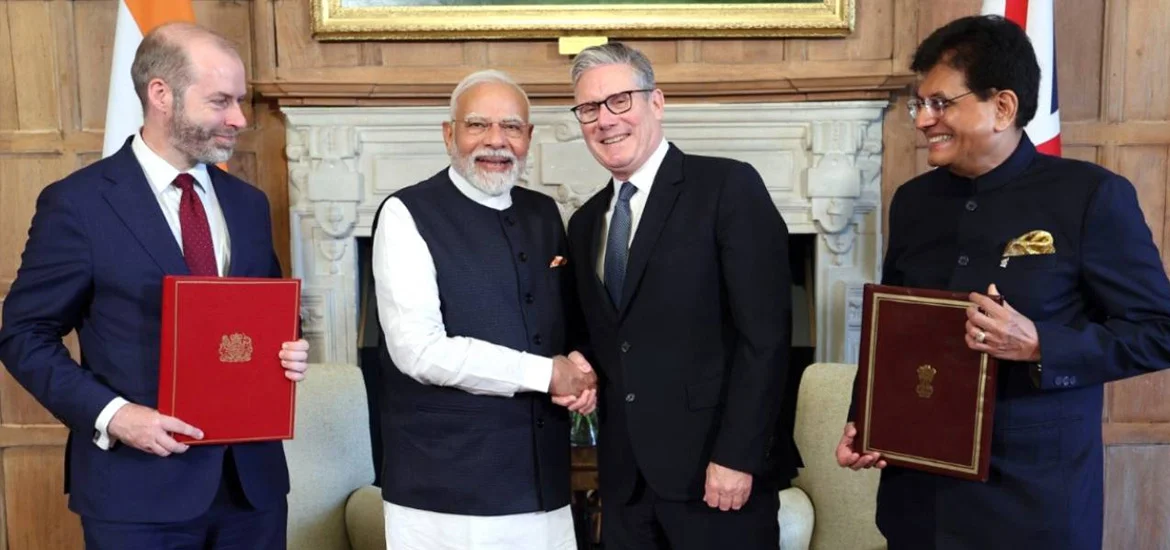
NEW DELHI: India’s largest trade agreement in years switches on this Wednesday. The India–United Kingdom Comprehensive Economic and Trade Agreement enters into force on July 15, alongside a companion Double Contribution Convention on social security — a pairing that lowers tariffs at the border and, less noticed, lightens the deductions on the payslips of Indian professionals posted to Britain.
On goods, Britain removes duties on about 99% of Indian tariff lines from day one, stripping away levies of up to 70% on some processed foods, around 21.5% on marine products, 18% on engineering goods and auto components, 16% on leather and footwear and 12% on textiles and clothing. On the services side, the Double Contribution Convention exempts Indian workers on temporary UK assignments from paying into two social-security systems at once, with the exemption window widened from three years to five — a direct saving for staff and the companies that send them.
The tariff cut makes the headlines; the social-security convention quietly changes the maths for every Indian firm sending people to Britain.
The pact is one link in a widening chain. India and the United States are in the final stretch of an interim agreement, with negotiators describing themselves as “very close” ahead of a US tariff step due on July 24, while a concluded India–EU deal moves toward signature. Taken together, they are redrawing the map of where Indian exporters can sell on favourable terms.
The constructive task now is uptake. A trade deal only pays when small and mid-sized firms can actually use it, so the way forward runs through clear rules-of-origin guidance, mutual recognition of standards and export finance that reaches beyond the largest houses. Handled well, July 15 becomes the day India’s smaller exporters — and its travelling professionals — feel the benefit directly.