Blitz Bureau
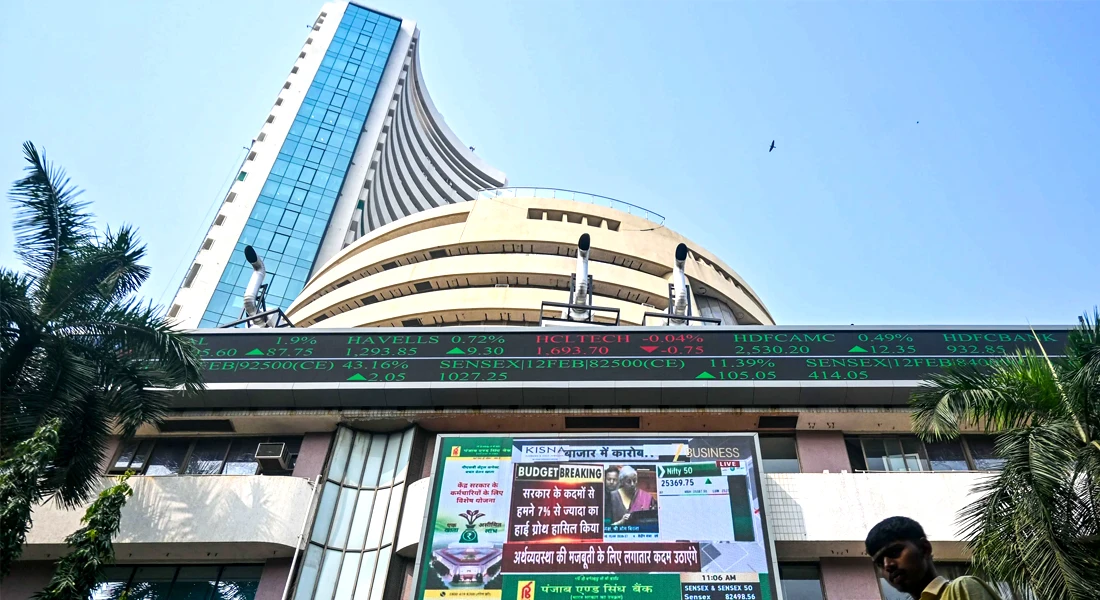
NEW DELHI: India’s markets took a breather on Thursday. The Sensex ended virtually unchanged at 77,186.87, while the Nifty 50 slipped a marginal 5.75 points to 24,072.75 — a flat close that, after an oil-pressured week, counted as calm. Positive global cues supported an early rally that the indices later handed back, with buying in aviation, select technology and consumer names balancing weakness in banking and defence stocks.
The currency did the day’s real moving. The rupee weakened eight paise to close at 96.33 to the dollar, pressured by West Asia tensions, firm crude and foreign-investor outflows, trading in a narrow 96.22–96.37 band. Brent, by contrast, eased to about $84.63 a barrel even after US forces struck Iranian military assets near the Strait of Hormuz — a sign that markets are, for now, pricing the risk premium rather than a supply break.
A flat close on a week of live oil headlines is not indecision. It is a market absorbing an external shock through the currency while equity fundamentals hold.
The home calendar kept its own rhythm beneath the geopolitics. Wipro opened the heavyweight leg of earnings season, the ₹9,813-crore SBI Funds Management IPO closed heavily oversubscribed, and June retail inflation printed inside the Reserve Bank’s tolerance band — each a reminder that a distant strait can dominate the headlines without deciding India’s direction. Crude remains the swing variable: a durable spike would press imported inflation, while any de-escalation would quickly lift sentiment.
The constructive read for the long-term saver is familiar and sound: a single risk-off week driven by events abroad does not rewrite India’s fundamentals — sector-leading growth, inflation near target, and a deep base of domestic investors that has repeatedly cushioned foreign selling. Days like this are the price of admission for an open, oil-importing economy; breadth, quality and a patient domestic bid remain the reply.