Blitz Bureau
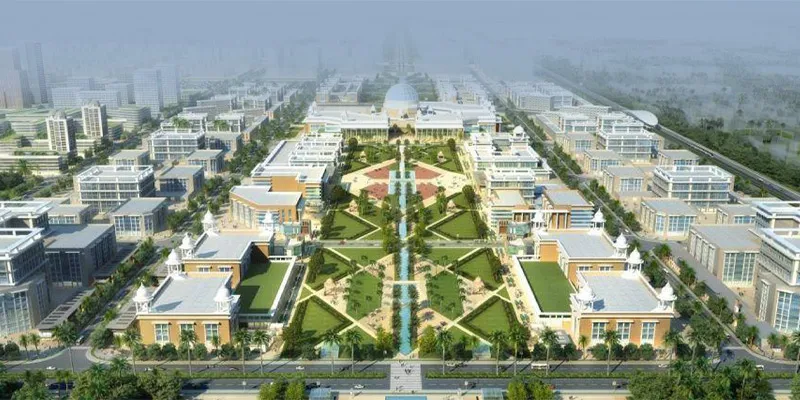
NEW DELHI: After completing foundational surveys for Andhra Pradesh’s new capital, Amaravati, the state government has moved from planning to execution.
The Amaravati Economic Region (AER) is a regional development plan centred on the new capital. It covers nine districts—West Godavari, Eluru, Krishna, NTR, Guntur, Bapatla, Palnadu, Markapuram and Prakasam— which together account for about one-third of the state’s population and area. The plan aims to connect Amaravati with industries such as agriculture, aquaculture, food processing and manufacturing across the region.
Last week, the Andhra Pradesh Capital Region Development Authority (APCRDA) took a series of decisions such as enhancing compensation to resolve land disputes and tightening legal measures to implement the project.
The project, estimated to cost over ₹40,000 crore, is being funded through a mix of international loans, domestic financial institutions and Central government support. Funding includes loans from the World Bank and the Asian Development Bank (ADB), financing from NaBFID, HUDCO and NABARD, and a ₹15,000 crore special assistance package from the Centre.
Most of the land was secured through the Land Pooling Scheme (LPS) instead of conventional land acquisition. Under the scheme, around 29,700 farmers pooled about 33,000 acres of land in return for developed residential and commercial plots, along with other benefits.
The government plans to develop Amaravati through 25 planned townships spread across about 217 sq km. It says each township will have schools, hospitals and other essential public facilities. The APCRDA has approved ₹159 crore in compensation to resolve land ownership issues affecting 307 acres earmarked for the proposed International Sports City and has set aside land for educational, cultural and other institutions.
PROJECT DELAYED
After coming to power in 2019, the Yuvajana Sramika Rythu Congress Party (YSRCP) government proposed a three-capital model, with Visakhapatnam as the executive capital, Amaravati as the legislative capital and Kurnool as the judicial capital. The policy shift led to legal disputes, halted construction, protests by farmers who had pooled land, and delays in funding. Some international funding commitments were also put on hold during this period.
According to APCRDA data as of June 27, 2026, construction is behind schedule. Across 95 ongoing projects worth nearly ₹51,000 crore, physical progress stood at about 18 per cent, against a planned target of nearly 45 per cent.