UPSC at 100: a century written in judgements
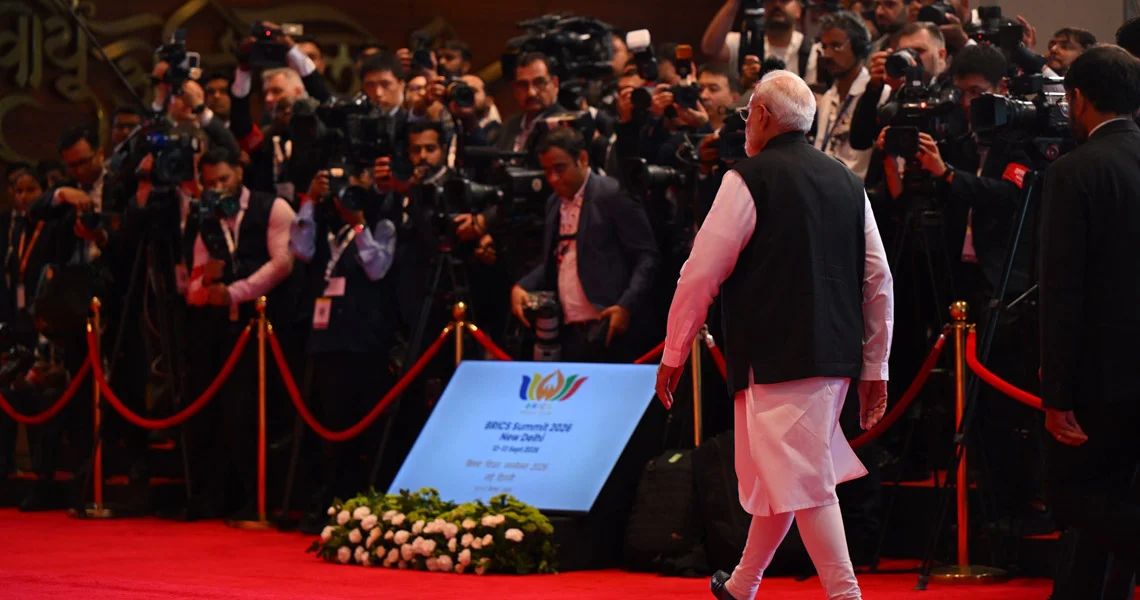
New Delhi, 1 October The Union Public Service Commission completes its hundredth year, and Prime Minister Narendra Modi will releasesa coin, a stamp and a book of judgements to mark it. According to the Prime Minister’s Office, the book titled, 100 Landmark Judgements — Shaping the Policies of UPSC and Public Service Commissions in India, is a collection of a century of courts telling the commission where its discretion ends.
That is a telling way for an examining body to celebrate. Most institutions at a hundred publish a list of their alumni. This one is publishing a list of the times it was corrected.
The commission was established in 1926, and the year-long centenary observance began on 1 October 2025, according to the commission’s own announcement carried by the Press Information Bureau. The two-day closing programme opened on 30 September 2026 with Shatabdi Samaroh — Manthan at the same venue, with panel discussions and addresses, and the Prime Minister’s Office says the chairmen and members of the State Public Service Commissions are in the hall alongside officers, academics and the commission’s own staff.
The presence of the State commissions is the part worth watching. There are more than two dozen of them, and between them they recruit far more people into Indian public service every year than the Union commission does. A judgement that binds the UPSC on how it frames a question, or how it treats a disability certificate, or how long a waiting list stays alive, lands on all of them.
At a glance
Union Public Service Commission established: 1926
Centenary year opened: 1 October 2025
Closing programme: 30 September and 1 October 2026, Bharat Mandapam, New Delhi
Released by the Prime Minister: a commemorative coin, a commemorative stamp, one book
Book title: 100 Landmark Judgements — Shaping the Policies of UPSC and Public Service Commissions in India
What India gains
A recruiting institution of a hundred years publishing the case law that limits its own discretion, in front of every State commission that follows its practice.
Pharma R&D draws Rs 4,620 crore
New Delhi, 1 October The Department of Pharmaceuticals has cleared 41 projects in the first round of its research scheme, and the number that matters is not the one in the headline of its release. According to the Department’s release of 30 September 2026, public support of about ₹1,600 crore is expected to bring ₹3,020 crore of private money behind it, for a total research outlay of about ₹4,620 crore. That is ₹1.89 of private money for every rupee of public money — a figure this desk worked out from the two the release prints, and one the release itself does not state.
For a sector whose complaint for twenty years has been that Indian pharmaceutical companies make other people’s molecules cheaply and discover none of their own, the ratio is the news.
Of the 41 cleared projects, 27 are in new drugs, nine in new medical devices and five in complex generics and biosimilars, the Department’s release states — new drugs therefore taking 65.9% of the approvals, on this desk’s calculation. Nineteen projects are being run by startups and small and medium enterprises against 22 by large companies, which puts the smaller firms at 46.3% of the portfolio. Twelve projects sit at an early stage and 29 at a later one. Average public support works out to ₹39 crore a project.
The named recipients span the industry: Biocon, Bharat Biotech, Sun Pharma, Wockhardt, Zydus and Mankind Pharma alongside Pandorum Technologies, Cellogen Therapeutics, Aurigene Oncology and Bugworks Research.
At a glance
Public support approved, round one: about ₹1,600 crore
Private investment expected to follow: ₹3,020 crore
Total research and development outlay: about ₹4,620 crore
Projects approved: 41 — 12 at an early stage, 29 at a later stage
By priority area: 27 new drugs, nine medical devices, five complex generics and biosimilars
By firm size: 19 run by startups and MSMEs, 22 by large companies
Cleared under the strategic priority framework: six
What India gains
A pharmaceutical industry that has grown on volume putting private capital behind original discovery, with a domestic tuberculosis vaccine candidate among the six highest-priority projects.
1891 law out, digital banking evidence in
New Delhi, 1 October The Bankers’ Books Evidence Act, 2026 comes into force today, replacing the Act of 1891, according to Akashvani’s report of 1 October 2026. The old law had stood on the statute book for 135 years, on this desk’s count, and it was written for ledgers kept in ink. The new one is technology-neutral: it recognises banking records held in physical, electronic, digital, virtual and cloud-based forms, and it says plainly that an electronic or digital record of a banker’s book is admissible, valid and legally enforceable as evidence. Certification is standardised, and may be by manual, digital or electronic signature. The Act received the President’s assent on 13 August 2026 and takes effect 49 days later.
Two mineral blocks go under the hammer
New Delhi, 1 October The Ministry of Mines launches the auction of offshore mineral blocks today, Akashvani reported on 1 October 2026, offering two blocks in the Andaman Sea region for the grant of a composite licence. The Ministry says the step is towards opening up India’s offshore mineral potential and strengthening long-term mineral resource security, and that it expects the auction to draw investment and advanced exploration technology.
A composite licence runs exploration and production together, which is what a bidder needs when nobody yet knows what is down there. India imports almost every mineral the battery and magnet industries use. Two blocks will not change that. A domestic offshore exploration industry, begun somewhere, might.
Garment exporters get three months more of RoSCTL relief
New Delhi, 1 October The Ministry of Textiles has extended the RoSCTL scheme for garment and made-up exports by three months, to 31 December 2026, at existing rates and under prevailing guidelines, according to its release of 30 September 2026. The scheme has run since 7 March 2019 and rebates embedded State and central taxes that no other route refunds — the zero-rating principle, so that a domestic tax does not travel abroad inside the price of an Indian shirt.
Delhi September air turns five- year better
New Delhi, 1 October Delhi’s monthly average Air Quality Index for September 2026 was 102, the lowest for that month in five years, according to the Ministry of Environment, Forest and Climate Change release of 30 September 2026. The comparison the Ministry prints runs 105 in 2025, 105 in 2024, 108 in 2023 and 104 in 2022.
At a glance
Delhi monthly average AQI, September 2026: 102
Days with daily average AQI under 200, January to September 2026: 194
Days in the poor-to-severe-plus band, January to September 2026: 79
Average PM2.5, January to 28 September 2026: 69 µg/m³
What India gains
Forty-eight more breathable days in the capital’s working year than four years ago, measured on the same index at the same stations.
India’s coast gets a Rs 767 cr protection push
New Delhi, 1 OctoberEnvironment Minister Bhupender Yadav released the implementation guidelines for the National Coastal Mission 2.0 in New Delhi on 30 September 2026, according to the Ministry of Environment, Forest and Climate Change release of that date. The central sector scheme carries an approved outlay of ₹767 crore and runs to 2030-31 across nine coastal States and four Union Territories.
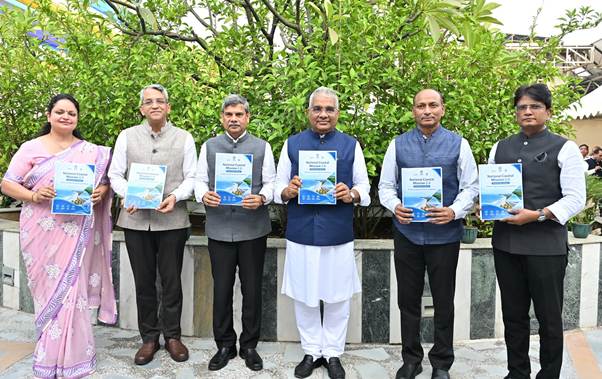
The mission covers risk assessment, ecosystem restoration, pollution management, biodiversity conservation, sustainable tourism, spatial planning, research and capacity building, the Minister said at the release. Across 13 coastal States and Union Territories the outlay averages ₹59 crore each, or ₹153 crore a year over five years, on this desk’s calculation — modest money for a coastline of this length, which is why the guidelines insist on convergence with schemes already running.
Modi, Trump speak on trade, defence and tech
New Delhi, 1 October Prime Minister Narendra Modi spoke to United States President Donald Trump over the phone on 30 September, the Prime Minister’s Office said, The two reviewed bilateral cooperation in trade, defence, energy and critical technologies, reaffirmed their commitment to the India-United States Comprehensive Global Strategic Partnership, exchanged views on regional and international developments, and agreed to stay in touch.
The call sits alongside the working level. Commerce Minister Piyush Goyal met United States Trade Representative Jamieson Greer on the sidelines of the G20 Trade Ministerial in Milwaukee, Akashvani reported on 1 October 2026, as part of efforts to reach a balanced and mutually beneficial trade agreement. Leaders reviewing four tracks on the phone while the trade ministers meet in person is the shape a negotiation takes when it is close.
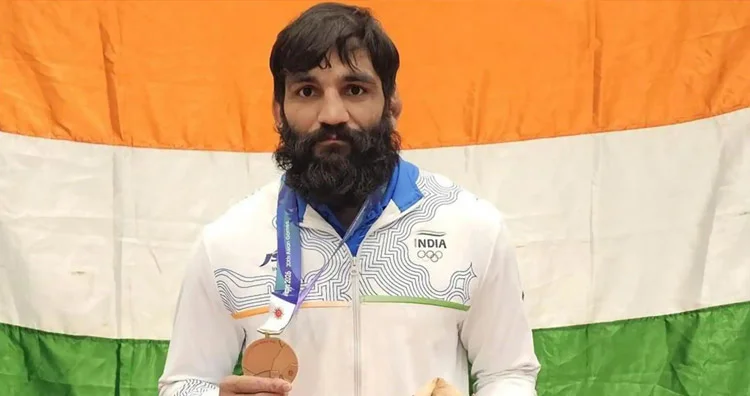
Sunil Kumar wrestles to Asian Games bronze
New Delhi, 1 October Sunil Kumar took bronze in the men’s Greco-Roman 87kg event at the Asian Games, and the Prime Minister’s Office recorded the win in a release of 30 September 2026 and a post from @PMOIndia the same day. “He secured the podium in the Men’s Greco-Roman 87kg event with a convincing win, matching his 2022 finish,” the post said. “Congratulations, Sunil! A fine performance and a proud moment for Indian wrestling.”
India-US trade talks move from table to text
Milwaukee, 1 October Commerce Minister Piyush Goyal met United States Trade Representative Jamieson Greer on the sidelines of the G20 Trade Ministerial in Milwaukee. This is as part of efforts by India and the United States to reach a balanced and mutually beneficial trade agreement. The Commerce Ministry had set out its position ahead of the visit.
A trade ministerial is where the text gets drafted. What India needs out of it is settled tariff treatment for the labour-intensive exports — garments, leather, gems — that employ the most people per crore of turnover.
India builds 1,000km quantum-secure network
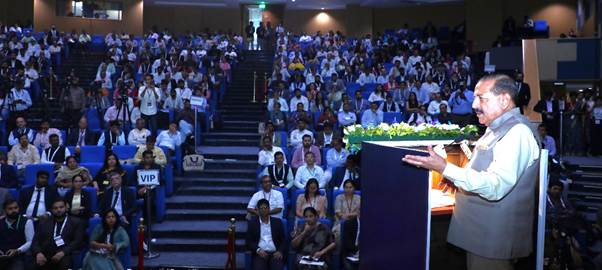
New Delhi, 1 October India has built 1,000 km of quantum-secure communication in about three years, against a target of 2,000 km set for an eight-year mission, Minister of State for Science and Technology Jitendra Singh said at Pragati Q-Foundry 2026 in New Delhi on 30 September 2026, according to the Ministry of Science and Technology release of that date. Half the distance in 37.5% of the time, on this desk’s arithmetic.
Jitendra Singh’s own framing was commercial rather than scientific: he asked the States to evaluate and procure what the startups have built, because quantum ventures need capital and a long commitment, and an early industry link is what keeps them alive. Sood made the same point about procurement. When the Minister and the Principal Scientific Adviser both say the gap is a buyer, the gap is a buyer.
At a glance
Quantum-secure communication built: 1,000 km
Mission target: 2,000 km over eight years
Time taken so far: about three years
Thematic hubs: four — IISc Bengaluru, IIT Madras, IIT Bombay, IIT Delhi
Researchers: 152, from 43 institutions across 17 States and two Union Territories
Startups supported: 26, up from 17, with nine announced on 30 September 2026
Technologies out of the hubs: about 52, at varying technology readiness levels
Demonstrated: a hybrid PQC-QKD link, Chennai to Bengaluru, 17 secure nodes, on BSNL fibre
What India gains
A quantum-secure link proved on telecom fibre the country already owns, which turns a national rollout from a construction project into an equipment purchase.
CAG goes AI: new tool brings multilingual translation to audit
New Delhi, 1 October The Office of the Comptroller and Auditor General of India and the Digital India BHASHINI Division launched CAG-BHASHINI Anuvaad in New Delhi on 30 September, This is an artificial-intelligence document translation platform, according to the Ministry of Electronics and Information Technology statement.