Blitz Bureau
NEW DELHI: For decades, the conservation narrative in India was etched in stone: wildlife reserves were ‘fortresses’, and human presence was treated as an ecological intrusion. But today that rigid boundary is dissolving.
On July 10, Union Environment, Forest and Climate Change Minister Bhupender Yadav inaugurated a Centre of Excellence (CoE) on Human-Wildlife Conflict at the Wildlife Institute of India-Salim Ali Centre for Ornithology and Natural History (WII-Sacon), Coimbatore, and launched the National Human-Wildlife Conflict Portal.
The CoE was announced by Prime Minister Narendra Modi during the seventh meeting of the National Board for Wildlife held at Gir National Park in Gujarat on March 3, 2025, on the occasion of World Wildlife Day. It will serve as a national hub for research, innovation, policy support, capacity building and dissemination of best practices for scientific and evidence-based management of human-wildlife conflict.
A fundamental shift
With this, India is signalling a fundamental shift. It is moving away from the binary of ‘man versus wild; towards a more complex, nuanced model of managed coexistence. Human-wildlife conflict has emerged as one of India’s major conservation and development challenges due to increasing interactions between people and wildlife caused by habitat fragmentation, changing land-use patterns and expanding human activities.
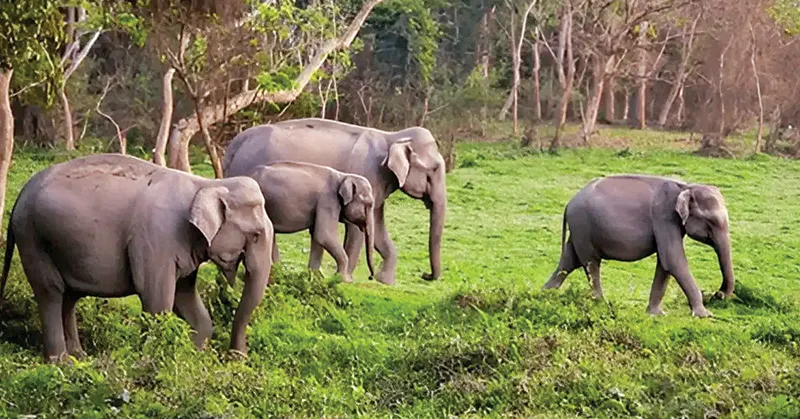
The data fuelling this shift is sober. Between 2019 and 2024, human-elephant conflicts claimed over 2,700 lives, while tigers were responsible for 349 fatalities. As India’s forest cover – now standing at approximately 25.17 per cent of its geographical area – attempts to balance infrastructure development with ecological preservation, the rising frequency of human-wildlife encounters has become both a conservation emergency and a socio-economic crisis.
The mantra today is simple: Coexistence is the only path to ecological sustainability.
Tribal vanguard
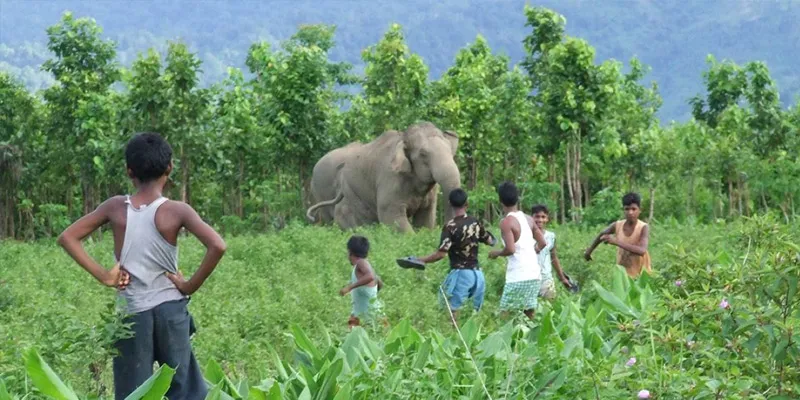
At the heart of this transition are India’s indigenous communities. Often mischaracterised as ‘encroachers’ by colonial-era forestry models, tribal and local communities are now being recognised as the most effective stewards of natural resources. They are the ‘eyes, ears, and voice’ of the forest corridors.
Programmes like the ‘Green Corridor Champions’ of the Wildlife Trust of India (WTI) are moving beyond simple patrolling. They empower local gram sabhas to manage forest resources, providing the traditional ecological knowledge that AI-based sensor systems often lack.
For instance, with the aim of strengthening community-based engagement, the members of Corbett Gram Vikas Samiti (CGVS) were trained and deployed as the Green Corridor Champions in September 2018 for monitoring Fatehpur-Gadgadia corridor, one of the 11 elephant corridors identified in the state of Uttarakhand.
Since then, the CGVS in partnership with WTI has been actively working to not only monitor the movement of elephants and other wildlife inside the corridor, but to also sensitise, motivate and mobilise local communities, school children and relevant authorities on the importance of giving the ‘right of passage’ to national heritage animal – the Asian elephant and protecting its habitat.

A sense of pride
According to Paridhi Jain of WTI, a fairly large population inhabiting concrete jungles often fails to realise the importance of conservation. Working together towards the shared vision for a more secure and resilient future to keep the wild lands ‘wild’ along with these local and indigenous people will not only drive conservation initiatives but also empower these communities by creating a sense of pride and ownership amongst them.
By formalising their role through the Forest Rights Act (FRA) and Biodiversity Management Committees (BMCs), India is turning traditional knowledge into a formal pillar of modern wildlife management. It’s a move toward ‘biocultural rights’ – acknowledging that the forest is not just a collection of trees and animals, but a lived territory for millions.
The move toward coexistence isn’t just cultural; it is industrial. The newly launched National Human-Wildlife Conflict Portal is a game-changer in data transparency. It allows forest officials and local communities to track movement patterns of conflict-prone species in real-time.
Precision conservation
When an elephant herd approaches a village, local farmers no longer rely on panicked whistles or firecrackers. They receive automated alerts on their mobile devices, triggered by AI-integrated camera traps and vibration sensors along the corridors.
This ‘precision conservation’ allows farmers to shift their agricultural patterns – planting non-palatable crops like lemongrass or chili – thereby reducing crop raiding and economic loss. By blending the wisdom of the tribe with the data of the machine, India is finally building a sustainable buffer zone where both wildlife and humanity can thrive.
Often mischaracterised as ‘encroachers’ by colonial-era forestry models, tribal and local communities are now being recognised as the most effective stewards of natural resources. They are the ‘eyes, ears, and voice’ of the forest corridors