Blitz Bureau
NEW DELHI: The number that framed India’s Friday was set far from any trading floor: Brent crude pushed above $100 a barrel for the first time since May, its highest in more than two months, as fresh tension across the Middle East squeezed the world’s most important supply lanes. For a country that imports the overwhelming majority of the oil it burns, a triple-digit crude price is never just a headline abroad — it is a line in the national budget, a nudge to inflation and a test of nerve for markets. Indian equities felt it at the open, with the Sensex starting the session about 683 points lower and the Nifty slipping below 23,700.
The drivers are geopolitical rather than about demand. A renewed flare-up between Washington and Tehran, together with attacks by Yemen’s Houthi movement on shipping near the Bab el-Mandeb strait, has revived fears over the Strait of Hormuz, the narrow channel through which a large slice of the world’s seaborne oil passes. As a precaution, Indian state refiners are reported to have paused some Iraqi crude loadings routed through Hormuz — a prudent, temporary step while the risk is assessed. Asian markets moved in sympathy, with Tokyo’s Nikkei down more than 3% and other regional indices lower.
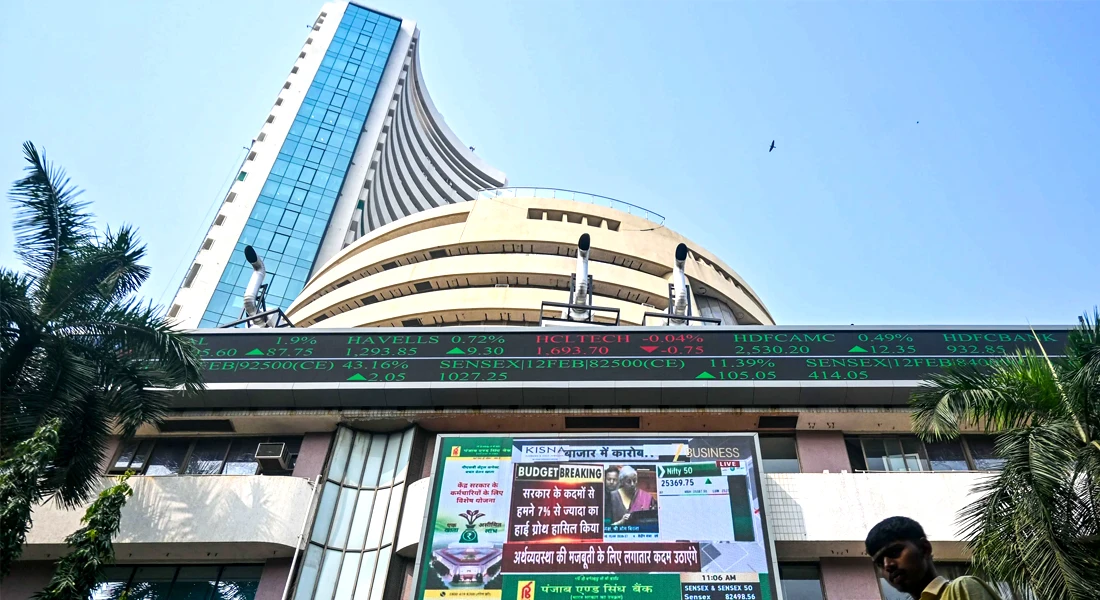
A distant tension, a domestic price: Brent crude topped $100 a barrel on Middle East supply worries, and Indian shares opened sharply lower on Friday — the Sensex down about 683 points and the Nifty below 23,700 — a reminder of how quickly an oil shock travels to Dalal Street.
An oil-importing economy cannot choose the world’s crude price. What it can choose is how well it is prepared for the day the price jumps — and how fast it builds the alternatives.
At a Glance
• Crude: Brent above $100/bbl, the highest since May
• Trigger: Middle East tension — US–Iran friction and Red Sea shipping risk
• Markets: Sensex ~683 pts lower, Nifty below 23,700 at Friday’s open
• Prudence: Indian refiners pause some Hormuz-routed Iraqi cargoes as a precaution
It helps to keep proportion. India today is far better cushioned against an oil shock than it was a decade ago: foreign-exchange reserves stand near record levels, the central bank has been reinforcing its external defences pre-emptively, and a large and growing domestic investor base has repeatedly absorbed bouts of foreign selling. A price spike driven by a supply scare, rather than by runaway global demand, also tends to ease once the immediate risk passes and diplomacy does its work. The market’s move on Friday looks like a repricing on real news, not a loss of faith in the India story.
The constructive way forward runs on two tracks. In the near term, India’s diversified crude sourcing, comfortable reserves and steady monetary hand give it room to ride out the volatility without panic. Over the longer term, every unit of energy India generates at home — from a swelling fleet of solar and wind farms to a fast-growing market for electric vehicles — is a unit it need not buy at the world’s mercy. A $100 morning is an uncomfortable reminder of an old dependence; it is also the clearest possible argument for the clean-energy build-out that is steadily loosening its grip.