Blitz Bureau
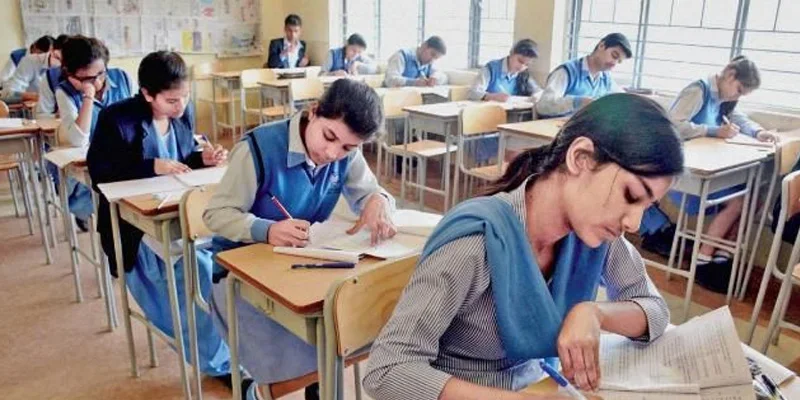
NEW DELHI: Strip this week’s events of their immediate politics and a permanent engineering problem remains, one India will be solving long after the current dispute is settled. How do you administer a single high-stakes examination to more than twenty million young people spread across every district of a subcontinent, on one day, with identical difficulty and absolute security — and do it every year? Very few countries attempt anything on this scale. The difficulty is not a failure of intent; it is a genuine problem in logistics, cryptography and institutional design, and it deserves to be understood as such.
The vulnerability is structural rather than mysterious. A single paper printed once and physically transported to thousands of centres creates an extended chain of custody in which every additional handler is an additional point of exposure. This is precisely why the reform conversation has converged on computer-based testing, which replaces one paper with a large calibrated question bank from which individualised sets are drawn — removing the object that can be stolen in advance. It is why the Supreme Court has asked specifically about the transition to CBT, and why it paired the question with data protection and cybersecurity: the reform substitutes a physical risk for a digital one, and the digital one must be engineered with equal seriousness.
The scale problem: A single high-stakes examination sat by more than twenty million candidates creates a chain of custody thousands of centres long — the structural reason reform has converged on computer-based testing drawn from calibrated question banks.
A leak is not merely a crime against an examination. It is a tax levied on every honest candidate who prepared for two years and asked only for a level floor.
The Long View
• The scale: a single-day national examination for over twenty million candidates
• The weak point: long physical chains of custody for printed papers
• The proposed fix: computer-based testing from large calibrated question banks
• The new requirement: cybersecurity, data protection and centre-level auditing
An honest account must name what CBT does not solve on its own. Item-response calibration has to be good enough that a candidate drawing one set is neither advantaged nor penalised against another — a hard psychometric problem, and the one that determines whether the system is genuinely fair. Centres need reliable power, connectivity and biometric verification, which is a very different investment in a district town than in a metropolitan hub. Capacity must be large enough to seat millions within a compressed window without disadvantaging rural candidates who travel farthest. And any digital system requires continuous auditing, because the adversary adapts. These are demanding requirements, but they are all engineering requirements, and engineering requirements can be met.
The deeper structural point sits underneath the examination itself. The intensity of pressure on NEET is a symptom of scarcity: far more aspirants than medical seats, and a society that has concentrated enormous life outcomes into a single test score. Expanding quality medical education capacity, broadening credible professional pathways, and strengthening counselling and mental-health support for aspirants would each reduce the temperature around the exam regardless of how it is administered. The constructive way forward therefore runs on two tracks at once — make the examination technically unleakable, and make a young person’s future depend a little less on one morning in a hall. India is now visibly working on the first. The second is the longer, quieter project, and it matters just as much.
This report refers to student deaths in the context of an ongoing public dispute over compensation. Readers who need support can contact the Tele-MANAS national mental health helpline on 14416.