Blitz Bureau
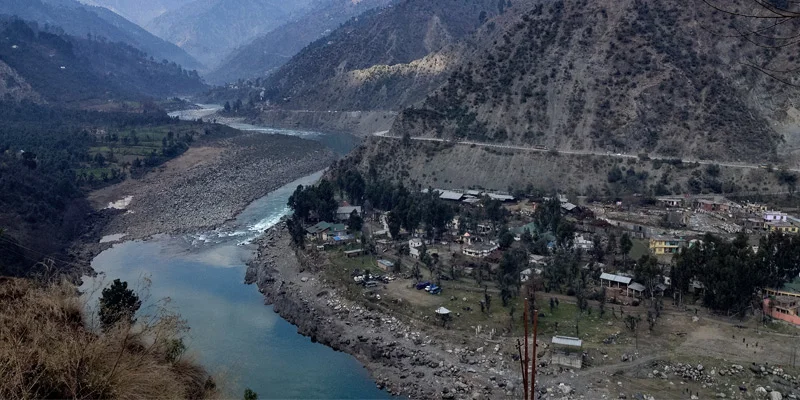
NEW DELHI: India has firmly rejected Pakistani allegations that it deliberately caused flooding downstream, describing the claims as baseless and technically untenable. Speaking on Friday, Ministry of External Affairs spokesperson Randhir Jaiswal said the recent rise in the flow of the Chenab was a direct consequence of intense monsoon rainfall over Jammu and adjoining catchment areas between July 20 and 23 — the same spell that has driven floods and landslides across India’s own northern hills.
The rebuttal rested on the strongest available ground: the other side’s own record. India noted that Pakistan’s Lahore-based Flood Forecasting Division had itself attributed the heavy discharge in the Chenab to downpours in the upper catchment. On the related charge that India had withheld flood-related information, the Ministry said the suggestion was without factual basis, and reiterated that India would share high-flood data with Pakistan on humanitarian grounds through diplomatic channels as and when a situation arises.
Rain, not intent: India has attributed the rise in Chenab flows to intense monsoon rainfall over Jammu and adjoining catchments between July 20 and 23 — noting that Pakistan’s own Flood Forecasting Division linked the discharge to upper-catchment downpours.
The most persuasive rebuttal is rarely the loudest one. Here it was a hydrograph, a rainfall record, and a citation of the other side’s own forecasting division.
At a Glance
• India’s position: allegations baseless and technically untenable
• Cause cited: intense monsoon rainfall over Jammu catchments, July 20–23
• Corroboration: Pakistan’s Lahore Flood Forecasting Division cited upper-catchment rain
• Commitment: high-flood data to be shared on humanitarian grounds
The context is a monsoon that has been hard on both sides of the boundary. The same rainfall spell that swelled the Chenab has caused loss of life and displacement across Jammu & Kashmir, Himachal Pradesh, Uttarakhand and the Northeast, with the India Meteorological Department recording extremely heavy falls over parts of Uttarakhand and Meghalaya on July 20. Rivers in this basin respond to what falls on the mountains above them, and a catchment receiving extraordinary rain produces extraordinary flows regardless of what any authority downstream or upstream would prefer.
The constructive way forward is the one India has signalled: keep the humanitarian channel open regardless of the political temperature. Flood warnings save lives on both banks, and a commitment to share high-flood data through diplomatic channels is worth honouring precisely because monsoons do not observe borders. The broader lesson belongs to the whole basin — as extreme rainfall events grow more frequent across the Himalayan region, the investment that matters is in shared meteorological understanding, better catchment forecasting and flood-resilient infrastructure. Hydrology is a poor instrument of politics and an excellent basis for cooperation.