Blitz Bureau
NEW DELHI: India goes into the seventh day of the Commonwealth Games in Glasgow with twelve medals — two gold, seven silver and three bronze — and a 122-strong squad still in contention across athletics, weightlifting, boxing and swimming. The temptation with any medal table is to read it as a story about individuals: Mirabai Chanu completing a hat-trick of Commonwealth titles, Rishikanta Singh taking silver in the men’s 60kg with a Games record in the snatch. That reading is not wrong, but it is incomplete. What has changed about Indian sport in the past eight years is not the arrival of exceptional athletes. India has always produced those. What has changed is that there is now an industrial process behind them, and its dimensions are startling when you set them out in a single place.
Consider the scale of the apparatus feeding that squad. Under the Khelo India scheme, 349 sports infrastructure projects have been approved with a combined investment of ₹3,176 crore. There are 1,067 Khelo India Centres running grassroots training, and 267 academies supported to develop athletes across disciplines. At the sharp end, 2,745 Khelo India Athletes receive coaching, equipment, medical care and a monthly out-of-pocket allowance. Talent identification, historically the weakest link in the Indian system, now runs through 174 Talent Assessment Centres that have completed 1,87,921 assessments using standardised protocols and data analytics. The Sports Ministry is working with its highest-ever allocation, ₹4,479.88 crore. The stated target is unambiguous: a place among the world’s top ten sporting nations by 2036, and the top five by 2047.
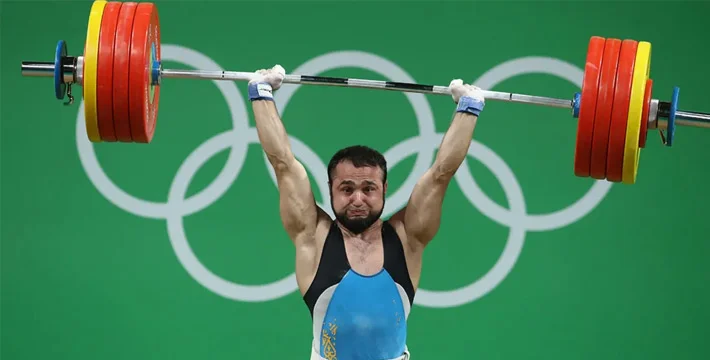
Weightlifting has become the reliable discipline: Mirabai Chanu’s third Commonwealth title and Rishikanta Singh’s record snatch came from a platform programme that now has depth across bodyweight categories rather than a single marquee name.
A medal is an event. A pipeline is a system. India spent the last decade quietly building the second so that the first would stop being a surprise.
At a Glance
• Glasgow tally: 12 medals — 2 gold, 7 silver, 3 bronze, as of July 29
• Squad: 122 Indian athletes; Games run July 23 to August 2
• Khelo India infrastructure: 349 projects approved, ₹3,176 crore committed
• Grassroots network: 1,067 Khelo India Centres; 267 supported academies; 2,745 funded athletes
• Talent identification: 174 assessment centres; 1,87,921 assessments completed
• Ministry budget: ₹4,479.88 crore — the highest ever
• Target: top-10 sporting nation by 2036; top-5 by 2047
Wednesday’s card gives that system another test in the events where India has historically been thinnest. Murali Sreeshankar and Lokesh Satyanathan contest the men’s long jump final; Manpreet Kaur is in the women’s shot put final later in the evening. Horizontal jumps and throws are precisely the disciplines that a talent-identification system built on standardised physical testing should be expected to improve, because they reward measurable attributes — speed, power, limb length, rate of force development — that an assessment centre can spot in a fifteen-year-old before any coach has met her. The results in these two finals will say more about the pipeline than the weightlifting medals do, because weightlifting was already working.
The honest challenge in the numbers is conversion. Seven silver medals against two gold is the signature of a country that has solved qualification and is still learning to win finals, and that last step is the most expensive one to buy. It is bought with international competition exposure, with overseas training blocks in the eighteen months before a Games, and with sports-science support — biomechanics, nutrition, load monitoring, psychology — delivered continuously rather than in the run-up to a major event. The constructive way to use Glasgow is therefore to treat the silver list as the most valuable document the Games produce: a named cohort of athletes who came within one attempt of the top step, each with a diagnosable reason why. Publish that analysis, fund against it, and the 2036 target stops being an aspiration and becomes a schedule.