Blitz Bureau
NEW DELHI: India’s electric car market has stopped being an experiment. Retail sales in the June quarter reached 82,011 units against 43,464 in the same quarter of 2025 — growth of 88.69%. June alone accounted for 31,823 electric cars, up 107.75% on the 15,318 sold in June 2025. Doubling is a familiar statistic in a small market. What makes this quarter different is the composition underneath it: the growth is no longer the story of one manufacturer with a head start.
Tata Motors remains the market leader, with 31,070 retail sales in the quarter, a 37.89% share, and 12,187 units in June alone at a 38.30% share — but its share is falling even as its volumes rise sharply, which is exactly what a maturing market looks like. Mahindra has taken second place with 7,766 units in June, growing 121.06% year-on-year. JSW MG sold 15,851 units across the quarter for a 19.33% share. Maruti Suzuki, the last of the volume incumbents to enter, retailed 4,741 electric vehicles in the quarter following the launch of the e Vitara.
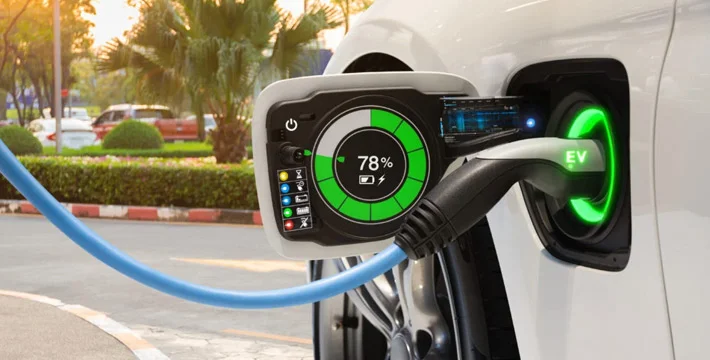
The constraint moves outside the car: with several credible models now on sale in each price band, the binding limit on Indian EV adoption is charging availability rather than choice.
A market with one strong seller is a product. A market with five is an industry — and the buyer’s calculation changes the moment the second credible option appears.
At a Glance
• Q2 2026 electric car retails: 82,011 units, up 88.69% from 43,464 a year earlier
• June 2026: 31,823 units, up 107.75% from 15,318
• Tata Motors: 31,070 units in the quarter, 37.89% share; 12,187 in June, up 126.73%
• Mahindra: 7,766 units in June, up 121.06% year-on-year
• JSW MG: 15,851 units in the quarter, 19.33% share, up 21.31%
• Maruti Suzuki: 4,741 units in the quarter, following the e Vitara launch
The economics of this shift are more consequential than the volumes. When a segment has a single dominant seller, component suppliers build to one customer’s specification and a buyer’s resale value depends on one brand’s reputation. When five manufacturers are selling in the same price bands, a domestic supply base for cells, motors, power electronics and thermal-management systems becomes viable at scale, service networks broaden, insurance and finance products get properly priced, and the second-hand market — the thing that ultimately determines whether a middle-class household will take the risk — begins to form. Maruti’s entry matters particularly for that last reason: its dealer and service footprint reaches district towns that the market’s early entrants do not.
The honest constraint is charging, and it is now the binding one. Choice is no longer the problem; confidence on a long drive is. The constructive agenda is well understood and needs execution rather than invention: reliable fast-charging at fixed intervals along the national highway network, mandatory and enforced interoperability so that any car can use any charger with one payment method, straightforward rules for chargers in apartment parking, and — crucially — public uptime data for every charging point so that a driver planning a route knows which ones actually work. India has built the demand side faster than most observers expected. The next two years belong to the plug.