

Blitz Bureau
NEW DELHI: The Centre’s books for the first quarter were published on Friday, and the headline number matters less than the composition underneath it. India’s fiscal deficit stood at about ₹3.1 lakh crore during April–June 2026, the first quarter of the current financial year — 18.2% of the full-year budget estimate — according to data released by the Controller General of Accounts. That compares with ₹2.8 lakh crore in the same quarter of the previous year.
Total government expenditure rose to ₹13.6 lakh crore in the quarter, against ₹12.2 lakh crore a year earlier. The line that separates a spending increase from an investment increase is capital expenditure, and it rose to ₹3.4 lakh crore from ₹2.75 lakh crore — a gain of roughly 24% year on year, and close to a quarter of all spending in the quarter. For the full year the Centre has budgeted a deficit of ₹16.96 lakh crore, or 4.3% of gross domestic product.
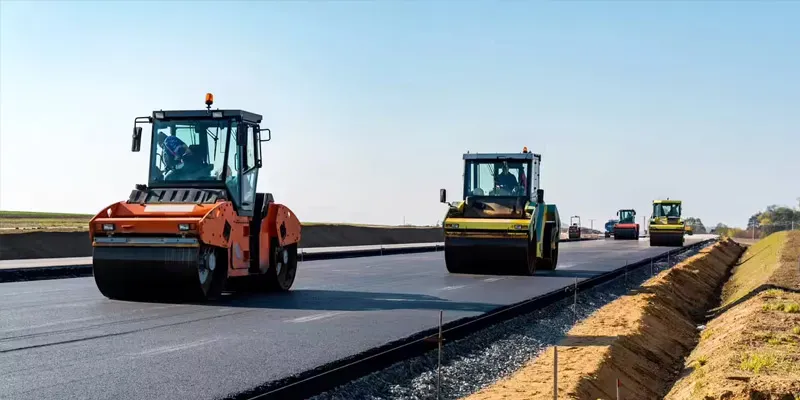
Front-loaded and building: capital spending of ₹3.4 lakh crore in the June quarter was up about 24% year on year, and made up close to a quarter of total expenditure.
A deficit spent on a road is a different economic object from a deficit spent on an interest payment. The quarter’s numbers are moving in the right direction on that test.
At a Glance
• Q1 FY27 fiscal deficit: about ₹3.1 lakh crore
• As a share of the full-year target: 18.2%
• A year earlier: ₹2.8 lakh crore in April–June 2025
• Total expenditure: ₹13.6 lakh crore, against ₹12.2 lakh crore
• Capital expenditure: ₹3.4 lakh crore, against ₹2.75 lakh crore — up about 24%
• Full-year budgeted deficit: ₹16.96 lakh crore
• As a share of GDP: 4.3% for FY27
• Source of the data: Controller General of Accounts, released July 31, 2026
Eighteen per cent of the annual target used in the first quarter is a comfortable position by the standards of recent years, and it reflects a deliberate pattern: the Centre front-loads capital spending into the months before the monsoon slows construction, then moderates. The relevant comparison is not against a straight-line quarter of 25% but against the government’s own execution history, and on that basis the year has opened on schedule. Revenue collections have held up alongside the spending, which is why a ₹1.4 lakh crore increase in outlay translated into only a ₹0.3 lakh crore widening of the gap.
The constructive point is about what the money is buying. Capital spending compounds: a road, a port berth or a transmission line keeps generating output for decades after the year it appears in the accounts, whereas revenue spending is consumed in the year it is made. Raising capex by a quarter while holding the deficit path steady is the harder version of fiscal management and the more valuable one. Two things will decide whether the pattern holds through the year. The first is nominal growth, since the 4.3% of GDP target is a ratio and a slower-than-budgeted economy widens it without anyone spending an extra rupee. The second is the states, whose combined capital budgets are larger than the Centre’s and whose execution is far more uneven; the most useful single reform available in Indian public finance is not a new central scheme but faster, more predictable release and utilisation of capital funds at the state level, where a great deal of budgeted money is still lost to the calendar rather than to any policy choice.