Blitz Bureau
NEW DELHI: A week after India returned from Glasgow with a Commonwealth Games medal haul built largely on boxing and para-athletics, the Cabinet answered a question the country has been asking since the last Olympic cycle: what happens between a talented twelve-year-old and a podium. A revamped Khelo India Scheme and an enhanced Assistance to National Sports Federations programme have been approved together at ₹36,441 crore for 2026–27 to 2030–31 — close to eight times the previous Khelo India outlay.
The structural change matters more than the total. Two new categories enter the scheme: Khelo India Feeder Schools and Khelo India Utkrishta Vidyalayas, which place the identification stage inside the school system rather than alongside it. The Emerging Khelo India Athletes category expands the supported pool by roughly a factor of ten. Read together, those three elements describe a deliberate shift in where the state intervenes — away from topping up athletes who have already emerged, and towards the far larger group who never get far enough to be noticed. India’s persistent problem has never been the absence of talent; it has been that the filter has been geography and family income rather than ability, and a scheme that operates through ordinary schools attacks exactly that filter.
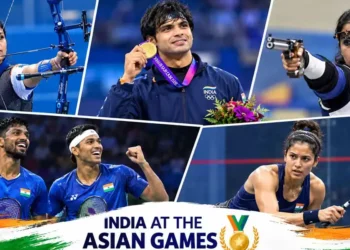
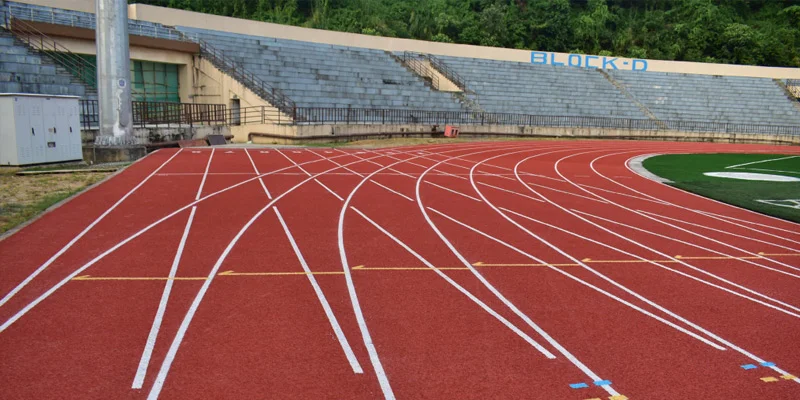
Where the pathway starts: the revamped scheme places talent identification inside feeder schools and Utkrishta Vidyalayas, and widens the Emerging Khelo India Athletes pool roughly tenfold.
Nations do not run short of gifted children. They run short of the ordinary infrastructure that lets a gifted child be found twice.
At a Glance
• Approved: July 31, 2026 — revamped Khelo India plus enhanced ANSF
• Combined outlay: ₹36,441 crore for 2026–27 to 2030–31
• Scale: close to eight times the previous Khelo India outlay
• New categories: Khelo India Feeder Schools and Utkrishta Vidyalayas
• Athlete pool: Emerging Khelo India Athletes expanded roughly tenfold
• Federation support covers: coaching, sports science, equipment, international exposure, camps, foreign experts
• Backdrop: India’s Commonwealth Games campaign in Glasgow, led by boxing and para-athletics
The federation half of the package is the less glamorous and arguably the more consequential. Enhanced ANSF funding covers coaching, sports science, modern equipment, international exposure, camps and the engagement of foreign experts. Every one of those is a recurring cost, and recurring costs are what national federations in India have historically been worst at meeting; the pattern of a well-funded Olympic year followed by three lean ones is precisely what prevents a squad from being built across a cycle rather than a season. Committing five years of assistance in a single approval changes the planning horizon a federation can credibly work to, which is a quieter improvement than a new stadium and a more durable one.
The work now is delivery, and the useful markers are already visible. A feeder school is only a feeder school if it has a surface, a coach and a competition calendar; the risk in any scheme of this size is that the money reaches buildings faster than it reaches coaching. Sports science capacity — physiotherapists, nutritionists, biomechanists attached to district centres rather than only to national camps — is the single input most likely to convert the widened pool into finished athletes, and it is the input hardest to procure quickly because the professionals have to be trained first. Publishing an annual count of certified coaches and support staff placed in the district system, alongside the athlete numbers, would show whether the pathway is being built or merely funded. India has just given itself five funded years and a much wider net. What Glasgow proved is that when the pathway does exist — as it now demonstrably does in boxing — the medals follow.