Blitz Bureau
NEW DELHI: The Culture and Tourism Minister launched an “As Seen on Netflix” section on the Incredible India portal this week, built with Netflix India. Underneath a promotional-sounding announcement sits a mechanism that tourism ministries have been trying to build for thirty years.
Screen tourism has always worked and has almost never been captured. A viewer watches a series, is struck by a landscape, and then loses the thread — because the place has no name on screen, the nearest town is unfamiliar, and by the time curiosity turns into a search query the impulse has gone. What a location index on a national tourism portal does is close that loop at the exact moment it is open. The film becomes the advertisement; the portal becomes the booking counter; and the gap between the two, which is where the intent normally dies, shrinks to a click. That is the whole idea, and it is why the tie-up is with a tourism portal rather than a marketing campaign.
Where the money actually lands: screen tourism tends to reward places that are not already on the circuit — the small town used as a backdrop gains more, proportionally, than the monument everyone already visits.
A hundred scholarships is a small number in a country of this size. It is a large number in a field where the training route has never been formal at all.
At a Glance
• Launched: an “As Seen on Netflix” section on the Incredible India portal, by the Union Minister for Culture and Tourism, Gajendra Singh Shekhawat
• Occasion: an event at the National Gallery of Modern Art, New Delhi, marking ten years of Netflix in India
• Also announced: a Netflix India Storytelling Initiative, a multi-phase investment in the creative talent pipeline
• First phase: youth skilling, through two institutional partnerships
• Training: co-developed curriculum with the Indian Institute of Creative Technologies, and funding for 100 scholarships for Indian students on in-person IICT programmes
• Context this week: anti-piracy enforcement has disabled 7,393 URLs, of which 4,996 were Telegram channels
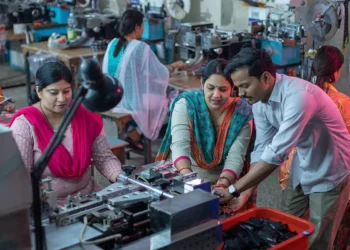
The second half of the announcement is the part with a longer shadow. A Netflix India Storytelling Initiative was unveiled whose first phase is youth skilling, with a co-developed curriculum at the Indian Institute of Creative Technologies and funding for a hundred students to attend its in-person programmes. India’s creative industries have historically trained people by apprenticeship — you learned to grade colour or mix sound by standing next to someone who already could, in Mumbai, Hyderabad or Chennai. That system produces excellent technicians and excludes almost everyone who cannot afford to be unpaid in an expensive city for two years. A funded seat on a structured course is a different door into the same room, and it is the door that reaches a student from a smaller town.
The constructive question is what makes this durable rather than decorative. Two things, and both are within reach. The first is that the location index has to be maintained, not merely launched: a page that still lists last year’s titles is a page nobody returns to, and the value here is entirely a function of freshness. The second is that the skilling partnership needs to be measured in placements rather than in enrolments — a hundred scholarships matter if a hundred graduates find work in post-production, animation or VFX houses that are themselves growing. That growth, in turn, depends on the industry keeping its revenue, which is why the piracy enforcement running alongside this week’s announcement belongs in the same story. A creative economy is built out of three things at once: an audience, a training route, and a way of getting paid. This week produced news on all three.