Market analysts are expecting major oil companies to report raking in large spring profits while fighting between Iran and the US impeded petroleum shipments and consumers around the world paid more for fuel and confronted shortages.
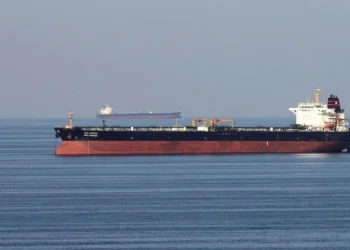
The conflict, now in its sixth month, halted most shipping through the Strait of Hormuz, a narrow waterway that previously served as a delivery route for a fifth of the world’s oil and natural gas. With global supplies constrained, prices for Brent crude, the international standard, soared from about $70 to above $100 a barrel for much of March, April and May, and at one point reached $126, according to a special report of AP.
That likely resulted in elevated profits for some of the biggest publicly traded oil companies as they sold their goods for higher prices. Gasoline, diesel and jet fuel prices climbed during that period, increasing costs for drivers and airline passengers. Supplies ran low in some countries, leading to sporadic fuel rationing in Australia and government office closures in Nepal and Sri Lanka.
Six of Europe’s largest oil companies posted firstquarter profits of $22 billion altogether, a total which was 43 per cent higher than the same time last year, according to Global Witness, a nonprofit organization that investigates environmental problems.
“There are constituencies around the world who are having a very good crisis, and the oil producers are one of them,” said Patrick Galey, fossil fuels lead at Global Witness. “When you compare that to the hundreds of millions of people who are struggling with rolling blackouts, with electricity curbs, rationing, waiting in line for food queues, or the disruption to fertilizers and the potential impact that that has on food prices, we don’t think that it’s a justifiable price for the rest of the world to be paying.”
Six of Europe’s largest oil companies posted firstquarter profits of $22 billion altogether, 43 per cent higher than the same time last year
Refineries getting rich Exxon and Chevron, which not only extract oil and gas but also own refineries, are in the best position to profit from the current market conditions. Refineries turn crude oil into gasoline, diesel, jet fuel and home heating oil.
They’re enjoying historically high “crack spreads,” which is a term to describe the profits refineries expect to make based on the prices of oil and products such as gasoline and jet full. In late July, refineries planning to buy a barrel of oil for about $80 were looking at potential profits of $50-$60, which is huge compared to the average range of $20-$25.
Refineries that have ample oil to work with, including those in the US are turning high profits, particularly when they make jet fuel and diesel, which is priced about 41 per cent higher in the US than before the Strait of Hormuz was blocked.
American refineries are running at near-full capacity and poised to benefit because some refineries in the Middle East and Russia were damaged, while others in Asia can’t get the amount of oil they used to from the Middle East.
Winners and losers
Many companies in the Middle East are not able to benefit from higher prices because they are struggling to get their liquefied natural gas out of the Persian Gulf or have a lot of damaged oil fields or processing facilities have a very different take on recent events.
In the present geopolitical environment, some companies are winners while others are losers, Timothy Fitzgerald, a University of Tennessee professor of business economics who studies the petroleum industry, pointed out. “Your ability to sell anything and the volume that you may be getting out is so curtailed that your revenues are way down and you’re incurring higher transportation costs and security costs,” he said.
Exxon and Chevron weren’t as profitable in the first quarter due to the way oil is traded; the first real opportunity they had to take advantage of higher prices was in April.