Blitz Bureau
NEW DELHI: The two most consequential digital documents of the week were not announcements. They were Bills, and both were passed by Parliament on the way to a Thursday adjournment that most of the country did not notice. The Micro, Small and Medium Enterprises Development (Amendment) Bill, 2026 creates a national digital platform on which any MSME may register, free and voluntarily, and pairs it with faster adjudication of delayed-payment disputes and the replacement of conviction-based fines with graded penalties, beginning with a warning. The Bankers’ Books Evidence Bill, 2026 does something less visible and arguably larger: it redefines a bank’s “books” to include records held in physical, electronic, digital, virtual or cloud form, standardises the certificates that accompany them, and recognises manual, digital and electronic authentication alike. In plain terms, a cloud ledger now carries the same evidentiary weight in an Indian court as a leather-bound register did in 1891, when the Act it replaces was written.
That is the shape the next phase of India’s digital story is taking, and it is worth understanding why it matters more than the transaction counts. The counts are extraordinary on their own. In July 2026 the Unified Payments Interface processed 23.66 billion transactions worth ₹29.88 lakh crore — the highest monthly volume ever recorded, past the 23.20 billion of May, and an average of 763 million payments and about ₹96,383 crore every single day. Volumes rose 4.1% over June, values 3.3%. Aadhaar, the identity layer beneath it, has roughly 134 crore live holders, and the Unique Identification Authority of India had recorded more than 15,452 crore cumulative authentication transactions by June 2025 — 221 crore in the single month of August 2025, itself 10% up on August 2024. These are the largest numbers of their kind anywhere. But volume is a measure of adoption, not of institutional depth. A payment rail that clears three-quarters of a billion transactions a day and a court system that still treats a server log as a second-class document are not, in the end, the same country.
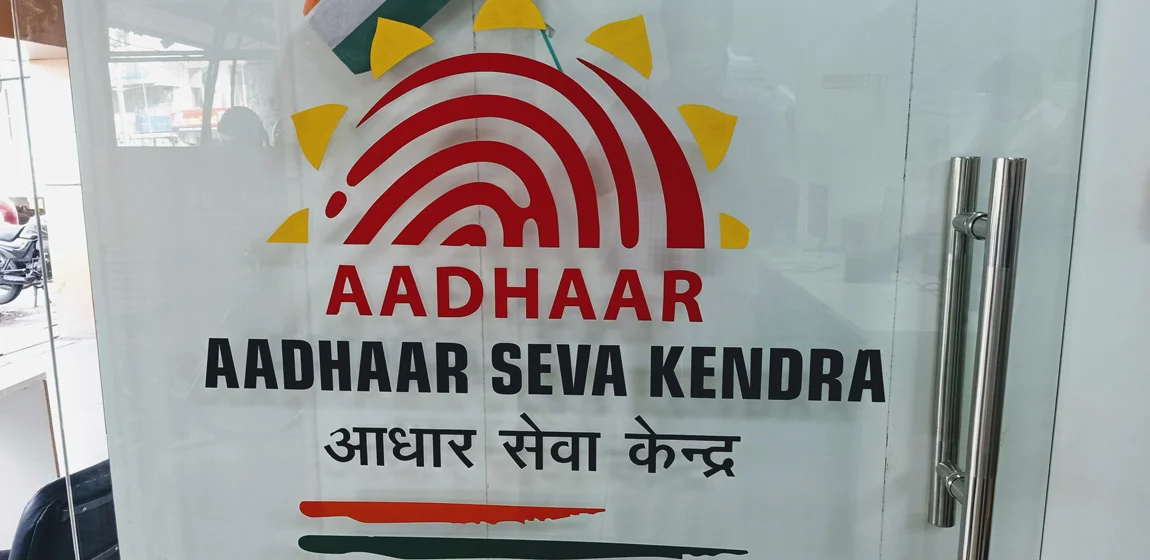
The layer everything else sits on: An Aadhaar Seva Kendra in Bhopal. India has about 134 crore live Aadhaar holders, and more than 15,452 crore authentication transactions had been processed by June 2025 — the identity spine that made instant payments, direct benefit transfer and paperless know-your-customer possible. Photo: Wikimedia Commons (Creative Commons)
A country can build a payments rail in five years. Giving it the legal standing of a bank ledger, the evidentiary weight of a signed document and a statutory home takes rather longer — and that is the work that began this week.
Why It Matters
• UPI, July 2026: 23.66 billion transactions worth ₹29.88 lakh crore — a record volume; 763 million payments a day
• Aadhaar: about 134 crore live holders; more than 15,452 crore cumulative authentications by June 2025; 221 crore in August 2025 alone, up 10% year on year
• MSMED (Amendment) Bill, 2026: a national digital platform for free, voluntary MSME registration; graded penalties replace conviction-based fines
• Bankers’ Books Evidence Bill, 2026: cloud, virtual and electronic bank records given full evidentiary standing; technology-neutral by design
• Digital economy: 11.74% of national income in 2022-23 (₹31.64 lakh crore) per MeitY’s own estimation report; about 13% now, and officials expect roughly a fifth of GDP by 2030
• IndiaAI Mission: ₹10,371.92 crore over five years; more than 38,000 high-end GPUs onboarded by February 2026
• Announced 15 August 2026: AI skills training for one crore youth within a year, and a free national online coaching network
Measure the distance India has already covered and the ambition of the next stretch becomes legible. The Ministry of Electronics and Information Technology’s own estimation exercise put the digital economy at 11.74% of national income in 2022-23 — ₹31.64 lakh crore, or roughly $402 billion — and projected 13.42% by 2024-25. Speaking at Nasscom’s Global Confluence this year, the ministry’s secretary put the current share at about 13% and noted that the digital economy is growing at roughly twice the pace of the rest of the economy, which is what puts a fifth of GDP by 2030 within arithmetic reach rather than rhetorical reach. Three years of compounding at double the national growth rate is not a forecast that requires heroic assumptions. It requires the plumbing to keep working, and the law to keep up with it.
The Prime Minister’s Independence Day announcements should be read against that backdrop rather than as standalone schemes. Artificial-intelligence skills training for one crore young Indians inside twelve months is, on any reading, an enormous undertaking — and India has a working template for it. The IndiaAI Mission, with an outlay of ₹10,371.92 crore across five years, had onboarded more than 38,000 high-end graphics processing units by February 2026 and is already funding undergraduate, postgraduate and doctoral cohorts through its FutureSkills arm. The free national online coaching network for competitive examinations is the same idea applied to a different queue: India’s examination economy costs families real money in fees, travel and rent in coaching towns, and a public digital alternative attacks all three at once. Whether it works will turn on unglamorous details — which institutions teach, what the certification is worth to an employer, and how completion is measured — none of which have been published yet.
There is a second reason the legislative turn matters, and it belongs to the smallest firms in the country. India’s micro and small enterprises have never lacked digital tools; they have lacked standing. A supplier whose payment is 180 days late needs an adjudication system that moves, not an app. A firm seeking working capital needs a lender able to read a verified transaction history, not a stack of photocopies. The MSMED amendment’s free registration platform and faster delayed-payment adjudication go at the first problem; the Bankers’ Books Evidence Bill, by making electronic records fully admissible, quietly goes at the second. Cash-flow-based lending to small firms has always foundered on the question of what a court will accept as proof. That question now has a modern answer.
The way forward from here is mostly a matter of finishing what has been started, and doing it in public. Publish the rules under both Bills quickly, so lenders and registrars know what a compliant electronic record looks like before the first dispute tests it. Put the MSME registration platform’s numbers out monthly — registrations, disputes filed, disputes resolved, median days to resolution — the way UPI volumes are published, because a rail that reports its own performance improves faster than one that does not. Name the institutions, the syllabus and the certification behind the one-crore AI commitment early, so the cohort that signs up in October knows what it is signing up for. And keep measuring the digital economy properly: MeitY’s estimation framework is one of the few in the world that tries to size this sector honestly, and it should be updated annually rather than episodically. India built the world’s busiest public payments system in under a decade. The harder, slower and more valuable work — giving it the standing of law — has now begun.
India & The World
United States — the interim deal, and what is still open: India and the United States announced a framework for an interim trade agreement in February this year, under which Washington applies a reciprocal tariff of 18% to a defined set of Indian goods — textiles and apparel, leather and footwear, certain chemicals — while removing tariffs altogether on generic pharmaceuticals, gems and diamonds. The wider bilateral trade agreement remains under negotiation, with agriculture, dairy, digital trade and non-tariff measures the files that have not closed, and both governments still working to a stated goal of $500 billion in two-way trade by 2030. New Delhi’s approach through all of it has been consistent: negotiate patiently, and diversify while negotiating. July’s record export month, spread across petroleum products at $6.92 billion, electronics at $5.92 billion, engineering goods, chemicals and textiles rather than concentrated in any one market, is what that policy looks like in the customs data. A country negotiating from a record export month negotiates differently from one negotiating from a slump.
European Union: The India–EU free trade agreement, concluded in New Delhi on 27 January this year after nearly two decades of on-and-off talks, is in the legal-scrubbing phase — the line-by-line vetting that precedes formal signature. It is not yet in force. Ratification then needs a qualified-majority decision in the Council of the European Union and the consent of the European Parliament, a process that typically runs about a year; India’s side is quicker, since trade agreements fall under executive competence. Entry into force is expected early in 2027. For Indian exporters the practical question is no longer whether it happens but whether they are ready when it does: textiles, pharmaceuticals and engineering goods stand to gain most, and the preparation window is closing rather than opening.
The diaspora as a capital account: The most striking international number of the week came from the Reserve Bank rather than any foreign ministry. The special swap window opened on 8 June to attract foreign currency has drawn $56.85 billion across its three channels as of 13 August, of which $52.3 billion came through Foreign Currency Non-Resident (Bank) deposits — money placed in Indian banks by non-resident Indians. It worked well enough that the RBI closed the FCNR(B) tap early on Friday, restricting it to deposits mobilised up to 31 August against an original 30 September, with banks able to avail swaps until 11 September. The window for external commercial borrowings and overseas foreign currency borrowings stays open to 31 December. India’s diaspora has long been described as a source of remittances; this quarter it has functioned as a source of balance-of-payments stability.
Where India sits in the supply chain: Electronic goods exports rose 57.4% year on year in July to $5.92 billion, one of the fastest-growing lines in the trade data and a direct read-out from a decade of production-linked incentives and assembly investment. India is still principally an assembler rather than a fabricator in this chain — the India Semiconductor Mission, with twelve approved projects and roughly ₹1.64 lakh crore of committed investment across six states, three of them now in commercial production, is the attempt to change that — but a 57% increase in a $5.92-billion line is what an industrial policy looks like when it starts showing up in customs data rather than in press releases.