Blitz Bureau
NEW DELHI: The men and women in khaki at a polling booth or a mela gate are usually not police. They are Prantiya Rakshak Dal volunteers, and until Tuesday they had no cashless medical entitlement of their own.
Uttar Pradesh Chief Minister Yogi Adityanath launched the Chief Minister’s PRD Cashless Medical Scheme at Gorakhpur on 18 August, at a conference of Prantiya Rakshak Dal personnel. Addressing the gathering, he said the benefits of development should reach every section of society, and set the scheme alongside the state’s wider programme of accommodation and welfare for uniformed personnel. “When a good government comes to power, ‘good days’ arrive for everyone,” he said. “Previously, there were no proper barracks facilities for police officers and personnel. There are 56 districts in the state where the tallest buildings will be the police barracks… High-rise barracks have also been constructed for the Prantiya Rakshak Dal in Lucknow. Change is not meant for just one section of society… I congratulate all the officers and volunteers on this facility.”
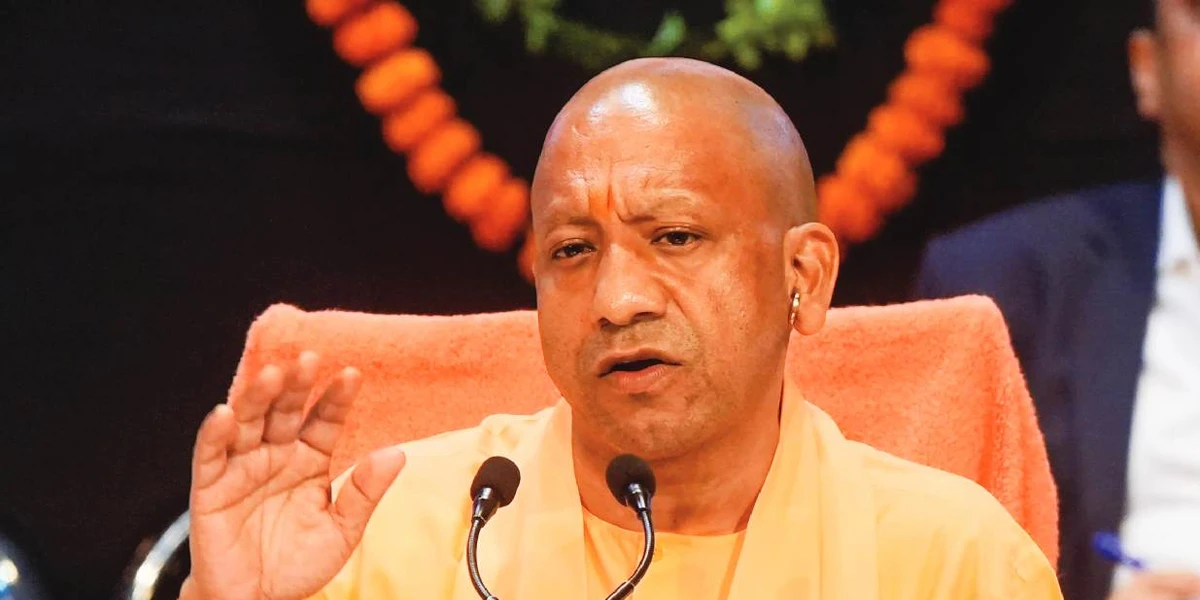
Gorakhpur, 18 August: Chief Minister Yogi Adityanath launched the Chief Minister’s PRD Cashless Medical Scheme at a conference of Prantiya Rakshak Dal personnel.
The Prantiya Rakshak Dal is the tier of the state’s security arrangement that citizens meet most often and know least about — and the tier that has historically had the thinnest entitlements.
At a Glance
• Scheme: Chief Minister’s PRD Cashless Medical Scheme
• Launched: Gorakhpur, 18 August 2026
• Launched by: Yogi Adityanath, Chief Minister, Uttar Pradesh
• Occasion: conference of Prantiya Rakshak Dal personnel
• Beneficiaries: PRD volunteers, who staff polling stations, fairs, festivals and crowd duty across the state
• Alongside: high-rise PRD barracks constructed in Lucknow; police barracks programme across 56 districts
• Also announced this month: ‘Youth Brigade Scheme’ — Mukhyamantri Yuva Udyami Vikas Abhiyan — on 15 August
The Prantiya Rakshak Dal occupies an unusual place in Uttar Pradesh’s administrative structure. Its volunteers are not regular police and are not paid as such, but they are the uniformed presence at polling stations on election day, at religious fairs, at festival crowd points and at district functions — the tier of the state’s security arrangement that ordinary citizens actually encounter, and the tier whose entitlements have historically been the thinnest. A cashless medical facility changes a specific and practical thing: it removes the moment at a hospital counter when a volunteer’s family has to find money first and claim it later. For households at that income level, the reimbursement model and the cashless model are not variants of the same benefit. They are different benefits.
The announcement sits within a wider month of state welfare and enterprise measures — the Chief Minister used his 80th Independence Day address on 15 August to announce the ‘Youth Brigade Scheme’, the Mukhyamantri Yuva Udyami Vikas Abhiyan, for young people entering business and enterprise. What will decide whether the medical scheme delivers is the same thing that decides it everywhere: the width of the empanelled hospital network in the districts where volunteers actually live, which in the PRD’s case means Gorakhpur, Basti, Devipatan and the eastern districts rather than the state capital. Publishing the empanelment list district by district, and the average claim-settlement time, would let the volunteers themselves see whether the card works before they need it. That is a small administrative step, and it is the one that turns a launch into an entitlement.