Blitz Bureau
NEW DELHI: India has the world’s third-largest renewable fleet and a 2030 target it can still reach. The arithmetic of the remaining distance is the part worth understanding, because it changes what the next four years should be spent on.
Installed renewable capacity reached 288.58 gigawatts in June 2026 — solar 162.15, wind 57.44, hydro 57.24 and bio-power 11.75, which sum exactly to the total. The national goal is 500 GW of non-fossil generating capacity by 2030. The gap is 211.42 GW. Spread over roughly four and a half years, that is about 47 GW a year, every year, without a slow quarter.
That is a demanding but not fanciful number, and India has been raising the run rate. What it does mean is that the binding constraint has moved. For most of the past decade the question was whether enough capacity could be financed and built. Solar module prices fell, auctions were oversubscribed, and 162.15 GW — 56.2 per cent of all renewable capacity — is the answer. The Union Budget for 2026-27 gave the Ministry of New and Renewable Energy ₹44,614.67 crore, an increase of 40.52 per cent over 2025-26, which is not the allocation of a programme that is short of intent.
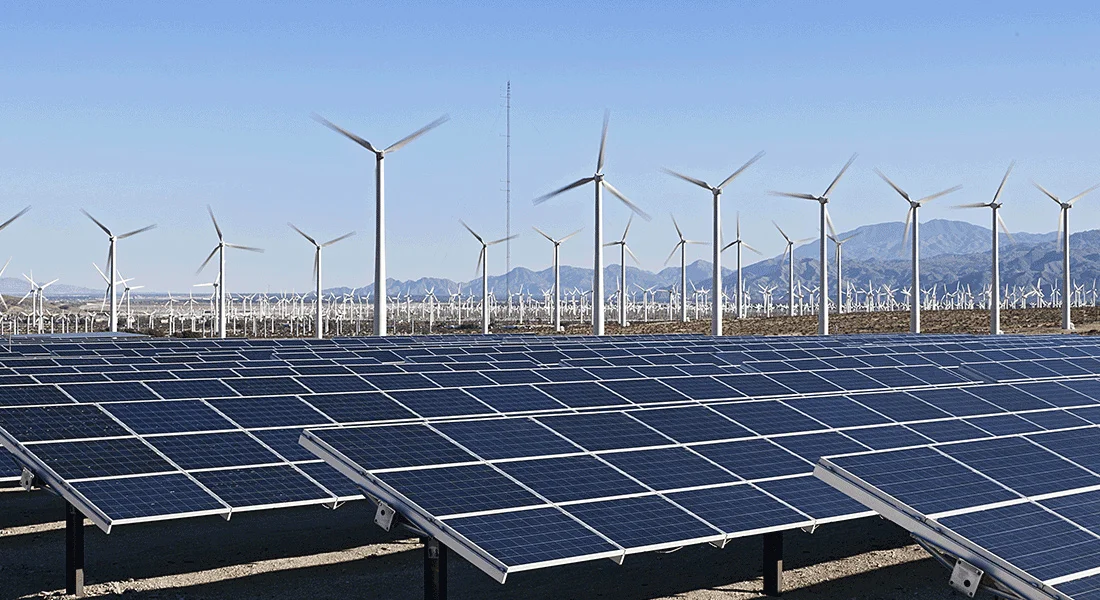
The easy half: A solar park in Gujarat. Solar accounts for 162.15 GW of India’s 288.58 GW of installed renewable capacity — 56.2 per cent — and the next phase of the transition depends less on adding panels than on storing and moving what they already produce.
The question has stopped being how many gigawatts India can install. It is how many gigawatt-hours India can store, and how many circuit-kilometres it can build to move them after dark.
At a Glance
• Installed renewable capacity, June 2026: 288.58 GW
• Composition: solar 162.15 GW, wind 57.44, hydro 57.24, bio-power 11.75
• Solar share: 56.2 per cent of renewable capacity
• 2030 target: 500 GW non-fossil capacity
• Remaining gap: 211.42 GW
• Implied run rate: about 47 GW a year
• Solar target within 2030 goal: 280 GW
• MNRE allocation 2026-27: ₹44,614.67 crore, up 40.52 per cent
• Global rank: third in installed renewable capacity
The constraint now is the hours of the day. Solar generates in a bell curve centred on noon; Indian demand peaks in the evening, after the sun has gone. Each additional gigawatt of solar added to a grid that already has 162 of them displaces less thermal generation than the one before it, because the middle of the day is already covered. Beyond a point the useful question is not how many gigawatts were installed but how many gigawatt-hours were stored and how much transmission was built to move them from where the sun and wind are — Rajasthan, Gujarat, Tamil Nadu, Karnataka — to where the load is.
This is a structural feature of every energy transition, not an Indian failing, and the countries ahead of India on the curve have met it in the same three ways: storage, transmission and demand flexibility. Battery storage attached to solar parks converts a noon surplus into an evening supply. Inter-state transmission corridors turn a windy afternoon in Kutch into evening power in Uttar Pradesh. Pumped hydro, of which India has substantial unexploited sites, does the same job over longer cycles. And time-of-day tariffs, already being introduced, move some demand into the sunlit hours where the cheapest electricity now sits.
There is a manufacturing dimension that ties this to the rest of India’s industrial policy. Domestic module and cell capacity has grown quickly, and the same logic that governs the semiconductor programme applies here: capacity built abroad and bought is capacity that can be priced or withheld. Every gigawatt of storage India can make rather than import is a gigawatt whose cost curve India partly controls.
The constructive framing is straightforward. India is third in the world on installed renewable capacity, has quadrupled solar in under a decade, and has funded the next phase generously. The task that remains is less photogenic than a solar park and more consequential: firm the output, move it, and store it. A sensible public marker would be to report storage capacity in gigawatt-hours and inter-state transmission commissioned in circuit-kilometres alongside the headline gigawatt figure each quarter. What gets published gets built.