NEW DELHI, 18 October 2026 — A family paying for chemotherapy often pays twice: once for the medicine, and again for the margin added between the factory gate and the pharmacy counter. On 137 cancer drugs, that second bill is about to shrink. The National Pharmaceutical Pricing Authority has capped trade margins at 30% of the maximum retail price, a move expected to bring prices down “by up to 70%”, the Department of Pharmaceuticals said in its release of 17 October 2026. The revised prices take effect on 9 November 2026.
What a trade margin is
The trade margin is the gap between what the manufacturer charges the first buyer in the chain and the price printed on the strip. These are non-scheduled drugs — medicines outside the government’s price-control list — and a fall of up to 70% means that, on some of them, most of the old price was margin. NPPA used Paragraph 19 of the Drugs (Prices Control) Order, 2013, which lets it act on prices in the public interest, to cap it at 30%.
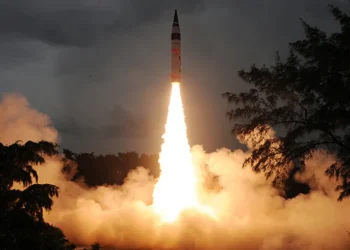
The drug-price regulator caps trade margins at 30% on 137 anti-cancer medicines from 9 November. The last time it tried this, on 42 drugs, some prices fell by nine-tenths.
The 137 drugs were chosen by an expert committee of oncologists, specialists and hospital experts from across the country, convened under the Directorate General of Health Services. The list will be reviewed from time to time. Manufacturers must report their revised prices to NPPA within seven days of the gazette notification.
The 2019 precedent
The regulator has been here before. In 2019 it capped trade margins on 42 anti-cancer drugs at the same 30%, and the maximum retail price of 526 brands fell by up to 90%, the release records. The new list is more than three times as long.
What the release does not give is the saving in rupees, or the number of brands affected this time. Those figures will come from the revised price lists. Patients can check the new price of any brand on NPPA’s “Pharma Sahi Dam” app or the regulator’s website.
Cancer treatment is among the costs most likely to push an Indian household into debt. A cap that reaches the pharmacy counter is relief the patient feels on the first bill.
At a glance
Anti-cancer drugs covered: 137 non-scheduled medicines
Trade margin cap: 30% of MRP
Expected price fall: up to 70%
In force: 9 November 2026
How it compares
Drugs covered in 2026: 137 — 100%
Drugs covered in the 2019 pilot: 42 — 31% of this year’s list
The 2026 list covers 3.3 times as many drugs as the 2019 pilot.
What the numbers add up to
137 ÷ 42 = 3.26. In 2019, 42 drugs produced price cuts on 526 brands; the brand count for 2026 is not yet stated.
What India gains
Cheaper cancer treatment for families, without a new subsidy bill.
Blitz appreciates
The National Pharmaceutical Pricing Authority and the oncologists of the expert committee.
Figures from the Department of Pharmaceuticals release of 17 October 2026 (PIB Release ID 2324743); checked on pib.gov.in.
Rubio heads to Mumbai and Jamnagar
NEW DELHI, 18 October 2026 — United States Secretary of State Marco Rubio is travelling to Samarkand, Mumbai and Jamnagar from 17 to 22 October, the State Department said in a media note of 13 October 2026.
It is his second official visit to India this year. In India he will meet senior officials “to strengthen the U.S.-India strategic partnership” and “discuss prospects for enhanced energy cooperation”, and meet business leaders on investment, the note says.
The US Secretary of State’s second India visit this year centres on energy and business. He calls India “an important ally” whose oil needs must be weighed before any tariff.
Jamnagar, home to one of the world’s largest refining complexes, is an unusual stop for a foreign minister, and a telling one. Before leaving, Rubio spoke about the US law that would have imposed tariffs of up to 100% on the largest buyers of Russian oil and gas, a law whose measures President Donald Trump waived this week. “You’ve got countries like India, for example, that have voluntarily diversified their energy portfolio,” Rubio said, as reported by DD News on 18 October. “But they’re also an important ally and partner of the United States.”
He said the President wanted to use a 60-day period to study what sanctions and tariffs would mean for the global and US economies. DD News reports that he reaches India on 20 October, after the C5+1 ministerial meeting with the Central Asian states in Uzbekistan.
For India, the sentence that matters is the one about time. A 60-day study, by a government that calls India an ally, is room for Indian negotiators to make the case that a refiner in Jamnagar buying crude from many sources is a stabiliser for world fuel markets, not a target.
Blitz Views
The Ministry of External Affairs and the Ministry of Petroleum could use the Jamnagar stop to set out, with figures, how India has widened its crude sources, so that the 60-day American review starts from India’s own numbers.
Space economy could grow nearly five-fold
NEW DELHI, 18 October 2026 — India’s space economy, worth about $9 billion, could reach $40–45 billion in the next seven to eight years, Minister of State for Science and Technology and Space Jitendra Singh told a Bloomberg New Economy Forum roundtable on “Space, Sovereignty and New Economy” in New Delhi, according to his ministry’s release of 17 October 2026.
From about $9 billion today to $40–45 billion in seven to eight years. Jitendra Singh wants companies, not just capabilities.
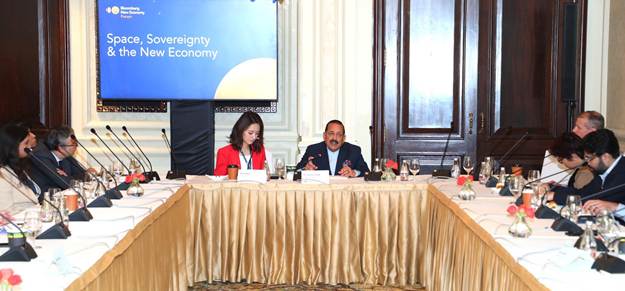
By Blitz analysis , that is growth of roughly 20% to 26% a year, depending on which end of the range and timeline is taken. The minister said the sector’s opening to private firms in 2019–20 had delivered results within five to six years, and that the next step is “building globally competitive commercial space companies”. Government agencies, he said, can act as anchor customers so that start-ups have predictable demand.
Vinod Kumar, Director (Promotion) at IN-SPACe, and Aisha Bowe, founder of STEMBoard and a former NASA engineer who has flown with Blue Origin, were among the participants. The minister also noted that Indian space-based information has supported disaster response in Myanmar, Bangladesh and Sri Lanka.
Blitz Views
IN-SPACe could publish an annual count of private space revenue, investment and exports, so that progress towards the $40–45 billion mark can be tracked every year, not only at the end.
No added sugar for babies under six months
NEW DELHI, 18 October 2026 — Infant formula and other nutrition products meant for babies up to six months old may no longer contain added sucrose or fructose, under a draft amendment published by the Food Safety and Standards Authority of India in the Gazette on 16 October 2026. “Sucrose and fructose shall not be added in the products intended for infants up to the age of 6 months,” the draft reads, according to the Health Ministry’s release of 17 October 2026.
FSSAI’s draft rule would bar sucrose and fructose in infant nutrition products for the first six months of life.
The 2020 infant-nutrition regulations already name lactose and glucose polymers as the preferred carbohydrates, but allow sucrose and fructose within limits where needed. The draft removes that allowance for the youngest age group.
FSSAI links the change to concerns about early exposure to added sugar and childhood obesity, and to the advice of exclusive breastfeeding for the first six months.
Objections and suggestions can be filed within 60 days of the Gazette being made available. The same day, FSSAI also proposed residue limits for two pesticides in tea — 20 mg/kg for acetamiprid, below Japan’s 30 and the United States’ 50, and 50 mg/kg for imidacloprid.
Blitz Views
FSSAI could publish the comments it receives and a short note on how each was considered, so that parents and manufacturers can see how the final rule was reached.
Kashmir’s rail line: ₹161 crore a kilometre
NEW DELHI, 18 October 2026 — The Udhampur–Srinagar–Baramulla Rail Link cost ₹43,780 crore for 272 km, according to the Government’s backgrounder “Connecting Kashmir” of 17 October 2026. By Blitz arithmetic, that is about ₹161 crore a kilometre, a figure that also carries more than 215 km of supporting roads built for the project. Much of the reason is underground: 119 km of the line, 43.8%, runs through 36 tunnels, and it crosses 943 bridges.
A Government backgrounder on Jammu and Kashmir’s connectivity shows the price of building through the Himalaya — and what it has bought.
What it has bought
The line, opened in June 2025, includes the Chenab bridge — 359 metres above the river, with a 467-metre arch — and the Anji Khad bridge, India’s first cable-stayed rail bridge. Vande Bharat trains have run between Katra and Srinagar since June 2025 and were extended to Jammu Tawi in April 2026, bringing Jammu–Srinagar under five hours. Building the line generated more than five crore person-days of work.
On the roads, the 13.153-km Zojila tunnel, costing ₹6,808 crore, broke through in June 2026 and will cut Sonamarg–Minamarg from about two hours to about 30 minutes when complete. Srinagar’s civil enclave is getting a ₹1,677 crore terminal for 10 million passengers a year. Three more cargo terminals are planned at Kathua, Anantnag and Jammu.
At a glance
USBRL: 272 km, ₹43,780 crore, 36 tunnels (119 km), 943 bridges
Zojila tunnel: 13.153 km, ₹6,808 crore, breakthrough June 2026
Srinagar terminal: ₹1,677 crore, 10 million passengers a year
How it compares
USBRL length: 272 km — 100%
Length in tunnels: 119 km — 43.8%
Nearly half the railway into the Valley runs underground.
What the numbers add up to
₹43,780 crore ÷ 272 km = about ₹161 crore per kilometre.
What India gains
An all-weather link between the Valley and the rest of the country.
Blitz appreciates
The engineers and workers of the Indian Railways and the tunnelling agencies who built in some of the world’s hardest terrain.
Figures from the Government’s backgrounder “Connecting Kashmir: Building the Infrastructure for Growth”, 17 October 2026 (PIB Release ID 2324629); checked on pib.gov.in and ddnews.gov.in.
Blitz Views
The Ministry of Railways could publish monthly freight and passenger numbers on the Kashmir line, so that the return on ₹43,780 crore can be measured in apples, cement and travellers, not only in kilometres.
Youth samvad and a farm campaign
NEW DELHI, 18 October 2026 — At a “Viksit Bharat Yuva Samvad” in Kutiyana, Porbandar district, Youth Affairs and Sports Minister Mansukh Mandaviya told students that one lakh youth leaders are being prepared across the country, and asked them to take the pledge “we will do it”, according to his ministry’s release of 17 October 2026. He described the 25 years to 2047 as the Amrit Kaal.
Two outreach drives for Viksit Bharat 2047: one for students in Porbandar, one for farmers in eleven States.
Agriculture Minister Shivraj Singh Chouhan, meanwhile, reviewed with ministers of eleven States the “Khet Bachao Abhiyan”, which runs from 22 October to 30 November 2026, according to the Agriculture Ministry’s release of 17 October. Its targets are 50 lakh participants each through ATMA and ICAR, 4,150 joint KVK–ATMA teams and about 1.5 lakh events, on residue management, soil health, natural farming, crop insurance and Kisan Credit Cards. “It should not become a formality,” he told the States.
Blitz Views
The Agriculture Ministry could publish, at the end of the campaign, how many farmers received a soil health card, a KCC or an insurance policy because of it, so that the campaign is measured by what farmers took home.
Indian warships train with Seychelles and Britain
NEW DELHI, 18 October 2026 — INS Tir, INS Sujata and Coast Guard ship Sarathi of the Navy’s First Training Squadron left Port Victoria on 15 October after a three-day visit to Seychelles, the Ministry of Defence said in its release of 17 October 2026. The squadron trained Seychelles Defence Forces personnel in firefighting and small arms, held a passage exercise with Seychelles Coast Guard ship Andromac, ran a medical camp and hosted schoolchildren on board.
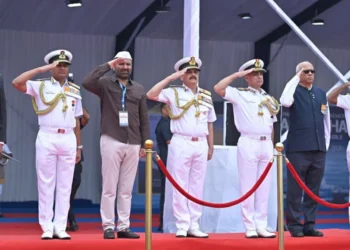
The First Training Squadron left Port Victoria and Exercise Konkan closed off Plymouth in the same week.
_20261017185118_01c63c.jpeg)
Off Plymouth, Exercise Konkan-2026 ended on 15 October after a four-day sea phase in which INS Trishul and the Royal Navy’s HMS Sutherland practised anti-submarine warfare, asymmetric threats and weapons firing under the Royal Navy’s Fleet Operating Standards and Training, the ministry said the same evening. At home, the Navy opened housing, a 409-bed hospital expansion and new utilities at the Karwar base under Project Seabird on 15 October, with more than 90% of materials to be sourced in India.
Blitz Views
The Navy could publish a yearly count of foreign personnel trained by the First Training Squadron, so that India’s role as a regional trainer is visible in numbers.
Blitz Research Desk: turning climate science into services
PUNE, 18 October 2026 — A farmer deciding when to sow, a city deciding where to drain and an insurer pricing a flood need different answers from the same climate data. The Indian Institute of Tropical Meteorology held the first stakeholder meeting of its Climate Science into Services for India Forum on 17 October 2026, with more than 150 participants from over 80 institutions, the Ministry of Earth Sciences said in its release that day.
IITM Pune brought more than 150 users from 80 institutions to say what climate information they actually need.
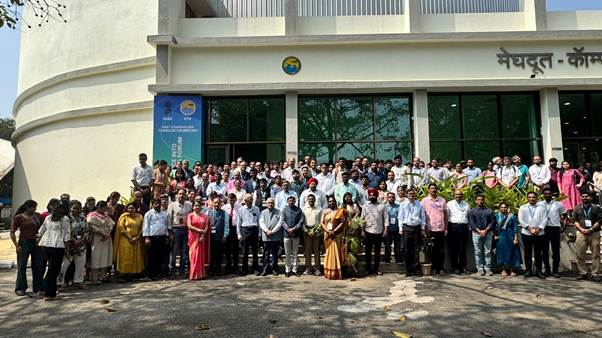
The users ranged from the Reserve Bank and the National Disaster Response Force to the Pune Municipal Corporation, State climate cells in Goa, Madhya Pradesh and Assam, and the Bihar Mausam Seva Kendra. Working groups covered water, agriculture, disaster risk, climate extremes, energy and finance, and coastal projections. Rupa Kumar Kolli, former chief of climate applications at the World Meteorological Organization, made the case for a national Climate Services Information System.
The release does not list the meeting’s recommendations, which IITM says will follow. That list — what users asked for and could not get — is the document worth waiting for.
Blitz Views
IITM could publish the forum’s recommendations with a timeline for each product it commits to, so that States and businesses can plan around the climate services that are coming.
Oversight Desk: NCR’s pollution squads, by numbers
NEW DELHI, 18 October 2026 — Between 25 September and 9 October 2026, the Commission for Air Quality Management’s flying squads inspected 124 sites in the National Capital Region and found violations at 55, the commission said in its release of 17 October 2026 after its 141st Enforcement Task Force meeting. By Blitz arithmetic, that is a violation rate of 44.4%; among industrial units it was 35 of 54.
CAQM’s flying squads found violations at 55 of 124 sites in two weeks. Cumulatively, 1,491 of 1,837 closed units have reopened after compliance.
The task force proposed closure of two construction sites and three industrial units, sealing of 12 units and compliance directions in seven cases. Since the squads began, they have inspected 28,868 units, issued 1,837 closure directions and allowed 1,491 to resume after verifying compliance — 81.2% by Blitz arithmetic. Another 130 cases went to pollution control boards, and 216 entities are awaiting resumption orders.
The figure that matters most is the reopening rate. A closure that ends in compliance, rather than in a shut factory, is the system working as designed.
Blitz Views
CAQM could publish the time taken from closure to resumption for each case, so that compliant units are not kept shut longer than needed and repeat violators stand out.