Blitz Bureau
NEW DELHI: Washington has proposed a filing fee of $103,265 on every cap-subject H-1B petition. For Indian professionals the number matters less than where in the process it sits.
The United States Department of Homeland Security has proposed an additional fee of $103,265 on all H-1B cap-subject petitions, including those filed for holders of advanced degrees, on top of every fee already payable. DHS said the amount would be paid at the time of filing, and estimated that it would raise about $8.8 billion a year against a projected 85,000 cap-subject petitions. Blitz India recomputed that arithmetic: 85,000 petitions at $103,265 comes to $8.78 billion, so the department’s estimate holds.
The detail that decides the consequence is the placement. A fee at the point of filing is paid before the lottery is run and before any worker is selected — which means an employer commits the money on a probability, not on an outcome. That converts the H-1B route from a hiring cost into a speculative one, and speculative costs are cut first by the smallest employers. Large listed technology firms can absorb a six-figure filing fee across a portfolio of petitions; a fifty-person start-up, a mid-sized hospital chain or a university-adjacent research firm cannot.
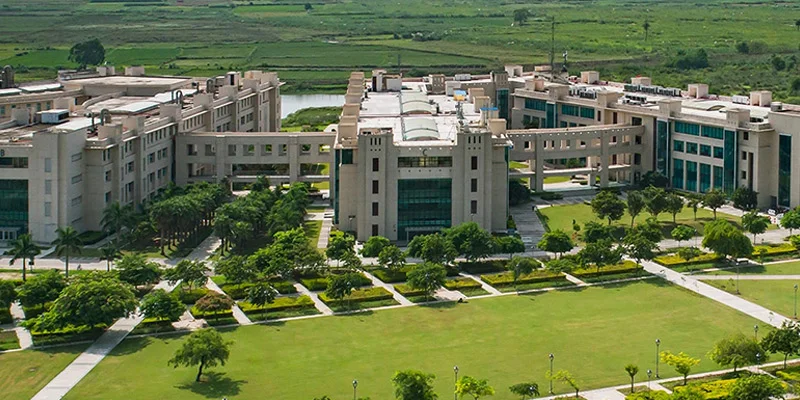
Where the cost lands. An Indian IT campus. A fee levied at filing is paid before selection, which shifts the burden from large employers with many petitions towards smaller ones with few — and towards the candidates they would have sponsored.
Read the exemption list and the intent becomes legible. Universities and research institutions are outside the fee. This is a charge on commercial hiring, not on scholarship.
At a Glance
• Proposed fee: $103,265 per cap-subject H-1B petition
• When paid: at the time of filing, over and above all other fees
• DHS revenue estimate: about $8.8 billion a year on 85,000 petitions
• Blitz recomputation: $8.78 billion — the estimate holds
• Exempt: cap-exempt petitions — certain non-profit and government research bodies, and institutions of higher education
• Status: a proposal, not a rule in force
What is not covered is as instructive. The fee does not apply to petitions that are not subject to the cap — those filed by certain non-profit research organisations, government research organisations and institutions of higher education. For an Indian student finishing a master’s degree in the United States, the university and the teaching hospital remain open at the old price; the mid-market employer becomes markedly harder to reach. For families in India weighing a US degree, the calculation has not collapsed, but it has narrowed, and it now runs through a smaller set of employers.
The constructive reading is that mobility has become a market with more than one counter, and India already holds a better ticket at another one. Under the India–UK Double Contribution Convention, in force since 15 July 2026, Indian professionals on temporary assignment in Britain are exempt from paying social security contributions twice, and the exemption period now runs five years instead of three — a saving the Commerce Ministry expects more than 75,000 Indian professionals and over 900 companies to use. One corridor is proposing to raise the price of entry; another has just lowered it. The task for Indian industry bodies and for the Ministry of External Affairs is to make the comment period on the American proposal count, and simultaneously to make sure the British and European doors are used to their full width. A country with the world’s largest supply of young technical talent should not be dependent on the mood of any single visa queue.