Blitz Bureau
NEW DELHI: Hardeep Singh Puri gave Indian diplomats a single number to carry abroad. It is the number that decides how the world treats India in every energy negotiation for twenty years.
Petroleum and Natural Gas Minister Hardeep Singh Puri, speaking to senior officers of the Indian Foreign Service on 25 August 2026, said India’s energy demand is expected to grow 2.5 times by 2047, and to account for about 25 per cent of incremental global demand. He described India as the world’s third-largest consumer of energy and oil, the third-largest refiner and the fourth-largest importer of LNG.
Separate those two claims, because they do different work. Being the third-largest consumer is a statement about the present and it buys India very little; large consumers are price-takers. Accounting for a quarter of the growth in world demand is a statement about the future, and it is the one that carries leverage. A supplier building a terminal, a refinery or a long-term contract today is building it for the demand that will exist in 2040, and a quarter of that increment is Indian. That is why the number was given to diplomats rather than to a trade fair.
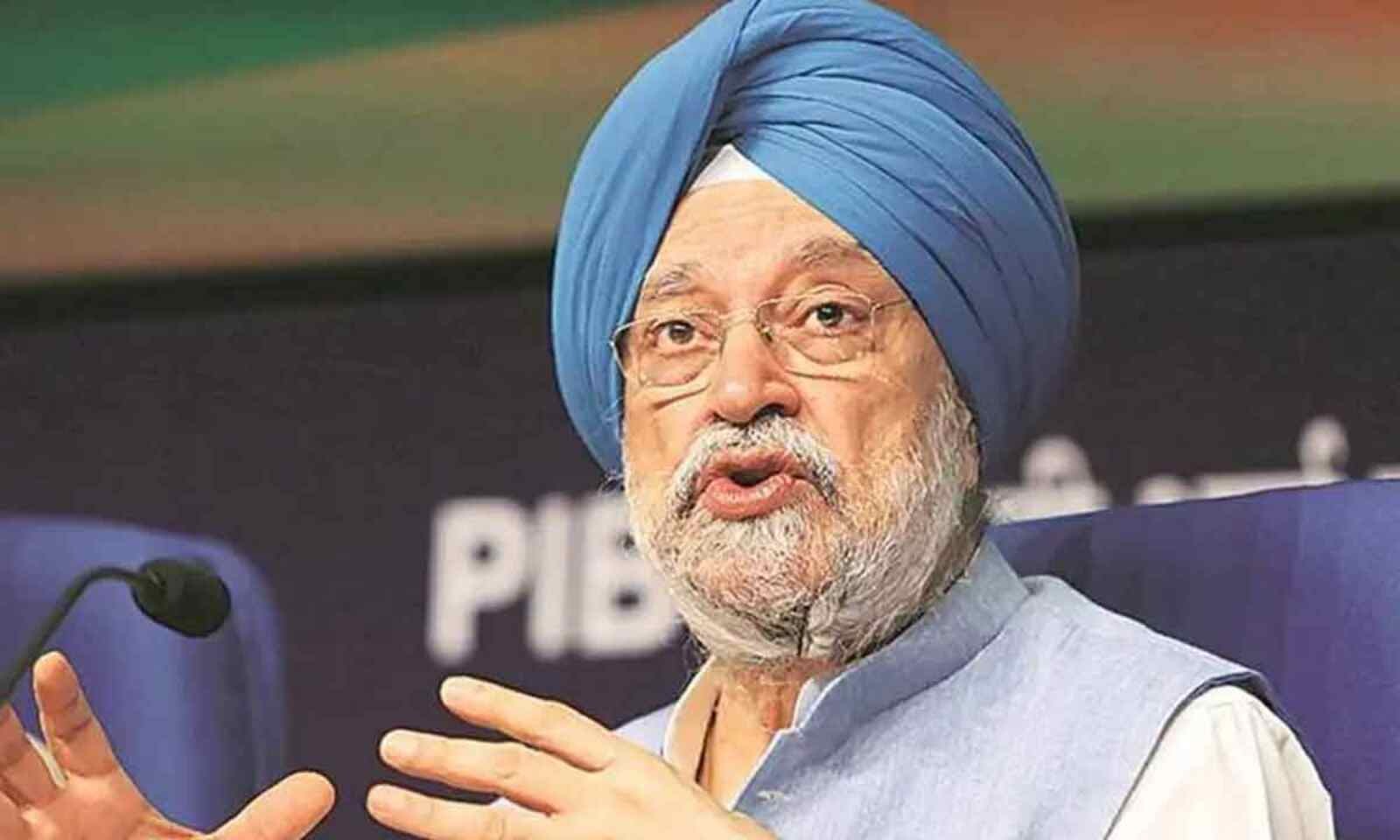
The brief to the diplomats. Union Minister of Petroleum and Natural Gas Hardeep Singh Puri, who set out the 2047 projection to Indian Foreign Service officers on 25 August 2026.
Being large makes you a customer. Being the place where the growth happens makes you a counterparty. India is about to stop negotiating as the first and start negotiating as the second.
At a Glance
• Projection: India’s energy demand to grow about 2.5 times by 2047
• Share of incremental global demand: around 25 per cent
• Rank — energy and oil consumption: third-largest in the world
• Rank — refining: third-largest
• Rank — LNG imports: fourth-largest
• Stated by: Hardeep Singh Puri to IFS officers, 25 August 2026
What follows for the ordinary reader is the shape of the next two decades of energy policy. Demand growing 2.5 times cannot be met by importing 2.5 times as much crude without exposing the household budget to every disruption in a shipping lane. So the strategy has three legs, all visible in the record: expand domestic refining and petrochemical capacity so that value is added at home rather than paid for abroad; diversify the sources of imported crude and gas so that no single supplier or route can set India’s pump price; and grow the non-fossil share fast enough that a rising demand curve does not become a rising import bill in lock step. India crossed 300 GW of installed non-fossil capacity this year, which is the third leg starting to carry weight.
The constructive challenge is honest to state. Electricity generation is where India’s clean transition is furthest along; transport fuel, cooking gas, fertiliser feedstock and industrial heat are where it is hardest, and those are precisely the uses that scale with a growing middle class. The way forward runs through the unglamorous parts of the system — gas pipelines and city gas distribution reaching the towns that still burn something worse, storage and grid flexibility so that the 300 GW is available at eight in the evening and not only at noon, and long-term supply contracts negotiated now, while India’s share of future growth is the strongest card it will ever hold. The number Mr Puri gave the diplomats is not a boast. It is a deadline.