Blitz Bureau
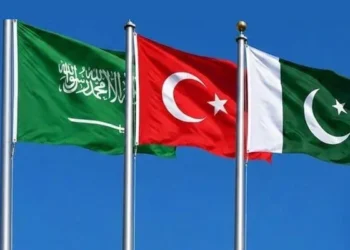
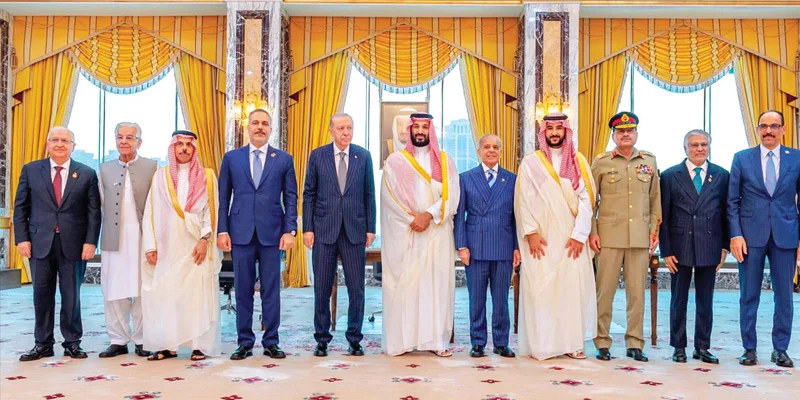
NEW DELHI: Pakistan, Saudi Arabia and Turkiye have formally called their new mutual defence pact the Mecca Defence Alliance, announcing the name in Istanbul after a meeting of senior officials from the three countries.
“A secretariat has been established in Riyadh, and the first secretary-general will be appointed amongst our Pakistani brothers,” Turkish Foreign Minister Hakan Fidan said on August 31 at a news conference after the talks.
A headquarters was already set up in Saudi Arabia after the formation of a separate Saudi-led maritime coalition this year. Fidan said the alliance was based on “international principles, such as respecting the sovereignty of other states, territorial integrity and not intervening in internal affairs” and it remained “open for the partnership and participation of any other country” in the region.
The meeting came just hours after Washington and Tehran traded strikes for the first time in a month, breaking a lull in a war that has now run for more than six months after the US and Israel launched attacks on Iran on February 28.
Field Marshal Asim Munir, the head of Pakistan’s military, and Deputy Prime Minister Ishaq Dar arrived in Turkiye on August 29. Dar flew in from London, where he had just wrapped up a separate visit.
Egypt may join
Pakistani officials had suggested in recent weeks that Egypt might also join the proceedings, not to discuss the defence pact itself but as part of a foursome that has played a key mediating role in trying to end the US-Israel war on Iran.
The group of four last met in Amman, Jordan, on August 5 and before that in June in Cairo, where it welcomed the signing of the Pakistanbrokered Islamabad Memorandum of Understanding between the US and Iran. At the latest meeting the focus was on the three countries that have inked the mutual security deal.
The Strategic Political and Defence Committee, created under the joint defence agreement that Pakistan, Saudi Arabia and Turkiye signed in Mecca on August 7, has now started the work of turning that political declaration – that an attack on any one of the three states will be treated as an attack on all three – into something operational.
Pakistan’s delegation was led by Dar, Munir and Defence Minister Khawaja Asif. Turkiye was represented by Fidan, Defence Minister Yasar Guler and Chief of the General Staff Selcuk Bayraktaroglu. Saudi Arabia’s delegation included Foreign Minister Faisal bin Farhan Al Saud, Defence Minister Khalid bin Salman and Chief of the General Staff Fayyad al-Ruwaili.
According to Pakistan’s Ministry of Foreign Affairs and Turkish officials, the agenda covered military interoperability, joint exercises, defence industrial cooperation, including joint production and research and counterterrorism coordination.
Like NATO?
While some have compared the alliance’s mutual defence clause to NATO’s Article 5, many independent analysts have pushed back on the comparison, noting that the pact has no integrated command, standing force or joint military machinery of the kind that underpins NATO.
Dar said on August 9 that the agreement was defensive in nature and did not replace any existing bilateral or multilateral arrangement.
Pakistan’s Foreign Ministry said the pact remains open to other states. Bangladesh has gone furthest in publicly signalling interest. Within the Gulf Cooperation Council, former Qatari Prime Minister Hamad bin Jassim Al Thani has publicly urged all six of its states to join.