
Rising fuel costs, discontent with the state of schools, declining public services and a housing crisis are fueling an autumn of protests in Europe.
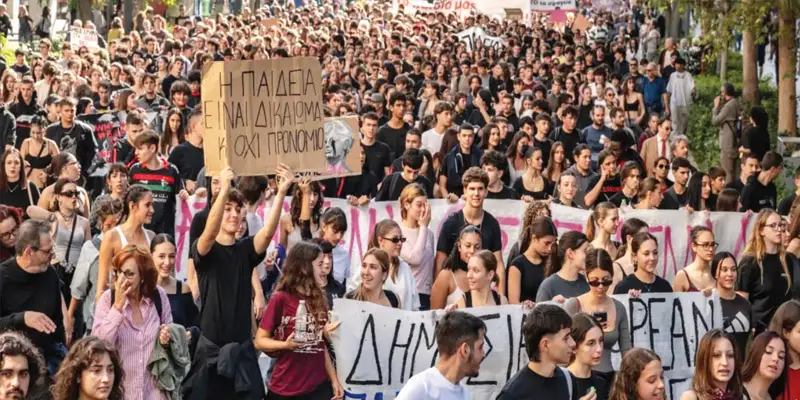
Crowds have protested for weeks in major cities, with some demonstrations marked by arrests, looting, injuries and violence across France, Italy and Albania. In Spain and Portugal, tent camps have sprung up to protest unaffordable housing, according to an AP report.
Cities have turned into battlefields as top EU economies, including France, Italy and Spain, approach pivotal elections, while far-right parties have made electoral gains in Germany and could do so elsewhere. It also comes as Europe faces a critical moment in its support for Ukraine, with President Donald Trump making overtures to President Vladimir Putin even as Russia is blamed for increasingly frequent arson attacks, cyberattacks and other acts of sabotage in NATO countries.
In France, high schoolers have staged blockades and demonstrations for more than three weeks, demanding more resources for schools they describe as understaffed and dilapidated, especially in lower-income neighborhoods.
The protests broadened as France’s CGT labor union and other activists joined in while students paused for a fall break. The movement now includes demands over rising living costs and public services. In Spain, elementary and secondary schoolteachers began an indefinite strike in Madrid last week to demand better pay and working conditions. Discontented teachers staged similar walkouts elsewhere in Spain this year. Similar housing protests have sprung up in Portugal’s largest cities, Lisbon and Porto, and in Barcelona, a focal point of Spain’s overtourism and housing challenges.
“Italia in Piazza,” or Italy in the Streets, has galvanized thousands of demonstrators, voicing demands for better employment, healthcare, education, and access to housing, as well as higher wages. Inflation in Italy rose to 4.2% in September, surpassing the eurozone’s 3.8%, according to government data.
Flamingo movement
Anti-government protests have stretched over a week in Albania’s capital of Tirana, with clashes escalating after high school and university students joined the broad anti-government “Flamingo” movement calling for Socialist Prime Minister Edi Rama to resign. In Serbia, the university students leading mass anticorruption protests for nearly two years are challenging an attempted return to power by the Balkan country’s former populist leader Aleksandar Vucic in parliamentary elections.
Key factors
Among the factors fuelling protests in European countries, economic inequality is cited as a major reason.
Inflation, fuel prices and living standards in France.
Housing and stagnant wages in Spain.
Low wages and healthcare strain in Italy.
Education cost and other economic pressures in Belgium.
Corruption and job scarcity in Albania.
Living costs and housing in Portugal.