Blitz Bureau
NEW DELHI:The monsoon is running roughly 11 per cent below its long-period average, and every year that sentence is written the same anxiety follows it. The structural fact underneath is more useful than the seasonal one: about half of India’s net sown area has never had an alternative to rain.
India has spent seven decades building irrigation, and it has worked. The net irrigated area now covers close to half of the net sown area — a transformation by any historical measure, and one that turned recurring famine into recurring inconvenience. But the arithmetic cuts both ways. The other half, give or take, remains rain-fed, and official assessments have long held that around 40 per cent of the net sown area will stay rain-fed even after India develops its full irrigation potential, because the remaining land is in terrain or aquifer conditions where canals and tubewells are not economic. That is the permanent part of the problem. A deficient monsoon is not an aberration that better forecasting will eventually retire. For a very large share of Indian farmland, rainfall is the irrigation system, and it always will be.
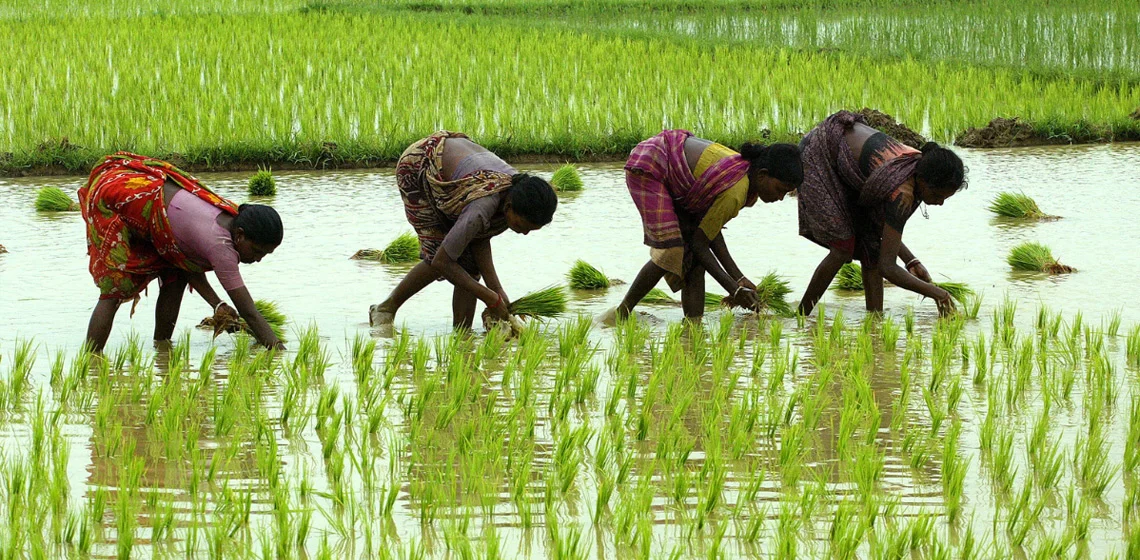
The dependent half: rain-fed land accounts for roughly half of India’s net sown area and a large share of its coarse cereals, pulses and oilseeds — the crops that do not have a canal behind them.
Irrigation solved the part of the problem that could be solved with concrete. What is left has to be solved with soil, seed and storage.
At a Glance
• Net irrigated area: roughly 49 per cent of net sown area
• Source split within irrigation: about 40 per cent from canals, about 60 per cent from groundwater
• Rain-fed share: roughly half the net sown area — and around 40 per cent expected to remain rain-fed even at full irrigation potential
• This season: cumulative rainfall to early August about 11 per cent below the long period average, with the shortfall concentrated in the northwest
• Distribution matters more than the total: weekly rainfall has run excess over the south peninsula while the northwest stayed deficient
• What rain-fed land grows: a disproportionate share of India’s pulses, oilseeds and coarse cereals
Two things follow, and both point somewhere constructive. The first is that groundwater now supplies roughly 60 per cent of irrigated area, which means India’s insurance against a weak monsoon is itself a depleting asset. Every dry year draws harder on aquifers that a wet year must refill, and the refilling is not automatic — it depends on whether rainfall is given time and surface to percolate rather than being channelled away. This is why watershed development, check dams, farm ponds and the restoration of village tanks are not rural-development ornaments. They are the recharge budget for the country’s main irrigation source, and they are among the few interventions that work specifically on the land irrigation cannot reach.
The second is that the rain-fed half is where crop choice does the most work. Pulses, oilseeds, millets and coarse cereals are the crops with shorter windows, lower water demand and better tolerance of an erratic distribution — and they are also, not coincidentally, the crops India imports most heavily. Aligning procurement, storage and price signals so that a farmer on rain-fed land is rewarded for growing what that land is suited to, rather than chasing a water-hungry crop with assured procurement behind it, is the single highest-return reform available in Indian agriculture. It needs no new technology and no new mission. It needs the price signal to stop contradicting the rainfall map. Micro-irrigation, soil-moisture advisories and short-duration seed varieties then do the rest — not by making the monsoon reliable, which no policy can, but by making a farm’s income less dependent on it. That, and not the seasonal departure figure, is the number worth improving.