Blitz Bureau
NEW DELHI: Five Union portfolios sit at one table in Singapore today. The reason is a single number: a country of six million people supplied a third of everything India received in foreign direct investment last year.
The fourth India-Singapore Ministerial Roundtable is held in Singapore on 20 August, with Finance Minister Nirmala Sitharaman, External Affairs Minister S. Jaishankar, Commerce and Industry Minister Piyush Goyal, Electronics and Information Technology Minister Ashwini Vaishnaw and Minister of State Jitin Prasada attending together. The fourth India-Singapore Business Roundtable runs alongside it, followed by a signing of memoranda and a lunch hosted by Singapore’s Deputy Prime Minister. The agenda covers advanced manufacturing, digitalisation, connectivity, healthcare and skills development under the Comprehensive Strategic Partnership.
The format is itself the point. Most bilateral engagement moves one ministry at a time, which means a manufacturing proposal that needs a customs ruling, a data rule and a skills accreditation travels through three separate calendars. Putting finance, external affairs, commerce and electronics in the same room compresses that. It is the same logic India has applied at home to single-window clearances, applied to a relationship.
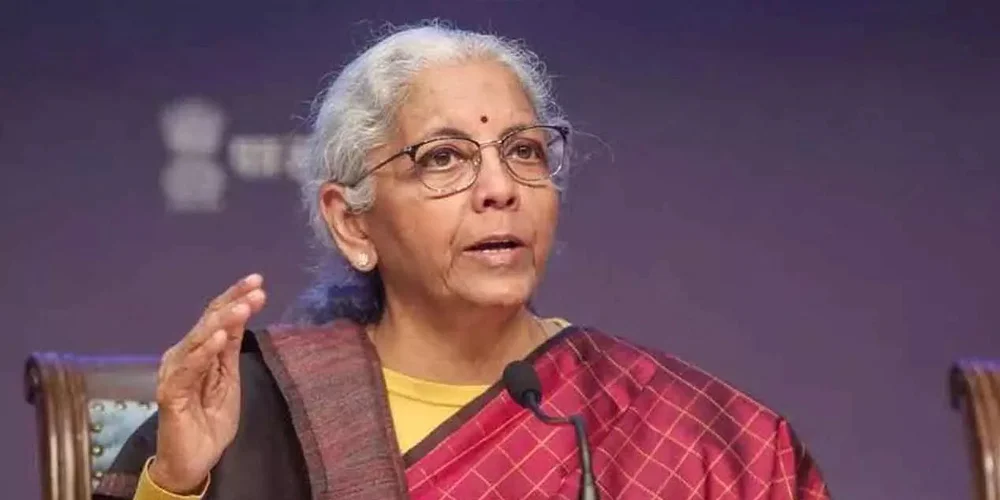
Leading the delegation: Union Finance Minister Nirmala Sitharaman, who travels to Singapore for the fourth India-Singapore Ministerial Roundtable on 20 August 2026, alongside four other Union ministers.
Singapore supplied a third of India’s foreign direct investment last year. Much of that money did not begin there — which is precisely the flow GIFT City was built to bring onshore.
At a Glance
• Event: 4th India-Singapore Ministerial Roundtable, Singapore, 20 August 2026
• Indian delegation: Sitharaman, Jaishankar, Goyal, Vaishnaw, Prasada
• Singapore FDI into India, 2025-26: $19.8 billion — largest single source
• Share of India’s total FDI inflows: 33.6 per cent of $58.85 billion
• Cumulative since April 2000: $194.68 billion, 24.72 per cent of the total
• Next largest cumulative source: Mauritius, $186.8 billion
• Agenda: advanced manufacturing, digitalisation, connectivity, healthcare, skills
• Alongside: 4th India-Singapore Business Roundtable and MoU signing
The investment numbers explain the seniority of the delegation. Singapore was India’s largest source of foreign direct investment in 2025-26 with equity inflows of $19.8 billion, against total FDI inflows of $58.85 billion for the year on DPIIT data released on 3 June 2026 — that is 33.6 per cent from one jurisdiction. Cumulatively, Singapore has sent $194.68 billion since April 2000, which the department puts at 24.72 per cent of all FDI equity into India, just ahead of Mauritius at $186.8 billion. Total FDI for 2025-26 was itself 18 per cent above the previous year.
A caution belongs with those figures, and stating it is what makes the rest credible. A large share of what arrives from Singapore does not originate there. Singapore is a holding and treasury jurisdiction, and capital from across Asia, Europe and the Gulf is routed through it for reasons of tax treaty, corporate law and dispute resolution. The $19.8 billion is a measure of where money is domiciled before it enters India, not always of where it was earned. That does not reduce its value — the routing exists because Singapore’s legal and financial infrastructure is trusted — but it does explain why India has been building GIFT City, where assets have now crossed $111 billion, as an onshore alternative for exactly these flows.
For the ordinary reader the practical content of this relationship is jobs and skills rather than capital tables. Singapore has partnered Indian institutions on skills development and advanced manufacturing training for over a decade, and the connectivity items on the agenda — air services, digital payments, port links — touch travellers, students and small exporters directly. India’s Unified Payments Interface and Singapore’s PayNow are already linked for cross-border remittances, which matters to every family with a member working there.
The constructive measure of today’s meeting will not be the number of memoranda signed but how many carry a named implementing agency and a date. Roundtables that produce an institutional owner for each item tend to be worth repeating; those that produce a communiqué tend to be repeated instead.