Blitz Bureau
NEW DELHI: India’s installed non-fossil electricity generation capacity stood at 300.50 gigawatts on 31 July 2026. That is three-fifths of the 500 GW the country has promised itself by 2030 — and, more tellingly, it is now more than half of everything India has plugged in.
The composition explains the speed. Solar accounts for 164.59 GW of the total, against 2.8 GW in 2014. Wind contributes 57.44 GW and large hydro 57.24 GW. Against a total installed generation capacity of roughly 552 GW, non-fossil sources are past 54 per cent — the crossover point that policy documents spent a decade projecting and that has now simply happened. In 2025-26 alone India added a record 44.6 GW of solar capacity, which is more solar in twelve months than the country’s entire solar fleet as recently as 2021.
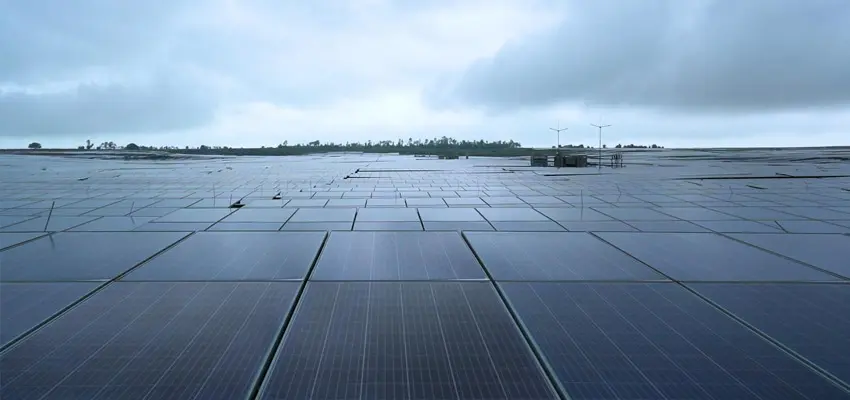
Sixty per cent of the way: solar accounts for 164.59 GW of India’s 300.50 GW of non-fossil capacity as on 31 July 2026, after a record 44.6 GW added in 2025-26.
Capacity is what a country builds. Generation is what it actually gets. The gap between the two is the next decade’s work.
At a Glance
• Non-fossil installed capacity: 300.50 GW as on 31 July 2026
• Share of 2030 target: just over 60 per cent of 500 GW
• Solar: 164.59 GW, up from 2.8 GW in 2014
• Wind: 57.44 GW · Large hydro: 57.24 GW
• Total installed capacity: approximately 552 GW
• Non-fossil share of capacity: above 54 per cent
• Added in 2025-26: a record 44.6 GW of solar
• Global rank: third in installed renewable energy capacity
The honest caveat is one that every energy ministry in the world carries, and India’s is no exception: installed capacity is not the same as electricity delivered. A solar panel produces for a fraction of the day; a coal unit can be asked to produce at three in the morning. Crossing 54 per cent of capacity does not mean 54 per cent of the units consumed, and the country’s evening peak is still met substantially by thermal plants. That is a statement of physics, not of failure.
Which is exactly why the next phase is about storage, transmission and the shape of the grid rather than about more panels. India’s constructive advantage here is that it is building the storage layer while the renewable fleet is still young, rather than retrofitting it onto a mature one — the sequencing problem that has cost several European grids dearly. Battery tenders, pumped hydro and inter-State transmission corridors are the unglamorous half of the 500 GW promise, and they are where the target will actually be won or lost. Three hundred gigawatts is a genuine national achievement. The reason to say so plainly is that it makes the harder second half easier to fund.