Blitz Bureau
NEW DELHI: Amid the daily noise of prices and politics, one of India’s most consequential transformations is unfolding largely off the front pages — on the power grid. The country has already crossed the point where half of its installed electricity capacity comes from non-fossil sources, a milestone it reached roughly five years ahead of the target it set under the Paris Agreement. The direction of India’s energy future is no longer aspirational; it is being built, megawatt by megawatt.
The numbers behind that shift are striking. India’s non-fossil capacity has climbed above 280 gigawatts, with the single biggest annual addition in its history logged in the last financial year. Solar alone now exceeds 150 GW, and the country ranks among the top three in the world for renewable-energy capacity. The stated goal — 500 GW of non-fossil power by 2030 — once looked heroic; today it looks like arithmetic.
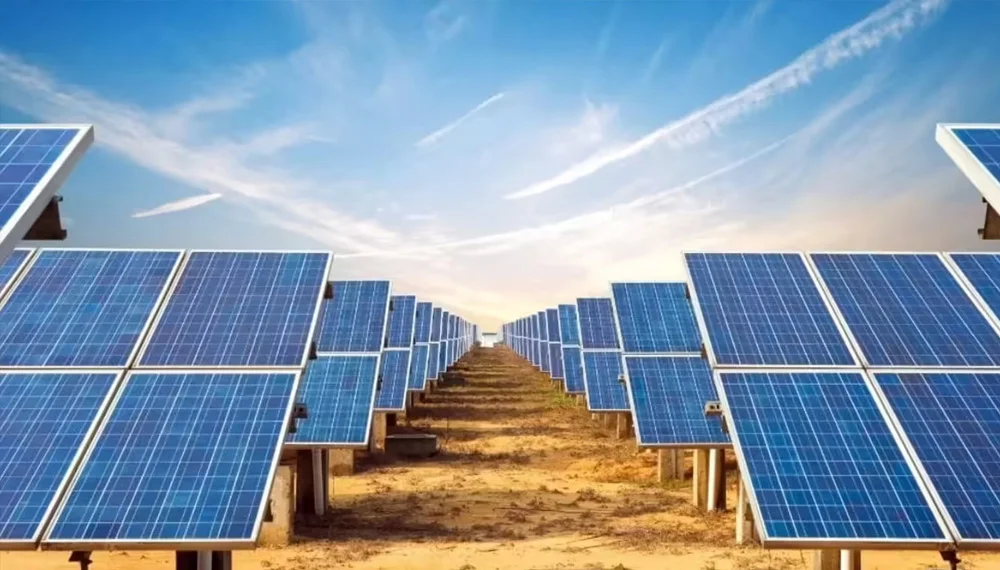
Built, not just promised: Record annual capacity additions have carried India past the halfway mark on non-fossil power years ahead of plan.
The hard part of an energy transition is not the first panel; it is the grid that has to carry the last one. That is where India’s next decade will be won.
The Long View
• Milestone: 50% of capacity non-fossil — hit ~5 years early
• Non-fossil: above 280 GW installed
• Solar: more than 150 GW; 3rd globally in renewables
• Target: 500 GW non-fossil by 2030
The frontier now moves from generation to integration. Adding panels and turbines is the part India has mastered; the harder, higher-value work is building the grids, the storage and the flexibility to absorb power that arrives when the sun shines and the wind blows rather than when demand peaks. Battery storage, pumped hydro, modernised transmission and a domestic manufacturing base for cells and modules are the pieces that turn installed capacity into reliable, round-the-clock electricity.
The constructive, long-view read is that India is running ahead of its own clock on the easy part and knows exactly where the hard part lies. Pair the record build-out with storage, smarter grids and home-grown manufacturing, and the country converts a climate commitment into an industrial advantage — cheaper power, cleaner air and millions of jobs in the technologies the whole world is racing to deploy.