• About us
  • Team
  • Privacy Policy
  • Contact
Tuesday, October 13, 2026
  • Login
No Result
View All Result
World's first weekly chronicle of development news
  • Blitz Highlights
    • Special
    • Spotlight
    • Insight
    • Entertainment
    • Sports
  • Opinion
  • Legal
  • Perspective
  • Nation
    • East
    • West
    • North
    • South
  • Business & Economy
  • World
  • Hindi Edition
  • International Editions
    • Dubai
    • Tanzania
    • United Kingdom
    • USA
  • Blitz India Business
  • Blitz Highlights
    • Special
    • Spotlight
    • Insight
    • Entertainment
    • Sports
  • Opinion
  • Legal
  • Perspective
  • Nation
    • East
    • West
    • North
    • South
  • Business & Economy
  • World
  • Hindi Edition
  • International Editions
    • Dubai
    • Tanzania
    • United Kingdom
    • USA
  • Blitz India Business
No Result
View All Result
World's first weekly chronicle of development news
No Result
View All Result

MARCH AHEAD, not leap forward

by Blitz India Media
October 3, 2025
in Insight
0
MARCH AHEAD, not leap forward
Blitz Bureau

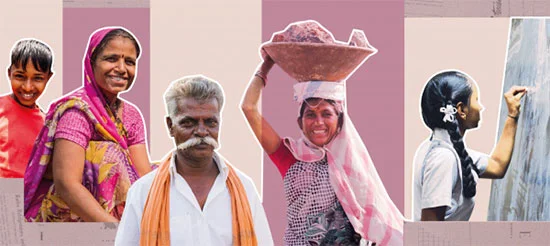
NEW DELHI: Democracy asks simple questions: Does any child sleep hungry, does any mother wrestle with anxiety, does any father living on a daily wage wonder about the family meal tomorrow in the India of the 2020s? The answer is no.

Narendra Modi’s Pradhan Mantri Garib Kalyan Yojana has ensured the highest level of security: food security. Some 800 million Indians get, every month, five kilograms of wheat or rice and one kilogram of preferred pulses. It is the largest social welfare scheme in human history. For Modi this was a fundamental right.

Meaning of trickle

Every Prime Minister has wanted to reduce poverty, but each largely left the responsibility to a massive Government machine which sought answers from the algorithm of overall economic development. The net effect was accurately described, not least by some of its votaries who loved above all the attention of a press conference, as the “trickle-down theory”. They never wondered about the meaning of trickle.

The theory was premised on a disproportionate value system. The rich got rivers; the middle class got a rivulet; the poor got a trickle. No one ever put it in these terms, but the hidden rationalisation was that each got what it merited. The poor deserved their poverty because ignorance and stupidity had kept them poor. Their existence was not defined by a rational compulsory standard in the quality of life but by an incremental rise; if they were a little better off than before then all was good.

Till 2014 women in hundreds of millions did not have basic sanitation, and no one in the classist traditional ruling spectrum lost any sleep over it

Till 2014 women in hundreds of millions did not have basic sanitation, and no one in the classist traditional ruling spectrum lost any sleep over it. They were half a loaf of bread better off than before, weren’t they? Their children were a semi-educated school better off than illiteracy, and that was good enough for the masses.

Of and for people

A paradox must be addressed. A government in a democracy may not be run by the people, but it must be of and for the people. Otherwise, you do not get reelected. The greatest demand for good governance comes from the poor: Why did they rebel so rarely? It is easy to attribute this to fatalism, as Western ‘Orientalists’ have done to justify their economic oppression, conjuring up an image of the East that degraded every aspect of society including culture and religion.

British Orientalists turned Hindu gods into ‘monsters’ even when civilisational achievements in temple architecture left them awestruck. Muslims became synonymous with brutality. The Chinese became opium-eaters. Their own record of citizen-massacres and mass murder through famine was permitted the minutest place in books, and erased from public memory if it escaped censorship.

The Indian poor were filled with hope in the 1950s, and gave vent to their growing disillusionment in the General Election of 1967. In 1971, Indira Gandhi brought ‘Garibi Hatao’ to the top of the democratic agenda but could not do as much about the promise as she may have wished.

The challenge to India’s unity in the 1980s and 1990s, and the heavy price paid, derailed the economic discourse. The economic reforms of the 1990s, essential to the very survival of the nation, delivered disproportionate rewards but, by the turn of the century, the time for excuses was getting over. Suffice to say that if Prime Minister Modi had not lifted Indians out of harsh poverty there would have been perpetual upheaval.

China’s first experiment in a ‘great leap forward’ under the helmsman Mao Zedong ended in an estimated 55 million deaths and economic disaster because it invested in dislocation of all kinds. The repair work had to be done by Deng Xiaoping. It is far more sensible to march ahead rather than leap forward. You keep your feet on the ground.

India marched ahead, but for a long while the pace of the march varied from one class demographic to another. Disparity has not disappeared. It cannot. There is no Utopia, except in books. But India can now assert with confidence that the poor do not belong to another country.

Related Posts

BJP Faces New Pressure from India’s Young Voters
Insight

Why is BJP in defensive mode?

October 3, 2026
BRICS Summit: India’s New Era of Politico-Diplomacy
Insight

Rise of the pivotal power

October 3, 2026
Trump Iran War and Pakistan
Insight

The Trump Syndrome

September 18, 2026
Modi diplomatic gifts
Insight

MODI MIX of huglomacy & booklomacy

September 18, 2026
cost of political office in India
Insight

Politicians paid more

September 4, 2026
Mecca Pact Islamic NATO Pakistan Saudi Arabia Turkey
Insight

An Islamic NATO: The Mecca Mirage

September 4, 2026
Load More
Next Post
A bridge too tall

A bridge too tall

Recent News

Asian Champions Trophy 2026
News

Pathak returns as India names squad for Asian Champions Trophy

by Blitz India Media
October 13, 2026
0

New Delhi, 13 October: Hockey India on Tuesday announced the Indian men’s squad for the Asian Champions Trophy Punjab 2026,...

Read moreDetails
Electronics production grows seven-fold : MeitY

New Delhi, 13 October : India’s fintech sector raised $2.2 billion in the first nine months of 2026 (January 1, 2026–September 30, 2026), up 14 per cent from $1.9 billion in the same period a year earlier, a report said. The report from data intelligence platform Tracxn Technologies Limited said funding rounds dipped from 260 to 153, adding that the funding was concentrated in a smaller number of large late‑stage rounds, with five mega‑rounds of $100 million or more accounting for $1.1 billion or 48 per cent of total capital. The report said in the first nine months of 2026, digital lending and payments topped the category rankings, while Bengaluru accounts for over three-fifths of all capital raised. On the exit side, IPOs saw a 50 per cent uptick while overall acquisitions slowed. As many as 30 companies raised their first funding round, down 49 per cent from 59 in the previous year. Series A and later rounds totalled 77, down 31 per cent from 112. Late-stage funding (Series C+, PE, and pre-IPO) led the mix, rising 95 per cent to $1.5 billion in the first nine months of 2026 — up from $751 million during the same period in the previous year. This capital surge pushed late-stage investments to 67 per cent of total market funding, the report noted. Earlier stages experienced contractions in capital and deal counts. Early-stage funding fell 33 per cent to $668 million across 52 rounds, compared to $1 billion across 82 rounds in nine months of 2025. Seed funding fell 57 per cent to $73.8 million across 76 rounds, down from $173 million across 148 rounds. New unicorns crossed the billion-dollar threshold in an average of 7.1 years after their Series A funding. Moreover, the industry saw 3 IPOs in nine months of 2026, up 50 per cent from 2 in the previous year, alongside 11 acquisitions, down 45 per cent from 20.

October 13, 2026
Indian stock market

IBM and MeitY Startup Hub partner to support India’s deep-tech startups with AI, cloud, quantum computing and mentorship.

October 13, 2026
IBM

IBM, MeitY sign MoU to boost India’s deep-tech

October 13, 2026
Solar panels supplying power in Africa

India Growth Story: Start-ups, Trade, Data and Khadi

October 13, 2026

Blitz Highlights

  • Special
  • Spotlight
  • Insight
  • Entertainment
  • Health

International Editions

  • US (New York)
  • UK (London)
  • Middle East (Dubai)
  • Tanzania (Africa)

Nation

  • East
  • West
  • South
  • North
  • Hindi Edition

E-paper

  • India
  • Hindi E-paper
  • Dubai E-Paper
  • USA E-Paper
  • UK-Epaper
  • Tanzania E-paper

Useful Links

  • About us
  • Team
  • Privacy Policy
  • Contact

©2024 Blitz India Media -Building A New Nation

Welcome Back!

Login to your account below

Forgotten Password?

Retrieve your password

Please enter your username or email address to reset your password.

Log In

    No Result
    View All Result
    • Blitz Highlights
      • Special
      • Spotlight
      • Insight
      • Entertainment
      • Sports
    • Opinion
    • Legal
    • Perspective
    • Nation
      • East
      • West
      • North
      • South
    • Business & Economy
    • World
    • Hindi Edition
    • International Editions
      • Dubai
      • Tanzania
      • United Kingdom
      • USA
    • Blitz India Business

    ©2024 Blitz India Media -Building A New Nation