
• About us
  • Team
  • Privacy Policy
  • Contact
Friday, November 20, 2026
  • Login
No Result
View All Result
World's first weekly chronicle of development news
  • Blitz Highlights
    • Special
    • Spotlight
    • Insight
    • Entertainment
    • Sports
  • Opinion
  • Legal
  • Perspective
  • Nation
    • East
    • West
    • North
    • South
  • Business & Economy
  • World
  • Hindi Edition
  • International Editions
    • Dubai
    • Tanzania
    • United Kingdom
    • USA
  • Blitz India Business
No Result
View All Result
World's first weekly chronicle of development news
No Result
View All Result

Himalayan tourism needs a new model

by Blitz India Media
June 27, 2026
in Insight
0
Sustainable Himalayan Tourism Is the Need of the Hour

Sukumar Sah

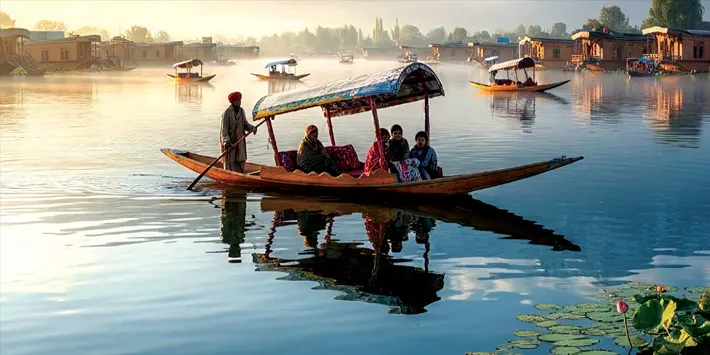
NEW DELHI: The Himalayas have always represented something larger than geography. They are India’s water source, its spiritual sanctuary, its climate regulator and one of its greatest natural treasures. Yet, from Kashmir to Arunachal Pradesh, the mountains are increasingly showing signs of stress – not only from climate change but also from the way tourism is being pursued.

The old model of measuring success by the number of visitors has reached its limits. The time has come to redefine Himalayan tourism in terms of sustainability rather than footfall.

Overstretched infra

Every long weekend now brings familiar images: kilometres-long traffic jams to hill stations, overflowing parking lots, plastic waste scattered across scenic landscapes and hotels mushrooming on fragile slopes. Popular destinations such as Manali, Mussoorie, Shimla and Nainital routinely struggle with shortages of water, waste disposal problems and overstretched civic infrastructure. The very attractions that draw visitors are being steadily eroded by their growing numbers.

Climate change has compounded the problem. Glaciers are retreating, rainfall patterns have become erratic and extreme weather events are becoming more frequent. Flash floods in Himachal Pradesh and Uttarakhand, landslides triggered by heavy rainfall and sudden cloudbursts have exposed the vulnerability of both local communities and tourists.

The Himalayan ecosystem is inherently fragile. Road widening, indiscriminate construction and unchecked commercialisation can destabilise slopes and increase disaster risks. The lessons from recent years are difficult to ignore: nature eventually makes you pay for reckless, mindless pursuit of development.

Economic lifeline

Tourism, undoubtedly, remains an economic lifeline for those populating the hills. It generates employment in hotels, transport, handicrafts, restaurants and adventure sports. Thousands of families depend on seasonal visitors for their livelihoods. But there is a growing distinction between tourism that enriches local communities and tourism that merely overwhelms them.

A better model would focus on quality rather than quantity. Instead of encouraging millions of short-duration visitors concentrated in a few destinations, policymakers should promote longer stays, smaller groups and wider geographical dispersal. Homestays, eco-tourism initiatives and community-managed tourism can ensure that economic benefits reach local residents rather than being captured entirely by large commercial operators.

Technology can also become an ally. Online permit systems, digital crowd management, advance booking requirements and real-time visitor monitoring can help regulate tourist flows in environmentally sensitive areas. Carrying-capacity assessments should become mandatory before approving new infrastructure projects.

Infrastructure itself requires a rethink. Better waste management systems, sustainable water supply, electric public transport and environmentally sensitive construction practices should become standard rather than exceptional. Development cannot simply mean pouring more concrete into mountain valleys.

Ecological necessity

Travellers, too, have responsibilities. Responsible tourism means respecting local customs, avoiding littering, reducing plastic use and recognising that mountains are living ecosystems rather than recreational playgrounds. Every visitor leaves a footprint; the challenge is to ensure that it remains as light as possible.

The Himalayas have survived empires, wars and centuries of change. Their greatest threat today may come from well-intentioned, poorly managed prosperity. If tourism continues to expand without ecological safeguards, the costs will eventually be measured not only in damaged landscapes but also in lost livelihoods and increased human tragedy.

The choice before India is not between development and conservation. It is between short-term gains and long-term sustainability. A new tourism model for the Himalayas is not an environmental luxury – it is an economic and ecological necessity.

A better model would focus on quality rather than quantity. Instead of encouraging millions of short-duration visitors, policymakers should promote longer stays, smaller groups and wider geographical dispersal


Related Posts

Social Media Freedom Under Threat from Governments and Big Tech
Insight

Mandarins and moguls muzzle dissent

November 17, 2026
Saudi Arabia’s Strategic Shift After US Setbacks
Insight

One hundred years of insecurity

November 17, 2026
Democratic Protest
Insight

Ballot box or street

October 30, 2026
India's Journey from Hunger to Poverty Reduction
Insight

His war on hunger

October 16, 2026
India-US Relations
Insight

India seeks a partner, not bully

October 16, 2026
BJP Faces New Pressure from India’s Young Voters
Insight

Why is BJP in defensive mode?

October 3, 2026
Load More
Next Post
PM Modi condoles death of shooting coach Jaspal

A champion’s legacy beyond medals

Recent News

India-Japan Defence Cooperation
News

India, Japan reaffirm commitment to free, open and rules-based Indo-Pacific

by Blitz India Media
November 19, 2026
0

Blitz BureauTokyo, 19 November: India and Japan held a 2+2 Ministerial Dialogue in Tokyo, reaffirming their Special Strategic and Global...

Read moreDetails
Indian stock market

Sensex jumps 990 points, Nifty reclaims 25,500 as auto stocks power rally

November 19, 2026
Blitz BureauNew Delhi, 19 November: Former wicketkeeper Ian Healy believes Pat Cummins does not need to stand down as Australia’s Test captain, but he has lost a big part of his credibility following Cameron Bancroft’s fresh claims on the 2018 ball-tampering scandal. Healy’s comments come after Bancroft claimed that the entire side knew about the plan to use sandpaper during the Cape Town Test against South Africa, and that he ‘took the bullet’ for the group. That revelation has turned the spotlight back on Cummins, who was one of the bowlers on that team and who previously said at a press conference last week that they were unaware of the plot. “No, he doesn't need to stand down. And I don't want to get into another panic mode of what happened in 2018, it was panic, and they tried to do an investigation in no time, didn't talk to anyone, it was rubbish. It was a lack of quality and rubbish, and rushed, and panicked. “Now, I can't say whether he should stand down now. Will he stand down? That might be a different thing. He might stand down. I would feel without refuting Cameron Bancroft's words again, he will struggle to captain the team. You've had a big part of your credibility taken away with that press conference now that it's been proven to be not as complete as Pat made it out to be,” Healy told SEN Radio. As per Healy, the hit to the credibility also extends to Cummins fellow bowlers from that series: Josh Hazlewood, Mitchell Starc and Nathan Lyon. “I would say it taints their personal legacies. I don't think it's going to taint their performance legacies. “Either side of this period where there was ball tampering happening - how long was it going before South Africa and probably not much since - but they got very brazen with it, so that tells me it's probably been going on longer than we think. “So they probably achieved some success with their skills, with a ball that's doing more than it was going to. That's a little bit of a part of their career legacy. Performance legacy, no. I think their performances stack up ok to what all the cricket world have been doing. Personally now, they're not as credible as they once were, unless they change something drastically in the next few days.”

Cummins has lost a big part of his credibility, says Healy

November 19, 2026
modi

PM Modi challenges India Inc to raise quality standards

November 19, 2026
India, Italy to strengthen economic partnership

India, Italy to strengthen economic partnership: Goyal

November 18, 2026

Blitz Highlights

  • Special
  • Spotlight
  • Insight
  • Entertainment
  • Health

International Editions

  • US (New York)
  • UK (London)
  • Middle East (Dubai)
  • Tanzania (Africa)

Nation

  • East
  • West
  • South
  • North
  • Hindi Edition

E-paper

  • India
  • Hindi E-paper
  • Dubai E-Paper
  • USA E-Paper
  • UK-Epaper
  • Tanzania E-paper

Useful Links

  • About us
  • Team
  • Privacy Policy
  • Contact

©2024 Blitz India Media -Building A New Nation

Welcome Back!

Login to your account below

Forgotten Password?

Retrieve your password

Please enter your username or email address to reset your password.

Log In

    No Result
    View All Result
    • Blitz Highlights
      • Special
      • Spotlight
      • Insight
      • Entertainment
      • Sports
    • Opinion
    • Legal
    • Perspective
    • Nation
      • East
      • West
      • North
      • South
    • Business & Economy
    • World
    • Hindi Edition
    • International Editions
      • Dubai
      • Tanzania
      • United Kingdom
      • USA
    • Blitz India Business

    ©2024 Blitz India Media -Building A New Nation