Blitz Bureau
NEW DELHI: Digital self-enumeration opened in Ladakh today. The reason it opened there first is the most practical one in the whole exercise: winter.
Self-enumeration for Census 2027 began across the Union Territory of Ladakh today and runs to 31 August, ahead of population enumeration — the second and larger phase of the census — from 1 to 30 September. About 637 enumeration blocks have been created to cover the territory completely. On that schedule Ladakh becomes the first Union Territory in the country to finish the Census 2027 exercise, a full season before the rest of India.
The sequencing is deliberate and the reason is climatic rather than administrative. Amit Sharma, Chief Principal Census Officer and Director of Census Operations for Jammu and Kashmir and Ladakh, told a press conference that the September window had been planned in view of the region’s harsh winter conditions, difficult terrain and limited accessibility. Anyone who has watched the Zoji La or the Rohtang approaches close understands the arithmetic: an enumerator cannot reach a hamlet in Zanskar or Nubra in February, and a census that cannot reach a household does not count it. Moving Ladakh to September is how the count stays complete.
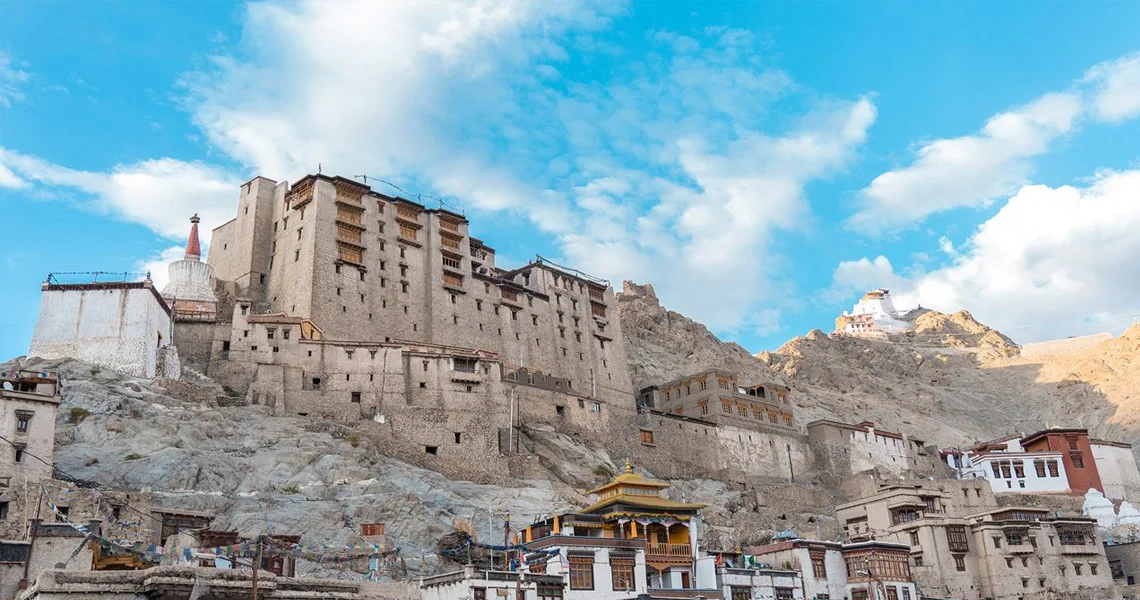
First to be counted: Leh Palace above Leh. Ladakh’s population enumeration has been scheduled for September because the territory’s winter would otherwise put households out of an enumerator’s reach.
An enumerator cannot reach Zanskar in February, and a census that cannot reach a household does not count it. September is how the count stays complete.
At a Glance
• Self-enumeration in Ladakh: 17 to 31 August 2026
• Population enumeration: 1 to 30 September 2026
• Enumeration blocks: about 637, for complete coverage
• Status: first Union Territory to complete Census 2027
• Reason for the early window: harsh winter, difficult terrain, limited accessibility
• Named by: Amit Sharma, Chief Principal Census Officer and Director of Census Operations, J&K and Ladakh
• Phase one: House Listing Operations, 1 to 30 June 2026
• Phase one data collection: 100 per cent digital
• Data collected in phase two: population distribution, demographic composition, education, economic activity, migration, disability, language, fertility
The wider point is what the exercise has become. House listing operations, the first phase, ran from 1 to 30 June and achieved 100 per cent digital data collection. Population enumeration will gather household-level information on population distribution, demographic composition, education, economic activity, migration, disability, language and fertility. Those are the variables that set constituency boundaries, size a state’s share of central transfers, decide where a primary health centre or a school is sanctioned, and anchor every survey conducted between one census and the next. A digital census does not merely save paper; it shortens the gap between collection and publication, which is the difference between planning on current data and planning on data that has aged.
Self-enumeration is where the citizen’s part comes in, and it is worth using. A household that fills its own form online reduces the chance of a transcription error and removes the need for an enumerator to make a second visit — which, in Ladakh’s geography, can mean a day’s travel. The demanding piece will be connectivity in the remoter valleys, and it is a fair thing to name: self-enumeration works where a network reaches, and the September enumerator visit exists precisely for where it does not. Getting Ladakh finished before the snow is a small logistical achievement of the kind that rarely makes a front page, and it is exactly the sort of thing on which a credible national count depends.