Blitz Bureau
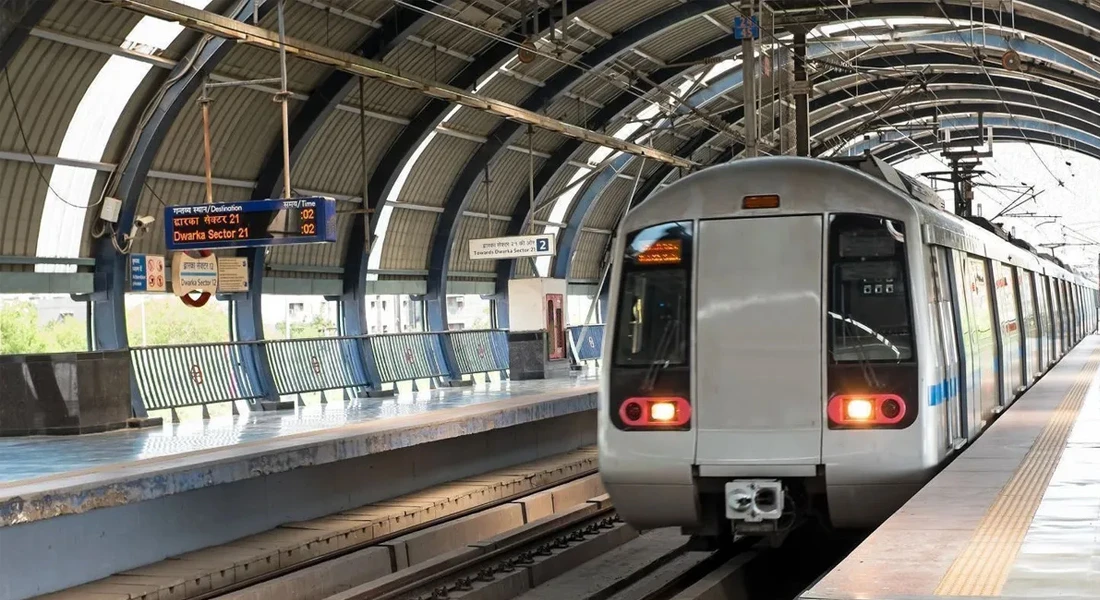
NEW DELHI: Commuters in central Delhi are navigating a fourth consecutive day of Metro restrictions. From 7.30 am on Saturday, the Delhi Metro Rail Corporation closed eighteen stations until further instructions, a security measure connected to the student demonstrations near Jantar Mantar. The closed list runs through the capital’s administrative core: Rajiv Chowk, Patel Chowk, Lok Kalyan Marg, Ramakrishna Ashram Marg, Barakhamba Road, Supreme Court, Seva Teerth, Janpath, Mandi House, Central Secretariat, ITO, Delhi Gate, Indraprastha, Khan Market, Jor Bagh, Shivaji Stadium, Jhandewalan and New Delhi.
The practical detail matters more than the list. Interchange facilities remain available at Rajiv Chowk, Mandi House and Central Secretariat — meaning passengers can still change lines at those junctions even though they cannot enter or exit there. Services on the Airport Express Line are running only between Dhaula Kuan and Yashobhoomi Dwarka Sector 25. For anyone travelling to the airport, to a hospital in the central district, or across the city this weekend, the operative advice is to plan an alternative surface route to and from the affected stretch and to allow substantially more time than usual.
Interchange, not entry: Eighteen central Delhi stations closed from 7.30 am on Saturday for a fourth day, with line changes still possible at Rajiv Chowk, Mandi House and Central Secretariat, and the Airport Express running only between Dhaula Kuan and Yashobhoomi Dwarka Sector 25.
A city of this size runs on its timetable. Every hour the map is redrawn, a few million people rewrite their day — which is why clear, early information is itself a public service.
At a Glance
• Closed: 18 stations from 7.30 am, July 25 — fourth consecutive day
• Interchange open: Rajiv Chowk, Mandi House, Central Secretariat
• Airport Express: Dhaula Kuan to Yashobhoomi Dwarka Sector 25 only
• In court: pleas alleging police excesses to be heard July 27
The legal dimension of the week will also be heard on Monday. The Supreme Court has agreed to take up on July 27 a plea alleging police excesses against students who protested at Jantar Mantar, a matter mentioned before a Bench headed by the Chief Justice of India, Surya Kant, and comprising Justices Joymalya Bagchi and V Mohana. Senior advocate Gopal Sankaranarayanan told the Court that two petitions concerning alleged violence during the demonstrations had been filed, with multiple states named as parties. Tensions had escalated on July 20 when a march toward Parliament was attempted without permission; the events of that day are what the petitions ask the Court to examine.
The constructive way forward runs along two tracks that need not compete. Delhi has managed large gatherings and long protests before, and the workable formula is familiar: keep the right to peaceful assembly protected, keep the city moving, and let an independent judiciary examine contested conduct rather than leaving it to argument on the street. For the immediate weekend, the practical priority is communication — timely station-level updates, extra bus capacity on the affected corridors, and clear guidance for hospital and airport traffic — so that the burden on ordinary commuters is measured in inconvenience rather than in missed appointments.