Blitz Bureau
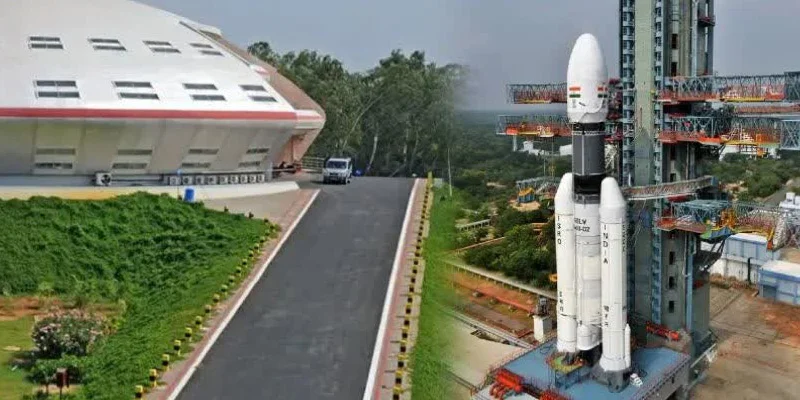
NEW DELHI: The road to India’s first human spaceflight is paved with the least glamorous and most important work of all: making sure the crew can come home safely. Through July, ISRO has been steadily putting Gaganyaan’s systems through their paces — including an early ground test of the crew-safety and life-support hardware — as it works toward a sequence of three uncrewed test flights before any astronaut leaves the pad. The first uncrewed mission is targeted for this year; the crewed flight is planned for 2027, when India would become only the fourth nation to launch humans to orbit on its own rocket.
Running alongside the human programme is the quieter fleet that already earns its keep. ISRO has lined up EOS-05, an earth-observation satellite bound for geostationary orbit aboard a GSLV rocket from Sriharikota, designed to deliver near-real-time images of the subcontinent. From that vantage a single spacecraft can watch a cyclone form, a coastline erode or a river valley flood — exactly the kind of eye-in-the-sky that turns a weather warning into an evacuation order in time to matter.
Safety first, then the stars: ISRO is advancing Gaganyaan’s crew-safety and life-support testing ahead of three uncrewed flights, with a crewed mission planned for 2027 — while EOS-05 prepares to add a near-real-time eye over India’s coasts and rivers.
The measure of a human spaceflight programme is not the thrill of launch but the certainty of return. India is building that certainty test by test.
At a Glance
• Gaganyaan: crew-safety and life-support testing advancing through July
• Sequence: three uncrewed test flights, the first targeted this year
• Crewed flight: planned for 2027 — India would be the 4th nation to fly its own
• Also ahead: EOS-05 earth-observation satellite on a GSLV from Sriharikota
Why does the unhurried pace deserve applause rather than impatience? Because human spaceflight forgives nothing, and the discipline of testing every abort, every parachute and every life-support loop before a person rides the rocket is the whole point. Each ground test that goes to plan retires a risk; each uncrewed flight rehearses the day that counts. This is how a spacefaring nation earns the right to send its own citizens to orbit — not by rushing the calendar, but by respecting it.
The constructive way forward is to keep the two tracks reinforcing each other. The earth-observation satellites deliver immediate public value — better disaster warning, sharper crop and coastline monitoring — and fund the credibility of the wider programme, while Gaganyaan builds the human-rated systems that will one day carry Indians further still. Handled with the patience ISRO is showing, this is a space programme maturing exactly as it should: proving the hard things quietly, so the historic ones can happen safely.