Blitz Bureau
NEW DELHI: The Sports Ministry has cleared 492 athletes for Japan. The composition of that number is a better guide to where Indian sport is going than the medal forecast will be.
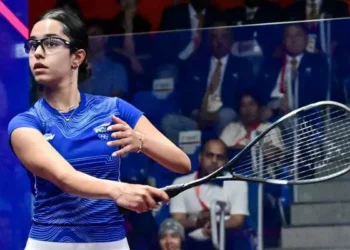
The Ministry of Youth Affairs and Sports has approved a 492-member Indian contingent for the Asian Games beginning next month in Japan. The split is 265 men and 227 women — which means women are 46.1 per cent of the squad. Athletics accounts for the single largest share at 73 participants, or about 14.8 per cent of the whole contingent.
The women’s figure deserves to be stated plainly because of what it is not. It is not a quota, and it is not a target that has been announced and then engineered. Continental Games selection runs on qualification standards and federation nominations, so a 46.1 per cent share is the output of a pipeline rather than a policy instruction. A generation of Indian women reached the qualifying marks, and the contingent reflects that arithmetic. Two decades ago the equivalent proportion in Indian multi-sport contingents sat far lower, and the gap closed one discipline at a time — wrestling, boxing, badminton, weightlifting, athletics, shooting and hockey each contributing.
A pipeline, not a quota. Women make up 227 of the 492 athletes cleared for the Asian Games in Japan — a share produced by qualification standards rather than by an announced target.
A contingent tells you who qualified. A contingent that is 46 per cent women tells you who was allowed to start training ten years ago.
At a Glance
• Contingent: 492 athletes approved by the Sports Ministry
• Split: 265 men, 227 women — women are 46.1%
• Largest discipline: athletics, with 73 participants (14.8%)
• Venue: Japan, from next month
• Same week: “Khelo India Samvad — Khel Ki Baat PM Ke Saath” on 27 August
• Format: two colleges in every district of Punjab and Haryana, and Chandigarh
• Occasion: National Sports Day, 27 August
• Recent form: wrestling medals at the U-20 Worlds; javelin and long jump titles on the Continental Tour
The week’s other sporting item is the feeder to this one. On 27 August, National Sports Day, the ministry is running “Khelo India Samvad — Khel Ki Baat PM Ke Saath” in two colleges in every district of Punjab and Haryana and in Chandigarh, with the stated aim of connecting young people to the national vision on sport, fitness and youth development. Those two states supply a share of Indian contingents far out of proportion to their population, and the college-by-college format targets precisely the age at which a promising athlete decides whether to continue or to concentrate on a degree.
Recent results suggest the pipeline is still filling. At the Under-20 World Championships in Slovakia, Mansi Lather took silver at 68kg while Tanvi Gundesh Magdum and Komal won bronze. At the World Athletics Continental Tour Silver meet in Bhubaneswar, Rohit Yadav won the javelin with a personal best of 87.68 metres and Murali Sreeshankar took the long jump. The constructive work now is unglamorous and local: the colleges hosting the 27 August conversation need usable grounds, coaching and equipment, so that a student inspired on Thursday has somewhere to train on Friday. Linking Khelo India centres to college facilities in those same districts is the step that would convert an event into a system.