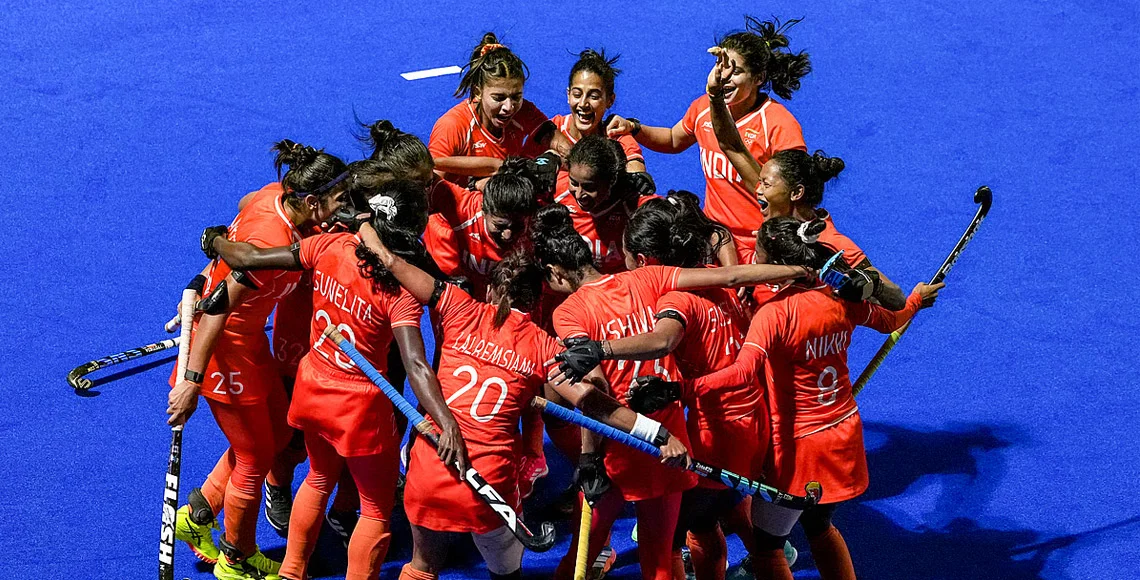
Indian women hockey team ends 44-year Asian Games gold wait
>
NEW DELHI, 3 October: Ten minutes into the final, Lalremsiami hit a reverse-stick shot and India led China by a goal. Sixty minutes later the score had not changed. The Prime Minister’s Office, in its release of 2 October, congratulated the Indian women’s hockey team on a gold medal at the Asian Games “after over four decades”; the last one came in 1982, at the event’s first edition in New Delhi, which makes the gap 44 years.
The opponent made the result heavier than the score. China were the defending champions, and the match in Kakamigahara, in Gifu prefecture, was the kind India had lost before: in 1998 to South Korea and in 2018 to Japan, both times in the final, both times for silver. This time one goal held.
The Asian Games is the continent’s Olympic qualifier in hockey. The winner takes a direct place at the next Games; the teams behind go into a qualifying tournament. India’s women missed the Paris Olympics of 2024 after losing in the qualifiers at home in Ranchi. The goal in Gifu removes that route from the calendar altogether: India go to Los Angeles in 2028 as Asian champions, and the next two years can be spent building a team rather than surviving a tournament to enter one.
At a glance
Final: India 1, China 0 — women’s hockey, Asian Games, Aichi-Nagoya 2026
Goal: Lalremsiami, 10th minute
Previous gold: 1982, New Delhi
Earlier finals lost: 1998 (to South Korea), 2018 (to Japan)
What the gold carries: a direct place at the Los Angeles 2028 Olympic Games
What India gains
An Olympic place settled two years early, which is the difference between planning a team and scrambling to qualify one — and a women’s side that has now beaten the holders in a final.
Lovlina leads India’s four-gold boxing haul
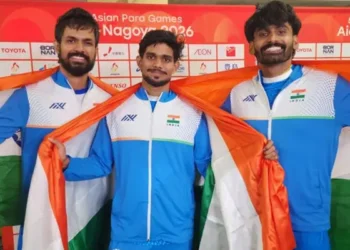
NEW DELHI, 3 October: Three of the six golds India won on 2 October came from the boxing ring. Lovlina Borgohain won the women’s 75 kg final by a 5-0 decision, a result the Prime Minister’s Office described in its release of 2 October 2026 as an “emphatic” victory. Parveen won the women’s 65 kg title and Ankush the men’s 80 kg, each announced by the PMO.
The fourth came on a mat. Sujeet won the men’s 65 kg freestyle wrestling final on his Asian Games debut, and the Prime Minister’s Office noted that it was India’s first wrestling gold of this edition. A debut gold in a weight class that India has long treated as its own is the kind of result a federation builds a cycle around.
Three boxing golds in one day is a statement about the depth of the squad rather than any one boxer. Lovlina’s is the senior medal, an Olympic bronze medallist adding an Asian title at a higher weight; Parveen’s and Ankush’s are the ones that say the next generation has arrived.
At a glance
Lovlina Borgohain: gold, women’s 75 kg boxing, final won 5-0
Parveen: gold, women’s 65 kg boxing
Ankush: gold, men’s 80 kg boxing
Sujeet: gold, men’s 65 kg freestyle wrestling, Asian Games debut
2.42 lakh gram sabhas meet as panchayat push begins
NEW DELHI, 3 October: On 2 October more than 2.42 lakh Gram Sabhas sat at the same time, which is the largest single meeting any democracy holds. The Ministry of Panchayati Raj, in its release of 2 October 2026, said the special sittings opened the People’s Plan Campaign for 2026-27, under the name Sabki Yojana, Sabka Vikas, in which each panchayat writes the development plan it will be funded to carry out in the year after next.
The money behind the plan is now known. The Sixteenth Finance Commission has recommended ₹4,35,236 crore for rural local bodies over 2026-31, which the ministry says is 84% more than the previous commission’s award. Work the percentage back and the earlier award comes to about ₹2,36,500 crore; the new one adds roughly ₹1,98,700 crore over five years, or about ₹87,000 crore a year across the whole country’s panchayats.
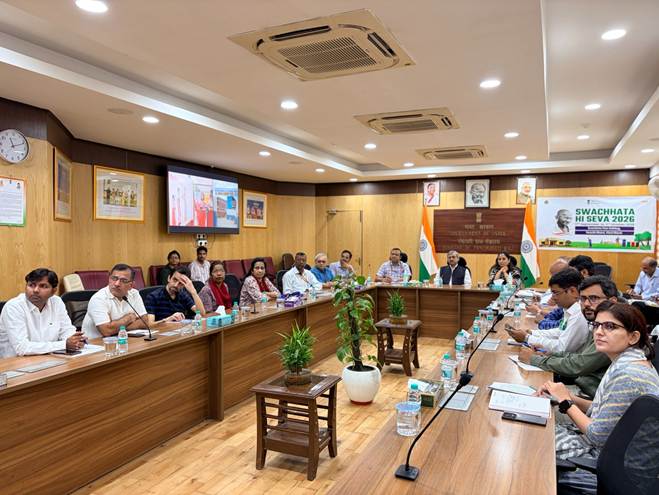
The ministry’s release lists what the sittings were asked to take stock of: 3.33 crore property cards issued under the SVAMITVA scheme, which maps village homesteads; more than 16 crore rural households with a tap connection, which it puts at over 80%; 12.22 crore household toilets built under the Swachh Bharat Mission; 1.55 crore structures built to recharge groundwater; 3.27 crore ration transactions a month made away from the home ration shop under One Nation One Ration Card; and 81.35 crore people covered by free foodgrain under the Pradhan Mantri Garib Kalyan Anna Yojana.
At a glance
Special Gram Sabhas held on 2 October 2026: more than 2.42 lakh
Sixteenth Finance Commission grant to rural local bodies, 2026-31: ₹4,35,236 crore
Increase over the previous commission’s award: 84%
Rural households with a tap connection: more than 16 crore, over 80%
Household toilets built under Swachh Bharat: 12.22 crore
What India gains
A plan written in the village before the money reaches it, and ₹87,000 crore a year for the panchayats to carry it out.
India’s gran pests beat Aluminium Phosphide
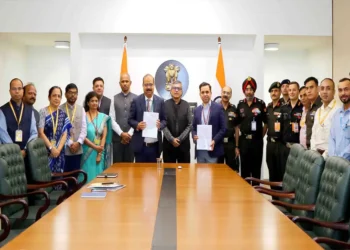
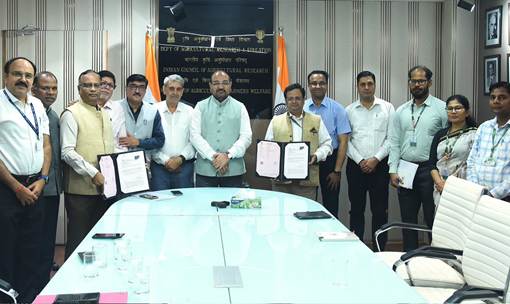
LUDHIANA, 3 October: The insect that eats India’s wheat has learnt to survive the poison used against it. The Indian Council of Agricultural Research and the Food Corporation of India signed a memorandum on 30 September 2026 to research alternative fumigation for stored wheat and rice, the Ministry of Agriculture and Farmers Welfare said in its release of 1 October 2026, and the reason is in the release’s own words: resistance to aluminium phosphide has reached “72-100% in key Indian states”.
For decades the national grain reserve has relied on two chemicals, aluminium phosphide and malathion. Repeated use has bred insects that shrug them off, so warehouses fumigate more often, costs climb, and the workers who apply the gas carry a respiratory risk the ministry itself names. The study, funded by the Department of Food and Public Distribution, will be run by ICAR’s Central Institute of Post-Harvest Engineering and Technology at Ludhiana.
The science is older than the problem. Insects breathe; replace the air around the grain with nitrogen or carbon dioxide and they cannot. Unlike a poison, an atmosphere leaves nothing for a population to adapt to, which is why resistance figures of 72% to 100% are an argument for gases rather than for a new chemical. What the trial has to establish is not whether it works but whether it works at the scale, in the buildings and at the cost of a national reserve.
At a glance
Memorandum signed: 30 September 2026, ICAR and the Food Corporation of India
Resistance to aluminium phosphide in key States: 72% to 100%
Nitrogen purity to be tested in metal silos: above 99%
Phase I: two years, ICAR-CIPHET Ludhiana; Phase II: one year, multi-location
What India gains
A way to keep the national grain stock without a chemical the pests have beaten, and without the respiratory risk to the people who apply it.
Six taxpayers 2,340 bills: CAG finds tax gap
BHUBANESWAR, 3 October An e-way bill is the document a lorry carries to prove that the goods on it have been declared for GST. In Odisha, between April 2018 and March 2022, 4,18,53,731 of them were generated for outward supplies, and the Comptroller and Auditor General’s Report No. 1 of 2026 on the revenue sector of the Government of Odisha, tabled in the State legislature on 28 September 2026, examined whether the system behind them protected the revenue it was built for.
The central finding, at paragraph 2.1.9.1, is plain: six taxpayers generated 2,340 e-way bills for goods worth ₹79.81 crore, with a tax implication of ₹11.90 crore, “had not filed GST returns and consequently, had not discharged the tax liability”. The goods moved; the tax did not.
At a glance
E-way bills for outward supply generated in Odisha, 2018-19 to 2021-22: 4,18,53,731
Non-filers found: 6 taxpayers, 2,340 bills, goods ₹79.81 crore, tax ₹11.90 crore (para 2.1.9.1)
Suspicious vehicles: 14 taxpayers, 1,113 bills, 235 vehicles, goods ₹80.30 crore, tax ₹13.78 crore (para 2.1.9.7)
Preventive units with government vehicles: 4 of 17
Delay in crediting deposits to the cash ledger: 6 to 1,257 days
What India gains
A written list of the exact joins — e-way bill to return, bill to vehicle registry, interception to circle — that, once made, would stop the leak in every State running the same software.
India, Netherlands expand farm partnership to seeds
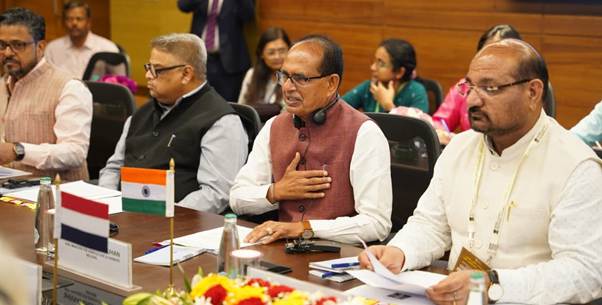
NEW DELHI, 3 October — Agriculture Minister Shivraj Singh Chouhan had met Netherlands minister Silvio Erkens in New Delhi on 28 September. The Ministry of Agriculture and Farmers Welfare, in its release of 2 October 2026, said the two sides reviewed progress on the 25 Centres of Excellence in agriculture and horticulture being set up with Dutch technology and agreed to explore cooperation in the seed sector through a work plan.
The centres are the practical end of the relationship: demonstration farms where Dutch greenhouse, irrigation and post-harvest methods are shown to Indian growers on Indian soil. The work plan on seeds is the newer thread, and it is the one a farmer would notice first, since seed is the input that sets the ceiling on everything after it.
At a glance
Meeting: 28 September 2026, New Delhi
Centres of Excellence under review: 25, agriculture and horticulture
Agreed: a work plan on seed-sector cooperation
Figures from the Ministry of Agriculture and Farmers Welfare release of 2 October 2026, Release ID 2318321; checked on pib.gov.in.
662 assistive devices reach 114 Delhi senior citizens
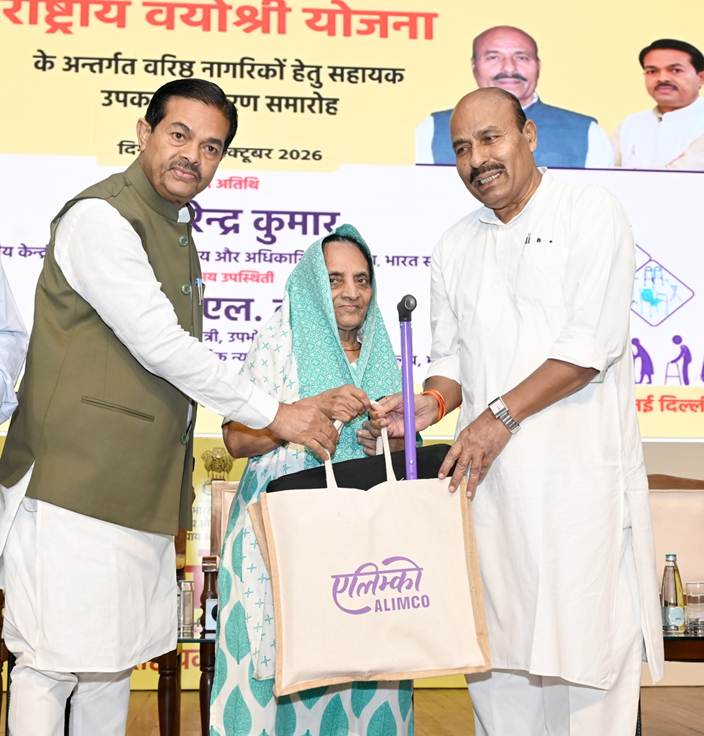
NEW DELHI, 3 October 2026 — At the Dr Ambedkar International Centre on 2 October, 114 senior citizens from Delhi-NCR received 662 assistive devices worth more than ₹10 lakh under the Rashtriya Vayoshri Yojana, the Ministry of Social Justice and Empowerment said in its release of 2 October 2026. That is nearly six devices a person, which is what the scheme is for: a hearing aid, a walking frame and a pair of spectacles usually go to the same person, because age rarely takes one faculty alone.
The announcement attached to the camp is larger than the camp. Social Justice Minister Virendra Kumar and Minister of State B.L. Verma said the PM-Divya Asha Kendras, the centres where devices are fitted, would expand from 109 to 300.
The release gives no date for reaching 300, and that is the figure to hold the ministry to. A device handed over at a camp lasts as long as the fitting was good; a centre within reach is what makes the next fitting possible.
At a glance
Devices distributed: 662, to 114 senior citizens, worth more than ₹10 lakh
PM-Divya Asha Kendras: 109 now, 300 planned
What India gains
Fitting centres within reach of more of the country’s elderly, instead of a camp that comes once.
NMMS deadline extended to October 31
NEW DELHI, 3 October — A Class IX student from a family earning under ₹3.50 lakh a year, who scored 55% or more in Class VII, has until 31 October 2026 to apply for the National Means-cum-Merit Scholarship. The Ministry of Education, in its release of 1 October 2026, extended the deadline on the National Scholarship Portal; institute-level verification now closes on 15 November and district-level on 30 November.
The scholarship pays ₹12,000 a year, straight to the student’s bank account, through Class XII, and one lakh are awarded each year to students who pass a State selection test. By 30 September the portal had taken about 88,522 fresh and 1,97,133 renewal applications since it opened on 1 June, a total of 2,85,655.
The number worth watching is the fresh one. Renewals are students already in the scheme; fresh applications are the pool from which the year’s one lakh new awards will be drawn, and at 88,522 it is still short of the number of scholarships on offer. A month more is a month for schools to find the students who qualify and have not applied.
At a glance
New deadline: 31 October 2026; verification 15 November (institute) and 30 November (district)
Scholarship: ₹12,000 a year, Class IX to XII; one lakh awards a year
Eligibility: 55% in Class VII (50% for SC and ST), family income up to ₹3.50 lakh
Applications to 30 September 2026: 88,522 fresh, 1,97,133 renewal
What India gains
Four years of ₹12,000 for a child whose family would otherwise weigh the cost of keeping them in school past Class VIII.