Blitz Bureau
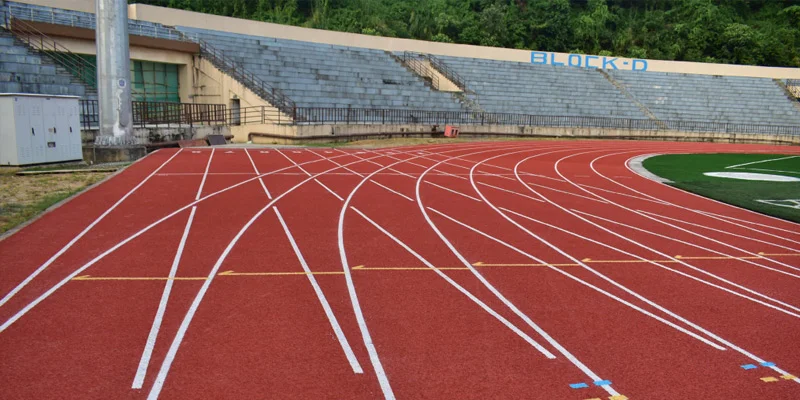
NEW DELHI: India arrives at the athletics stage of these Commonwealth Games with four medals already banked — one gold, two silver and one bronze, good for eighth place — and with the part of the programme that historically defines its campaign only now beginning. The Athletics Federation of India has named a 32-member squad for Glasgow, and the track and field events at Scotstoun bring Neeraj Chopra into competition for the first time at these Games, alongside long jumper Murali Sreeshankar and sprinter Gurindervir Singh.
The gold so far belongs to Mirabai Chanu, whose hat-trick of Commonwealth titles in the women’s 48kg gave India its first champion of the Games. What follows is a broader test. Chopra, the men’s javelin gold medallist at Gold Coast 2018, leads a squad that also includes Animesh Kujur, Tajinderpal Singh Toor in the shot put, Parul Chaudhary and Gulveer Singh in the distance events — a spread across sprints, throws, jumps and endurance that would have been unimaginable for an Indian team two decades ago, when the country’s track hopes rested on one or two individuals at a time.
Thirty-two on the entry list: India’s athletics squad opens its Glasgow campaign at Scotstoun with Neeraj Chopra, Murali Sreeshankar and Gurindervir Singh among the names, on a medal table where India currently sits eighth.
A single champion is a story. Thirty-two entries across sprints, throws, jumps and distance is a system — and systems keep producing after the champion retires.
At a Glance
• Medal tally: four — one gold, two silver, one bronze; India eighth
• Gold: Mirabai Chanu, women’s 48kg weightlifting — a third successive Commonwealth title
• Athletics squad: 32 members named by the Athletics Federation of India
• Names to watch: Neeraj Chopra, Murali Sreeshankar, Gurindervir Singh, Tajinderpal Singh Toor, Parul Chaudhary, Gulveer Singh
Depth of this kind is the quiet achievement behind any medal count. It reflects a decade in which coaching quality, sports science, international competition exposure and athlete funding improved at roughly the same time — and in which a young athlete in a district town could realistically see a path from a local meet to a national camp. The medals that arrive at a Games are the visible output; the entry list is the better indicator of what the next Games will look like.
The constructive priority now is continuity rather than celebration. Athletes need support through the unglamorous years between Games, when there are no cameras and the training is hardest; junior programmes need enough qualified coaches that talent is developed rather than merely discovered; and the sports-medicine capacity that keeps a thrower or a distance runner healthy through a full cycle needs to reach beyond a handful of national centres. India’s task in Glasgow is to add to a medal tally. Its task afterwards is to make sure the thirty-two becomes sixty.