
Blitz Bureau
NEW DELHI: Export totals are easy to quote and easy to misunderstand. A defence export number rises for one of two reasons — because you sold more of the same low-value items, or because you started selling things nobody previously bought from you. Last year’s rise was firmly the second kind. India’s defence exports reached ₹38,424 crore in FY26, up 62.66 per cent from ₹23,622 crore in FY25 and ₹21,083 crore in FY24.
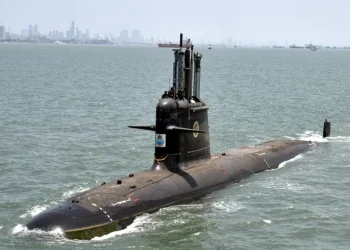
The composition tells you why the jump is structural. The export mix has moved decisively past components and consumables into complete high-value systems: the BrahMos cruise missile and the Akash air-defence system; artillery and rocket systems including the Pinaka multi-barrel rocket launcher and the ATAGS howitzer; Swathi weapon-locating radars; electronic warfare suites; Dornier 228 aircraft; naval vessels; and lightweight torpedoes. These are platforms with long service lives, which means each sale carries a decade or more of spares, training and upgrade revenue behind it. That is a different and far more valuable business than shipping ammunition. The customer base widened alongside — Indian defence equipment went to more than eighty countries — and the number of registered defence exporters rose from 128 to 145 in a single year.
Platforms, not parts: the shift into complete systems — missiles, artillery, radars, aircraft, naval vessels — is what makes the FY26 rise a change in business model rather than a good year.
Selling a howitzer is not a transaction. It is the beginning of a twenty-year relationship in spares, training and upgrades.
At a Glance
• FY26 defence exports: ₹38,424 crore, up 62.66%
• Base: ₹23,622 crore in FY25; ₹21,083 crore in FY24
• Split: defence public sector undertakings 54.84%; private sector 45.16%
• DPSU surge: from ₹8,389 crore to ₹21,071 crore — a rise of about 151%
• Reach: more than 80 countries
• Exporters: 145 registered, up from 128
• Products: BrahMos, Akash, Pinaka, ATAGS, Swathi radars, electronic warfare systems, Dornier 228, naval vessels, lightweight torpedoes
One line in the breakdown deserves a second look. Defence public sector undertakings raised exports about 151 per cent, from ₹8,389 crore to ₹21,071 crore, and now account for 54.84 per cent of the total against 45.16 per cent from the private sector. For most of the past decade the private share had been rising and the public share falling — a trend widely read as evidence that the state-owned yards and factories were the constraint. FY26 reverses it, and the reversal is a useful corrective: given an order book and an export mandate, the DPSUs scaled faster than anyone had modelled. A near-even split between public and private exporters is, in any case, a healthier industrial structure than dominance by either.
The constructive agenda from here is about repeatability. Three things separate a good export year from a durable export industry, and India has partially built all three. The first is financing: buyers of Indian systems are frequently countries that need credit lines as much as they need equipment, and line-of-credit capacity is the single most cited limitation by exporters. The second is after-sales presence — a customer eight thousand kilometres away needs a local spares depot and a resident engineering team, not a purchase order. The third is certification, so that Indian systems arrive pre-qualified against the standards the buyer’s existing fleet already meets. Get those three right and eighty countries becomes a hundred, and ₹38,424 crore stops being a record and becomes a baseline.