• About us
  • Team
  • Privacy Policy
  • Contact
Tuesday, August 4, 2026
  • Login
No Result
View All Result
World's first weekly chronicle of development news
  • Blitz Highlights
    • Special
    • Spotlight
    • Insight
    • Entertainment
    • Sports
  • Opinion
  • Legal
  • Perspective
  • Nation
    • East
    • West
    • North
    • South
  • Business & Economy
  • World
  • Hindi Edition
  • International Editions
    • Dubai
    • Tanzania
    • United Kingdom
    • USA
  • Blitz India Business
  • Blitz Highlights
    • Special
    • Spotlight
    • Insight
    • Entertainment
    • Sports
  • Opinion
  • Legal
  • Perspective
  • Nation
    • East
    • West
    • North
    • South
  • Business & Economy
  • World
  • Hindi Edition
  • International Editions
    • Dubai
    • Tanzania
    • United Kingdom
    • USA
  • Blitz India Business
No Result
View All Result
World's first weekly chronicle of development news
No Result
View All Result

India Built ₹1.78 Lakh Crore of Defence Equipment Last Year. The Number That Changed Fastest Was the One From Private Factories

by Blitz India Media
August 4, 2026
in News
0
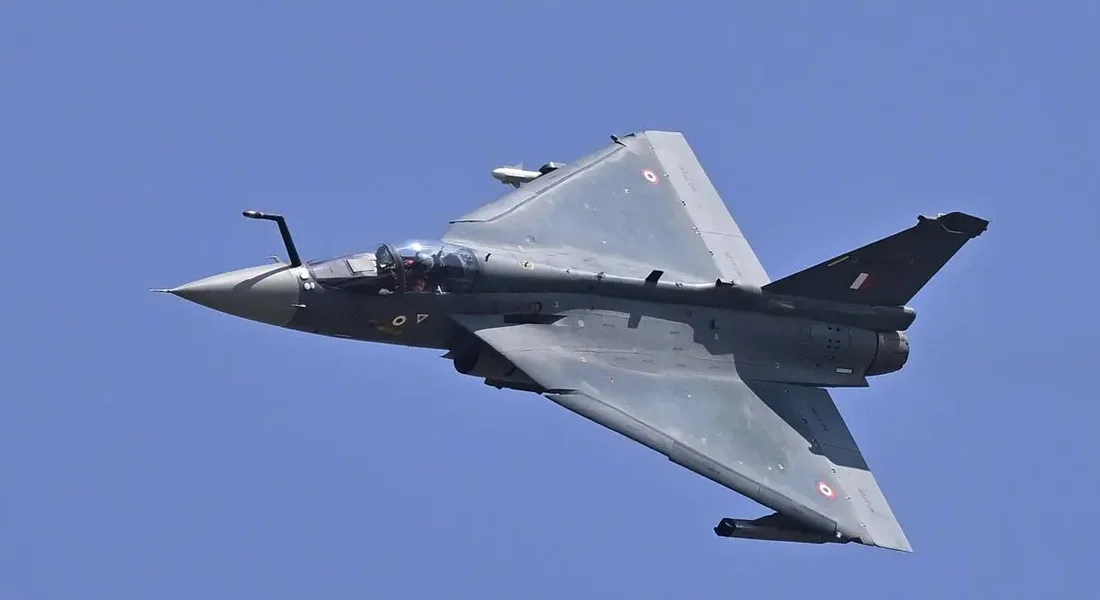
Tejas

Blitz Bureau

NEW DELHI: Defence production figures are usually read as a statement about security. They are at least as useful read as a statement about industrial capability — about how many Indian firms can hold a tolerance, pass an audit and deliver on a schedule. On that reading, the 2025-26 numbers describe something that has changed rather quickly. India’s annual defence production reached ₹1.78 lakh crore in 2025-26, an all-time high and 15.6 per cent above the ₹1.54 lakh crore recorded the previous year. Set against 2020-21’s ₹84,643 crore, output has rather more than doubled in five years.

Two figures inside that total are more informative than the total. The first is the private-sector share, which reached an all-time high of about ₹42,000 crore — roughly 24 per cent of everything produced, with defence public sector undertakings and other PSUs accounting for the remaining 76 per cent. A quarter of India’s defence output now leaves a privately owned factory. The second is exports, which reached ₹38,424 crore in 2025-26, up ₹14,802 crore or 62.66 per cent on the previous year’s ₹23,622 crore, with Indian military hardware now reaching more than 80 countries. Exports have grown from ₹686 crore in 2013-14; that is a fifty-six-fold increase over twelve years, and the compounding has accelerated rather than tailed off.

The supplier list is the story: a quarter of India’s defence output — about ₹42,000 crore in 2025-26 — now comes from privately owned factories, an all-time high.

An export order is an audit no domestic procurement process can replicate. Someone else’s air force has inspected the shop floor and signed.

At a Glance

• Defence production, 2025-26: ₹1.78 lakh crore — an all-time high
• Growth: 15.6 per cent over ₹1.54 lakh crore in 2024-25; up about 110 per cent on ₹84,643 crore in 2020-21
• Defence exports, 2025-26: ₹38,424 crore, up ₹14,802 crore or 62.66 per cent on ₹23,622 crore
• Export reach: more than 80 countries; exports were ₹686 crore in 2013-14
• Ownership split: DPSUs and other PSUs about 76 per cent of output; private sector about 24 per cent
• Private-sector value: roughly ₹42,000 crore — an all-time high
• Defence budget: ₹7.85 lakh crore in 2026-27, from ₹2.53 lakh crore in 2013-14

The export figure carries a quality signal that domestic orders cannot. A government can buy from its own factories for reasons that have nothing to do with the product; a foreign air force or navy generally cannot. Every rupee of that ₹38,424 crore represents a customer who had alternatives, inspected an Indian production line and placed an order anyway. That is why the export series, more than the production series, is the honest measure of whether the Atmanirbhar Bharat and Make in India reforms and the Defence Acquisition Procedure of 2020 have produced competitiveness or merely substitution. On the evidence of a 62.66 per cent increase in a single year, they have produced competitiveness.

Where the constructive work now lies is in the composition of what is exported and by whom. Much of India’s export book remains in components, sub-systems, ammunition and platforms at the smaller end; the higher-value integrated systems, where margins and technological learning are concentrated, are a thinner slice. The route to widening it runs through the same place as the production number — the private tier-one supplier base, which at 24 per cent of output is large enough to be serious and small enough to have a long way to grow. If the next five years move the private share towards a third while holding the export growth rate at even half of last year’s, India will have built something that no longer needs to be described as an aspiration.

Related Posts

export
News

Three Weeks Inside CETA: What an Indian Family Actually Notices When 99 Per Cent of Tariff Lines Go to Zero

August 4, 2026
At a Glance
News

India Won 39 Medals in Glasgow and 10 of Them Came From One Ring. Two Days Later the Cabinet Wrote a ₹36,441-Crore Cheque. Read Those Facts Together

August 4, 2026
Customs and cargo handling at an Indian port
News

GST Receipts Rose 15.4 Per Cent in July. Domestic Collections Rose 10.1 Per Cent. The Difference Is Not a Consumption Boom

August 4, 2026
farmer
News

The Monsoon Is 12 Per Cent Short and the Forecast for August Is Below Normal. Why the Sowing Numbers Are Nonetheless Holding Up

August 4, 2026
solar
Energy

India’s Energy Transition Has Quietly Stopped Being a Policy Debate. It Is Now a Construction Schedule — and the Bottleneck Has Moved

August 4, 2026
Google
News

Google selects 20 AI Indian startups

August 3, 2026
Load More
Next Post
Customs and cargo handling at an Indian port

GST Receipts Rose 15.4 Per Cent in July. Domestic Collections Rose 10.1 Per Cent. The Difference Is Not a Consumption Boom

Recent News

export
News

Three Weeks Inside CETA: What an Indian Family Actually Notices When 99 Per Cent of Tariff Lines Go to Zero

by Blitz India Media
August 4, 2026
0

Blitz Bureau NEW DELHI: The India–United Kingdom Comprehensive Economic and Trade Agreement entered into force on July 15. Most of...

Read moreDetails
At a Glance

India Won 39 Medals in Glasgow and 10 of Them Came From One Ring. Two Days Later the Cabinet Wrote a ₹36,441-Crore Cheque. Read Those Facts Together

August 4, 2026
Customs and cargo handling at an Indian port

GST Receipts Rose 15.4 Per Cent in July. Domestic Collections Rose 10.1 Per Cent. The Difference Is Not a Consumption Boom

August 4, 2026
Tejas

India Built ₹1.78 Lakh Crore of Defence Equipment Last Year. The Number That Changed Fastest Was the One From Private Factories

August 4, 2026
farmer

The Monsoon Is 12 Per Cent Short and the Forecast for August Is Below Normal. Why the Sowing Numbers Are Nonetheless Holding Up

August 4, 2026

Blitz Highlights

  • Special
  • Spotlight
  • Insight
  • Entertainment
  • Health

International Editions

  • US (New York)
  • UK (London)
  • Middle East (Dubai)
  • Tanzania (Africa)

Nation

  • East
  • West
  • South
  • North
  • Hindi Edition

E-paper

  • India
  • Hindi E-paper
  • Dubai E-Paper
  • USA E-Paper
  • UK-Epaper
  • Tanzania E-paper

Useful Links

  • About us
  • Team
  • Privacy Policy
  • Contact

©2024 Blitz India Media -Building A New Nation

Welcome Back!

Login to your account below

Forgotten Password?

Retrieve your password

Please enter your username or email address to reset your password.

Log In

    No Result
    View All Result
    • Blitz Highlights
      • Special
      • Spotlight
      • Insight
      • Entertainment
      • Sports
    • Opinion
    • Legal
    • Perspective
    • Nation
      • East
      • West
      • North
      • South
    • Business & Economy
    • World
    • Hindi Edition
    • International Editions
      • Dubai
      • Tanzania
      • United Kingdom
      • USA
    • Blitz India Business

    ©2024 Blitz India Media -Building A New Nation