• About us
  • Team
  • Privacy Policy
  • Contact
Wednesday, October 14, 2026
  • Login
No Result
View All Result
World's first weekly chronicle of development news
  • Blitz Highlights
    • Special
    • Spotlight
    • Insight
    • Entertainment
    • Sports
  • Opinion
  • Legal
  • Perspective
  • Nation
    • East
    • West
    • North
    • South
  • Business & Economy
  • World
  • Hindi Edition
  • International Editions
    • Dubai
    • Tanzania
    • United Kingdom
    • USA
  • Blitz India Business
  • Blitz Highlights
    • Special
    • Spotlight
    • Insight
    • Entertainment
    • Sports
  • Opinion
  • Legal
  • Perspective
  • Nation
    • East
    • West
    • North
    • South
  • Business & Economy
  • World
  • Hindi Edition
  • International Editions
    • Dubai
    • Tanzania
    • United Kingdom
    • USA
  • Blitz India Business
No Result
View All Result
World's first weekly chronicle of development news
No Result
View All Result

Every Barrel India Doesn’t Import: Why the Energy Transition Is a Security Policy

by Blitz India Media
July 15, 2026
in Energy, News
0
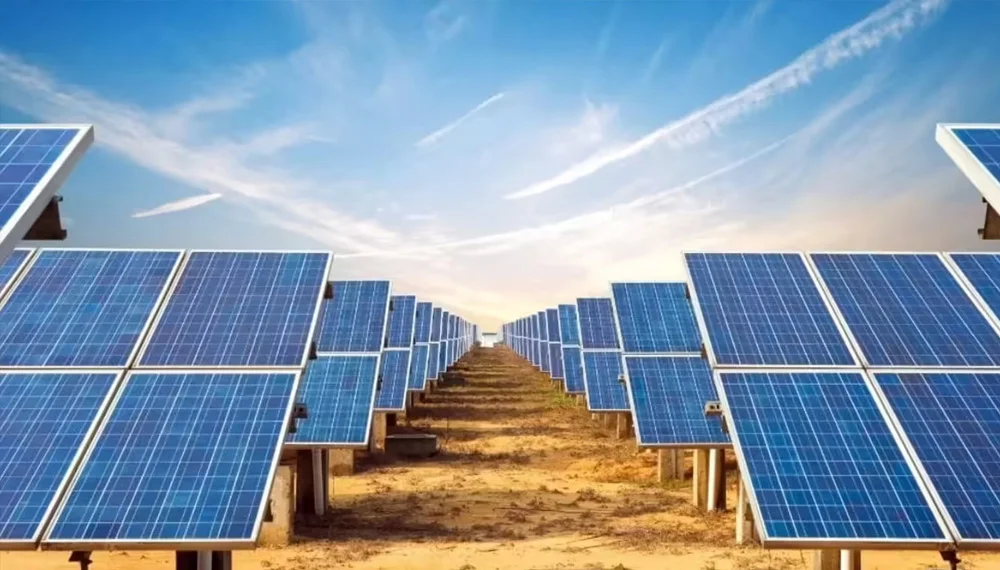
solar

Blitz Bureau

NEW DELHI:Read Tuesday’s dominant number the right way and a strategy comes into focus. A distant strait can put several dollars on a barrel of oil in an afternoon and ripple straight into an Indian household’s budget and a trading screen. That recurring vulnerability is one India inherited — and the clean-energy build is the one it is choosing to grow its way out of. The deeper significance of that build, beyond the climate headlines, is that it is an energy-security policy.

The logic is simple arithmetic. Every unit of solar or wind added, every electric scooter and car sold, every litre of biofuel blended, shrinks the quantum of imported crude the economy must buy at whatever price the world sets that day. India has moved fast on the supply side: non-fossil sources now make up roughly half of installed power capacity — a milestone reached years ahead of target — with non-fossil capacity above 280 GW and the fastest annual clean-energy additions on record, placing India among the top three nations globally.

You cannot negotiate with a strait. You can, over years, need it less. The energy transition is how an import-dependent nation buys back its own resilience.

The Long View

  • The exposure: India imports most of the crude it consumes
  • The hedge: renewables + EVs + biofuels shrink the import bill
  • The base: ~50% of capacity now non-fossil; 280 GW-plus and rising
  • The payoff: lower price risk, cleaner air, a domestic manufacturing base

The transition is not costless or automatic. It demands grid upgrades to absorb variable power, a domestic battery and solar-manufacturing base so one import dependence is not simply swapped for another, charging networks that reach small towns, and a fair deal for the workers and regions tied to today’s fossil economy. These are real engineering and social challenges, not slogans, and getting them right is the whole task.

The constructive, long-view read is that India has both the incentive and the momentum to see it through. The same crude shock that unsettles a trading day is the clearest argument for the patient work of electrification and clean power. Handled well, the energy transition turns a recurring vulnerability into a durable strength — and the barrels India never has to import become the truest measure of its progress.

Related Posts

Rajnath Singh
News

India offers ASEAN joint manufacture of defence systems

October 14, 2026
India Canada diplomatic ties
News

India News: Canada Ties, Ports, Minerals and Stubble Fires

October 14, 2026
Asian Champions Trophy 2026
News

Pathak returns as India names squad for Asian Champions Trophy

October 13, 2026
Electronics production grows seven-fold : MeitY
News

New Delhi, 13 October : India’s fintech sector raised $2.2 billion in the first nine months of 2026 (January 1, 2026–September 30, 2026), up 14 per cent from $1.9 billion in the same period a year earlier, a report said. The report from data intelligence platform Tracxn Technologies Limited said funding rounds dipped from 260 to 153, adding that the funding was concentrated in a smaller number of large late‑stage rounds, with five mega‑rounds of $100 million or more accounting for $1.1 billion or 48 per cent of total capital. The report said in the first nine months of 2026, digital lending and payments topped the category rankings, while Bengaluru accounts for over three-fifths of all capital raised. On the exit side, IPOs saw a 50 per cent uptick while overall acquisitions slowed. As many as 30 companies raised their first funding round, down 49 per cent from 59 in the previous year. Series A and later rounds totalled 77, down 31 per cent from 112. Late-stage funding (Series C+, PE, and pre-IPO) led the mix, rising 95 per cent to $1.5 billion in the first nine months of 2026 — up from $751 million during the same period in the previous year. This capital surge pushed late-stage investments to 67 per cent of total market funding, the report noted. Earlier stages experienced contractions in capital and deal counts. Early-stage funding fell 33 per cent to $668 million across 52 rounds, compared to $1 billion across 82 rounds in nine months of 2025. Seed funding fell 57 per cent to $73.8 million across 76 rounds, down from $173 million across 148 rounds. New unicorns crossed the billion-dollar threshold in an average of 7.1 years after their Series A funding. Moreover, the industry saw 3 IPOs in nine months of 2026, up 50 per cent from 2 in the previous year, alongside 11 acquisitions, down 45 per cent from 20.

October 13, 2026
Indian stock market
News

IBM and MeitY Startup Hub partner to support India’s deep-tech startups with AI, cloud, quantum computing and mentorship.

October 13, 2026
IBM
News

IBM, MeitY sign MoU to boost India’s deep-tech

October 13, 2026
Load More
Next Post
Semiconductor

From Blueprint to Wafer: India's First Home-Made Chips Come Into View

Recent News

Rajnath Singh
News

India offers ASEAN joint manufacture of defence systems

by Blitz India Media
October 14, 2026
0

NEW DELHI, 14 October— India is ready to explore building patrol vessels, radars, air-defence systems, helicopters and drones together with...

Read moreDetails
India Canada diplomatic ties

India News: Canada Ties, Ports, Minerals and Stubble Fires

October 14, 2026
Asian Champions Trophy 2026

Pathak returns as India names squad for Asian Champions Trophy

October 13, 2026
Electronics production grows seven-fold : MeitY

New Delhi, 13 October : India’s fintech sector raised $2.2 billion in the first nine months of 2026 (January 1, 2026–September 30, 2026), up 14 per cent from $1.9 billion in the same period a year earlier, a report said. The report from data intelligence platform Tracxn Technologies Limited said funding rounds dipped from 260 to 153, adding that the funding was concentrated in a smaller number of large late‑stage rounds, with five mega‑rounds of $100 million or more accounting for $1.1 billion or 48 per cent of total capital. The report said in the first nine months of 2026, digital lending and payments topped the category rankings, while Bengaluru accounts for over three-fifths of all capital raised. On the exit side, IPOs saw a 50 per cent uptick while overall acquisitions slowed. As many as 30 companies raised their first funding round, down 49 per cent from 59 in the previous year. Series A and later rounds totalled 77, down 31 per cent from 112. Late-stage funding (Series C+, PE, and pre-IPO) led the mix, rising 95 per cent to $1.5 billion in the first nine months of 2026 — up from $751 million during the same period in the previous year. This capital surge pushed late-stage investments to 67 per cent of total market funding, the report noted. Earlier stages experienced contractions in capital and deal counts. Early-stage funding fell 33 per cent to $668 million across 52 rounds, compared to $1 billion across 82 rounds in nine months of 2025. Seed funding fell 57 per cent to $73.8 million across 76 rounds, down from $173 million across 148 rounds. New unicorns crossed the billion-dollar threshold in an average of 7.1 years after their Series A funding. Moreover, the industry saw 3 IPOs in nine months of 2026, up 50 per cent from 2 in the previous year, alongside 11 acquisitions, down 45 per cent from 20.

October 13, 2026
Indian stock market

IBM and MeitY Startup Hub partner to support India’s deep-tech startups with AI, cloud, quantum computing and mentorship.

October 13, 2026

Blitz Highlights

  • Special
  • Spotlight
  • Insight
  • Entertainment
  • Health

International Editions

  • US (New York)
  • UK (London)
  • Middle East (Dubai)
  • Tanzania (Africa)

Nation

  • East
  • West
  • South
  • North
  • Hindi Edition

E-paper

  • India
  • Hindi E-paper
  • Dubai E-Paper
  • USA E-Paper
  • UK-Epaper
  • Tanzania E-paper

Useful Links

  • About us
  • Team
  • Privacy Policy
  • Contact

©2024 Blitz India Media -Building A New Nation

Welcome Back!

Login to your account below

Forgotten Password?

Retrieve your password

Please enter your username or email address to reset your password.

Log In

    No Result
    View All Result
    • Blitz Highlights
      • Special
      • Spotlight
      • Insight
      • Entertainment
      • Sports
    • Opinion
    • Legal
    • Perspective
    • Nation
      • East
      • West
      • North
      • South
    • Business & Economy
    • World
    • Hindi Edition
    • International Editions
      • Dubai
      • Tanzania
      • United Kingdom
      • USA
    • Blitz India Business

    ©2024 Blitz India Media -Building A New Nation