Blitz Bureau
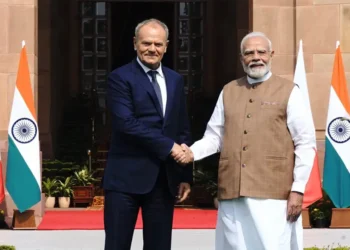
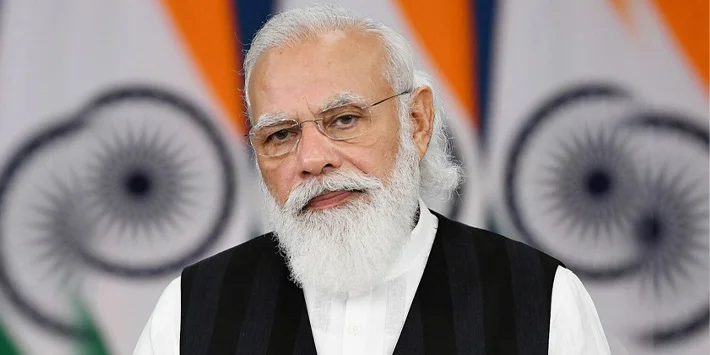
NEW DELHI: India and New Zealand elevated their relationship to a Strategic Partnership on Saturday, the headline result of talks in Auckland between Prime Minister Narendra Modi and his counterpart Christopher Luxon that yielded 18 concrete outcomes, including 10 agreements — and a shared target of doubling two-way trade in goods and services to around ₹35,000 crore by 2030.
The upgrade caps the first visit by an Indian prime minister to New Zealand in four decades and the closing leg of a three-nation Indo-Pacific tour that also took in Indonesia and Australia. The two leaders, describing their countries as “natural partners” bound by shared democratic values, deep people-to-people links and common Indo-Pacific interests, adopted a four-year roadmap to widen cooperation, a framework to deepen maritime collaboration, and a reciprocal logistics-support arrangement between the Indian Navy and the New Zealand Defence Force.
Ten agreements and a trade target give the “strategic” label real content — the work now is turning a stack of signatures into staffed programmes and steady shipments.
At a Glance
- Outcome: Ties elevated to a Strategic Partnership (Jul 11)
- Deliverables: 18 outcomes, incl. 10 agreements
- Trade goal: Double two-way trade to ~₹35,000 cr by 2030
- Security: Maritime framework; Navy–NZDF logistics pact; FTA still in talks
The Auckland stop sits inside an unusually busy season of Indian trade and Indo-Pacific diplomacy. It joins a fast-widening web of agreements — the India–UK pact going live on July 15, an interim deal with the United States in its final stretch, and a concluded India–EU agreement heading toward signature. Read together, they present India as a dependable partner spreading its ties across many markets rather than leaning on any one.
The constructive task now is follow-through: converting the agreements into working projects, standing up the maritime and logistics arrangements, and closing the trade negotiation on terms that serve farmers, exporters and professionals in both countries. Handled patiently, a landmark first visit becomes the foundation of a durable partnership rather than a diplomatic milestone alone.